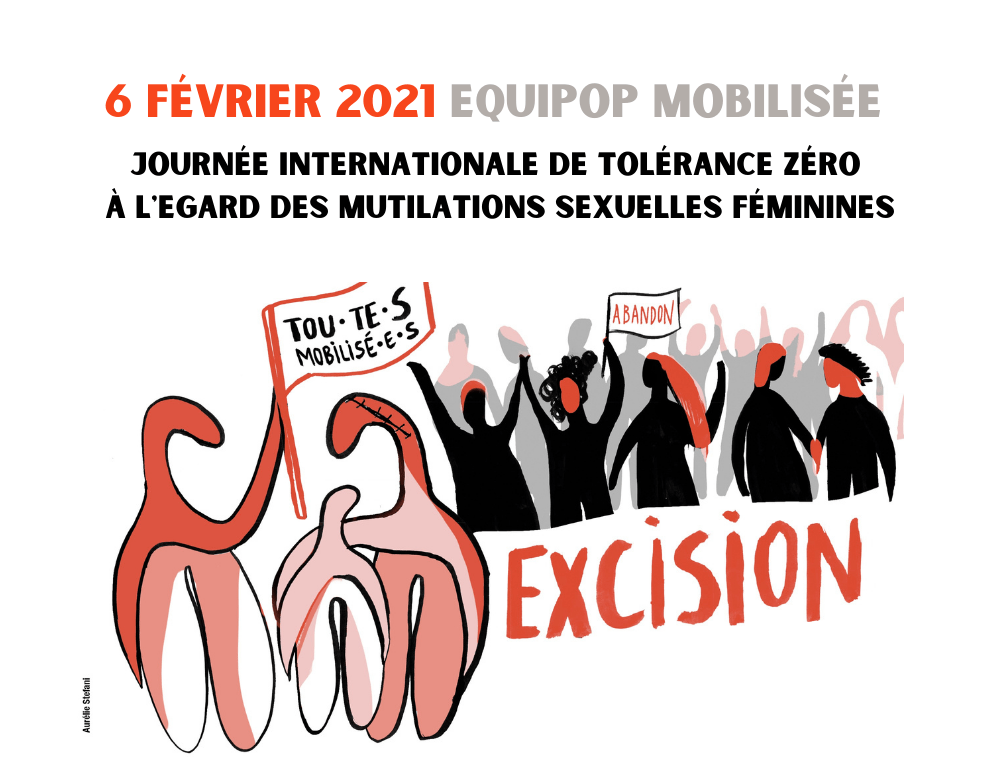
More than 200 million girls and women worldwide have undergone female genital mutilation (FGM). On February 5, 2016, the UN Secretary-General called for the total elimination of FGM by 2030, in line with the Sustainable Development Goals. Equipop is contributing to this goal and is campaigning for the abandonment of FGM.
On September 15, 2020, Equipop organized the final conference of the Let's CHANGE project. Dedicated to the prevention of FGM in Europe, this two-year project was co-financed by the European Union. It was carried out with partners from three countries: TERRE DES FEMMES (TDF; Berlin, Germany), Equipop (Paris, France), Federatie van Somalische Associaties Nederland (FSAN; Amsterdam, Netherlands), and Plan International Deutschland (Plan; Hamburg, Germany), and with the European network End FGM (Brussels, Belgium).
As part of the Let's Change project, Equipop has produced a series of podcasts featuring experts, activists, and survivors answering questions asked by millions of women who have undergone female genital mutilation around the world.
EVENTS NOT TO BE MISSED
Equipop invites you to follow the events organized by its partners in France and Guinea on the International Day of Zero Tolerance for Female Genital Mutilation, February 6, 2021.
The Guinean Girls' Forum
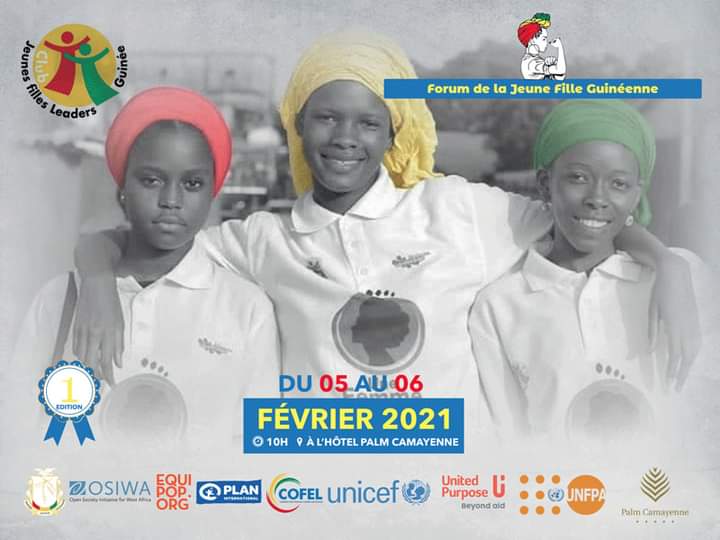
From February 5 to 6, 2021, the first edition of the Guinean Girls' Forum will be held in Conakry. This initiative by the Club des jeunes filles leaders de Guinée (CJFLG) brings together 150 people under the theme: "Girls, victims and agents of change." The organizers' goal is to reduce violence against women. This forum is driven by a study on gender-based violence (GBV) in the Greater Conakry region to make recommendations and pleadings to decision-makers.
Battantes! A day to change perceptions of female genital mutilation

On February 6, the platform "Excision, parlons-en!" (Let's talk about excision!) is organizing a virtual conference aimed at changing the discourse on excision, which often focuses on the consequences of the practice and the factors of resistance within communities. According to Excision, parlons-en!, while these issues should not be downplayed, they should be nuanced. It is therefore essential to renew the discourse on female genital mutilation, to move away from a catastrophic vision and to defend the autonomy, resilience, and courage of all those who are mobilizing to end it. The program includes three conferences and the broadcast of a report on Congolese gynecologist Denis Mukwege, winner of the 2018 Nobel Peace Prize.
MSF today: what is the situation and what are the responses?
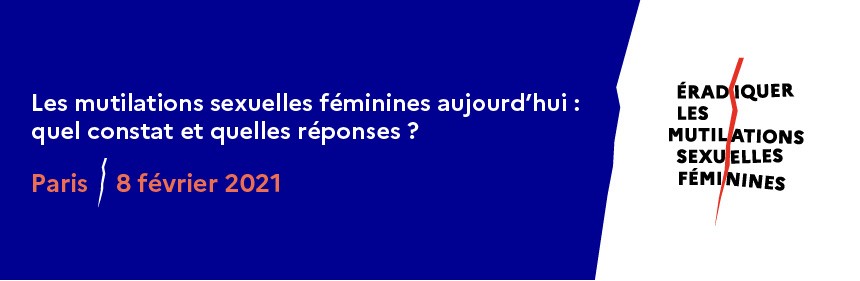
This is the theme chosen by the Ministry for Gender Equality, Diversity, and Equal Opportunities for its online conference to be held on February 8, 2021. Round tables will focus on the situation of FGM around the world and the presentation of new cooperation tools to better equip actors to promote the abandonment of female genital mutilation.