On September 15, 2020, the final conference of the Let's CHANGE project was held. Dedicated to the prevention of STIs in Europe, this two-year project was co-funded by the European Union. 136 people—professionals, institutions, and activists from across Europe—participated in this event.
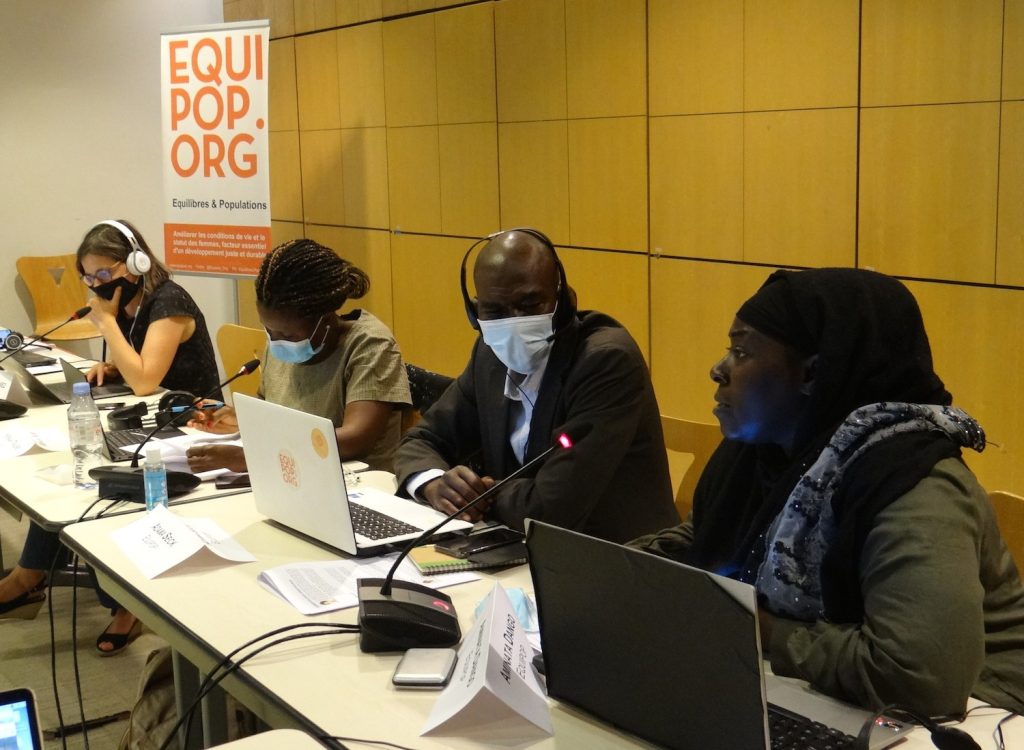
Due to the Covid-19 pandemic, the conference organized on September 15 by the participants in the Let's CHANGE project had to be held mainly online and in person at Paris City Hall with Equipop employees and volunteers.
Entitled "How can we overcome the challenges to end female genital mutilation (FGM) in the European Union (and beyond)?" this conference was interpreted simultaneously into English and French to enable partners from the various countries represented to participate fully.
Coordinated work at the European level for sustainable change
For more than two years, partners from three countries have been participating in this project: TERRE DES FEMMES (TDF; Berlin, Germany), Equipop (Paris, France), Federatie van Somalische Associaties Nederland (FSAN; Amsterdam, Netherlands) and Plan International Deutschland (Plan; Hamburg, Germany). They also work with the European network End FGM (Brussels, Belgium) to prevent and abandon FGM in the European Union and beyond. Their work is based on the theory of change developed jointly by the project partners. The main feature of this approach is the direct participation of multipliers from the communities concerned, mediators, and trainers for change.
Involve all stakeholders in the eradication of FGM
The conference marked the end of the project and provided an opportunity to take stock of the joint work carried out over the past two years (read our articles on Let's CHANGE). After the opening speech by Hélène Bidard, Deputy Mayor of Paris in charge of gender equality and youth, and Aurélie Gal-Régniez, Executive Director of Equipop, Christa Jakobsson, Policy Officer in the European Commission's Gender Equality Unit, presented the EU's strategy to combat violence against girls and women. Next, the project coordinators, Charlotte Weil and Carolin Pranz (TDF), gave an overview of the Let's CHANGE project, the theory of change applied, and the project's results.
The decisive role of mediators
The project's mediators and trainers then shared their experiences and presented their efforts to end FGM. In particular, they highlighted the importance of treating FGM as a global issue. Furthermore, it is essential to involve men and religious leaders in awareness-raising and education efforts. Training and awareness-raising among professionals such as doctors, social workers, and midwives are also essential to support those affected and protect girls at risk.
Europe-wide exchange with stakeholders
Three parallel workshops provided an opportunity for discussion with conference participants. The workshop topics were as follows:
- The role of frontline professionals in ending FGM, as well as the documentation of FGM cases, prosecutions, and the lack of statistics in Europe;
- Care and support services and the challenges of providing comprehensive, systematic support to those affected;
- Community empowerment and how to achieve lasting change.
Assessment and outlook
During an online evaluation of the conference, conference participants were able to express their views on the innovative work of the project and the importance of transnational cooperation. The direct involvement of affected communities is considered a good practice and will also be implemented in future projects.
Sokhna Fall Ba, project coordinator at Equipop, concluded the conference by highlighting the pillars of prevention and abandonment of FGM:
- Raising awareness and consciousness among affected communities and at the institutional level;
- Empowerment and direct participation of affected communities;
- The constant updating of data on MSFs at national and European level;
- The financing, implementation, and evaluation of national plans aimed at eradicating FMD.
Equipop will continue this work in close collaboration with communities in Europe and in the countries of origin to put an end to female genital mutilation.
You can find more information by reading our article on Let’s CHANGE, or by downloading the Let’s CHANGE publication in PDF format.