In a climate where fundamental freedoms are under threat and anti-rights rhetoric and policies are on the rise, training serves as a tool for resistance and empowerment. It is within this framework that Equipop has rolled out its training offerings this year, making education a space for action. Rooted in the participants’ experiences, our training programs create the conditions for in-depth reflection: on oneself, one’s practices, and one’s organization.
By engaging a wide range of actors across different geographic areas, multiple avenues for action are pursued simultaneously. Feminist approaches are conceived here as tools for inventing alternative imaginaries, organizing counter-powers, and fueling the dynamics of social change in the international solidarity sector. Training is a way to create spaces for recharging, restoring meaning to action, and forging alliances.
Spaces for relaxation and respite
The training programs offered by Equipop are designed as “spaces of our own”: places to breathe where we can collectively identify and transform the contexts we navigate. Spaces that care for people as much as for ideas (by giving them the time and space to be questioned and collectively reinvented), which offer a critical perspective to restore meaning to practices.
Inspired by the principles of popular education and feminist approaches, our pedagogy is based on the co-construction of knowledge, the sharing of experiences, experimentation, and reflexivity. It paves the way for non-prescriptive change, starting from where each person stands.
These spaces foster the exchange of perspectives and the emergence of collective intelligence. They also enable the development of a shared framework and tools for critical analysis, making training a lever for empowerment driven by the idea that collective thinking is a resolutely political force. Training also means supporting counter-powers: Equipop thus equips those who, within their organizations, wish to voice alternative perspectives, question power dynamics, and envision alternative futures.
Spaces to challenge authority and take action alongside a diverse group of participants
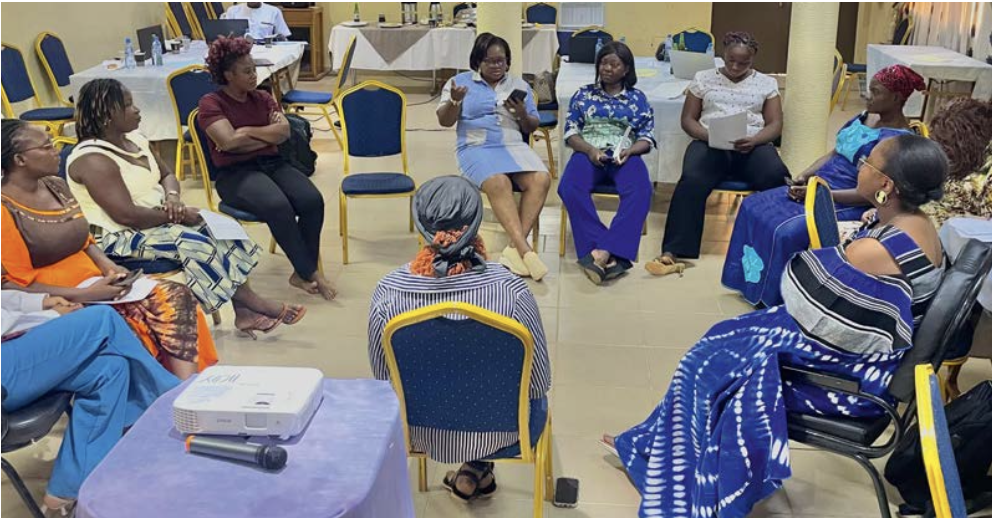
Between July 2024 and June 2025, Equipop organized some 30 training sessions and supported more than 40 different organizations, reaching over 1,000 people across various geographic areas. These initiatives involved a wide range of stakeholders: journalists, students, activists, local governments, technical and financial partners, research institutions, international agencies, and others. This diversity of audiences is important in that it helps break down barriers and foster the exchange of experiences. We have thus strengthened the structure of our training support, both within existing projects and through new collaborations, responding to a growing demand regarding social justice issues. Our work has taken root in diverse settings, affirming that feminist principles can and must permeate wherever power dynamics are at play. Promoting these principles, even in the most institutional settings, reaffirms their political relevance: enabling a redistribution of power in the service of greater equality.
This work has notably taken the form of support for the AFD Group Campus, the training center of the French Development Agency, in the strategic and operational integration of feminist approaches. This support is fully aligned with the direction set by French feminist diplomacy and the Campus’s commitment to making gender equality a cross-cutting priority in its work. Through training for the entire team, we worked to build a shared, reflective, and critical culture centered on power dynamics, structural inequalities, and an understanding of feminist struggles. This work has also been embodied in several of the Campus’s flagship projects—such as the PLAY collective intelligence program, the Mediterranean Talent Academy, and the Social and Inclusive Business Camp—by integrating tools for feminist popular education, intersectional analysis frameworks, and modules on inclusive and political communication. These experiences demonstrate how feminist approaches serve both as resources for rethinking development challenges and as concrete levers for transforming training practices. They thus contribute to making the Campus a space for collective learning, open to the plurality of knowledge, attentive to situated experiences, and a catalyst for transformative change.
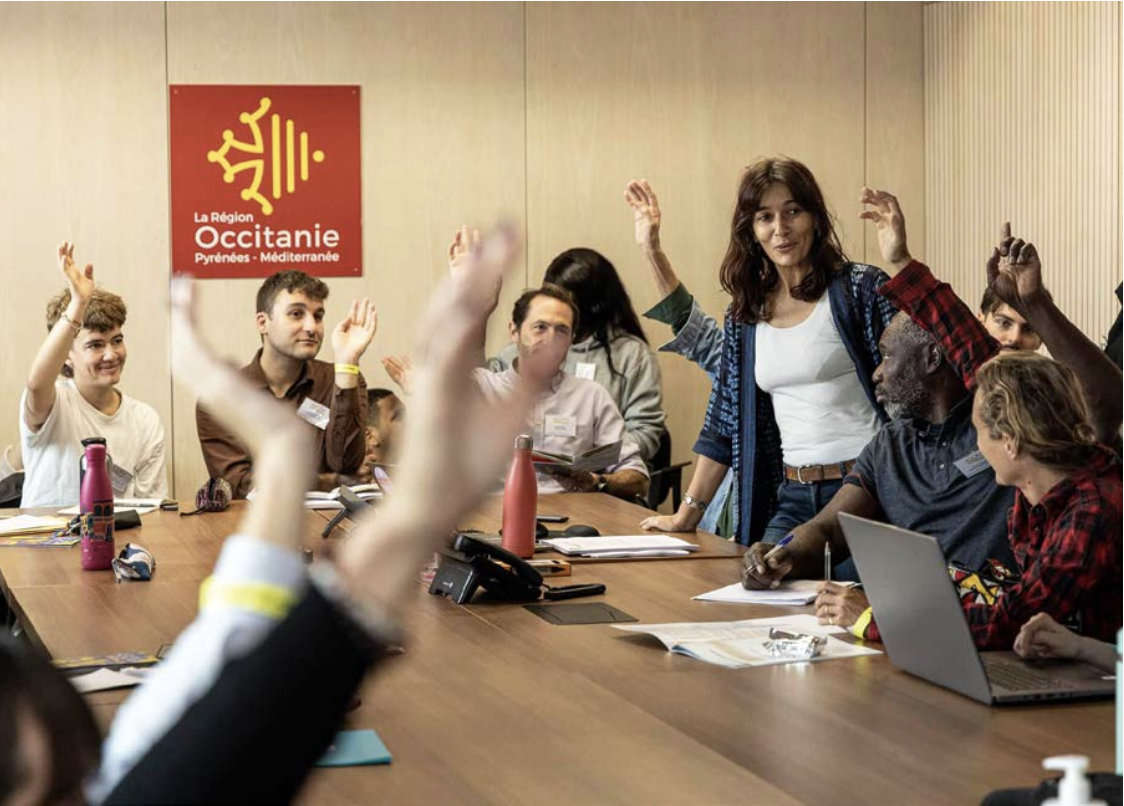
Our collaborations with Regional Multi-Stakeholder Networks (RRMA)—notably RESACOOP, Occitanie Coopération, and Yvelines Coopération—fully illustrate the potential of feminist approaches at the regional level. In these spaces, often characterized by a technical approach and a kind of mandate to “do gender,” the training sessions helped to repoliticize the issues by reconnecting them to on-the-ground realities and power dynamics. They offered local governments and associations the opportunity to examine their practices, their room for maneuver, their methods of building partnerships, and their roles in the international solidarity sector. This approach has strengthened the capacities of small organizations and generated renewed demand for training.
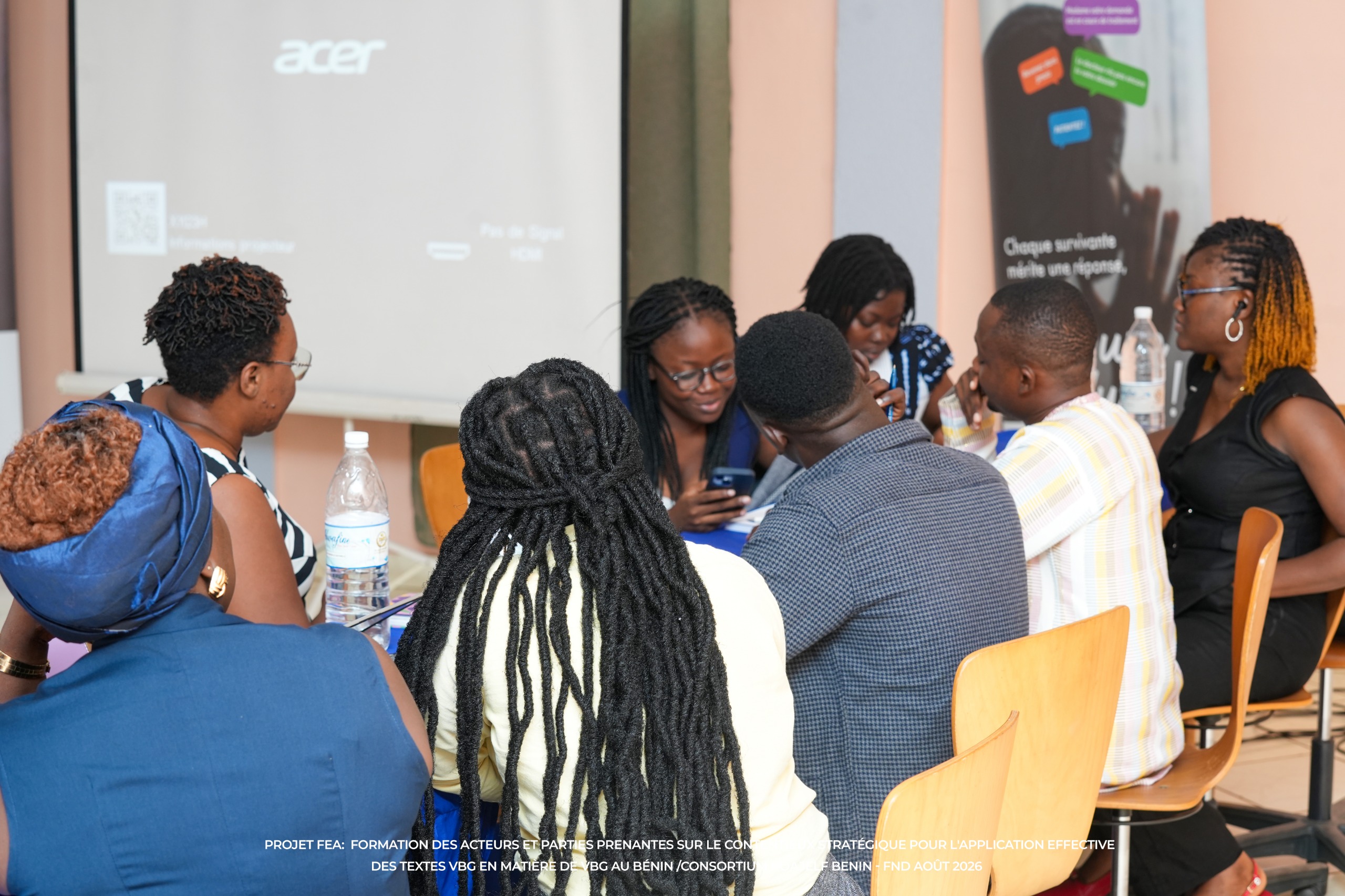
In a context where the media shapes social perceptions, training journalists in feminist approaches has also become a strategic priority. Equipop has made this a cornerstone of its work, engaging with both journalism schools and professionals. Through tailored modules, we support them in analyzing their practices, identifying sexist biases, and crafting more accurate and inclusive narratives. These trainings aim to improve media coverage of gender issues and sexist and sexual violence, as well as to create spaces for peer support, particularly for journalists who are isolated or facing hostile professional environments. The workshop organized in Burkina Faso as part of the Se Défendre project is a good example of this: by addressing narrative biases, feminist storytelling ethics, and the centrality of survivors in violence coverage, it paved the way for the creation of a network of socially conscious journalists. Training journalists today means giving them the tools for a feminist approach to news coverage, amplifying other voices, and fully participating in the struggles for gender justice.
Spaces to strengthen partnerships
Sharing our approaches, spreading feminist knowledge, and drawing on participants’ experiences is a crucial challenge that raises many questions for our future collaborations: How can we (re)think the dissemination of this knowledge from a more inclusive perspective? How can we engage in dialogue with stakeholders who are less involved in these issues? Create spaces for connection and strategic alignment among actors who do not always meet but who share a common desire for transformation and equality? Reach new audiences? Enhance the quality of our offerings and expand access to our training programs? With this in mind, Equipop will begin the process of obtaining QUALIOPI certification in 2025 to strengthen the structure of its offerings, enable funding through OPCOs (organizations supporting vocational training in France), and facilitate access to training, particularly for small associations.
But this restructuring effort is not solely aimed at professionalizing our training activities; it also helps us better recognize the transformative impact of training, including for those who lead it. Designing and delivering these training programs is, in itself, a tool for empowerment—a source of fresh insights, strategic alignment, and perspective—that enriches our practices and commitments.
We must learn to better observe, document, and highlight these internal effects, which are often overlooked but are fundamental to the vitality of our initiatives and our own capacity for action. These “spaces of our own” for learning are part of an effort to anchor democracy in the active and critical participation of everyone by encouraging open discussion, debate, and collective analysis of the current issues facing our societies. We are convinced that democracies cannot exist without a genuine capacity on the part of individuals and collectives to take ownership of political issues and to engage in order to influence the course of events. The alliances made possible by our training programs thus offer unprecedented spaces for thinking about and engaging in politics, collectively and in new ways.
Educational approaches that resonate with our feminist principles of action
Equipop’s educational approaches are grounded in a few key feminist principles: they are political, context-specific, and designed to contribute to collective processes of transformation, while prioritizing the well-being of individuals.
- Equipping without dictating: our training programs are grounded in the participants’ practices and questions. The goal is not to provide ready-made solutions, but to create the conditions for a collective journey, by fostering empowerment—that is, the realization of one’s own capacity to take action.
“I realized that small steps can be taken right now, without waiting for sweeping change. I’m leaving with a positive energy and the hope that everyone will take this training. The facilitator listens with empathy, puts herself in everyone’s shoes, and never judges.”
(training on equitable partnerships, IRD, France)
- Creating the conditions for collective analysis: our training programs facilitate the joint construction of meaning and the sharing of experiences. They promote the generation of knowledge rooted in real-world experiences.
- Working with, not for: participants are recognized as full partners. This approach reflects our commitment to examining power dynamics and avoiding any form of domination in our educational relationships, as well as in our partnerships.
- Utilizing participatory methods: tools drawn from community education (such as community mapping, photolanguage, and intentional single-sex groups) encourage people to speak up, step back and think differently, broaden their perspectives, and strengthen their ability to analyze and act independently. They enable the practical implementation of an intersectional approach by creating spaces where diverse identities are heard.
“These sessions helped me develop valuable skills for assessing project progress (…). The facilitation methodology made it easier for me to understand the various topics covered, particularly the concept of collective intelligence, through practical techniques and role-playing exercises. I also appreciated the opportunity to share experiences based on our own lived experiences.”
(empowerment training, Sansas project, Senegal)
- Grounding our work in the practices of those we train: by bringing together on-the-ground experiences, experiential knowledge, and more theoretical insights, we develop context-specific analyses. This helps to institutionalize feminist values in contexts that are sometimes not conducive to their expression.
- Working collectively: we connect committed activists who, together, can make their voices heard. This reflects our commitment to supporting movements for equality and building alliances across our various areas of work.
“This training strengthens team cohesion. (…) Regardless of participants’ initial level of awareness, everyone leaves with the tools to question, understand, and take action.”
(training on feminist approaches, AFD campus, France)
- Cultivating ongoing self-reflection: we constantly question our practices to ensure that our feminist values are reflected in our teaching approaches and in all our actions.
Resource Alert: A Report on Rethinking International Solidarity Policies and the Fight Against Global Inequality from a Feminist Perspective
In the report “Rethinking Policies on International Solidarity and the Fight Against Global Inequality from a Feminist Perspective,” Equipop offers a critical analysis of the role that feminist approaches should play in international solidarity (IS).
Often caught up in the urgency to act and faced with the scale of inequalities that permeate the patriarchal, postcolonial, and capitalist world in which we live, our organizations rarely have the time needed to take a critical look at their practices. By acknowledging the pitfalls our sector can fall into, while remaining aware of the progress made and the path still ahead for an organization like Equipop, we wish to collectively contribute to the transformation of our sector. In the current context, one of the major challenges is to formulate strong and transformative alternatives, while continuing to speak in a way that is both audible and mobilizing for the general public. This special issue brings together feminist insights—drawn from both activist circles and research—with the practices of the information society sector. It invites self-reflection, the recognition of internalized biases that shape us, and the visibility of ideas and tools derived from feminist and decolonial approaches. This issue does not claim to be exhaustive; it opens up avenues, proposes tools, and invites us to continue the work of strengthening social innovation.
To learn more, we invite you to explore the Equipop resource center. It complements the many platforms that bring together resources on feminist thinking and action in the areas of foreign policy and international solidarity. In a tense political climate, marked by significant cuts to official development assistance and where anti-rights movements directly attack the very essence of these sectors, there is a growing need for critical and solidarity-based spaces to reflect on the alliances to be built, the narratives to be transformed, and the practices to be collectively renewed. It offers support to those in associations, institutions, or the media who seek to re-examine their commitments.