Project: “Toward Feminist Peace and Security Agendas—West African and Sahelian Women United for Peace” – Consortium: EQUIPOP – DIAKONIA – FAD – Gorée Institute (GORIN) | Funding: French Development Agency (AFD) – N’Djamena, Chad | Hôtel Persévérance | June 2026
A political and feminist emergency
In the Sahel and West Africa, crises and conflicts do not affect everyone in the same way. Women and young people bear the brunt of gender-based and sexual violence, exclusion from decision-making circles, and economic insecurity. And yet, they are also the ones who keep communities going. They are the ones who negotiate, rebuild, and strengthen their communities—often without recognition, resources, or visibility.
It is this contradiction that the regional project“Toward Feminist Peace and Security Agendas—West African and Sahelian Women United for Peace” aims to address. Led by the consortium EQUIPOP – DIAKONIA SWEDEN – Femmes Actions et Développement – Gorée Institute, with support from AFD through the Support Fund for Feminist Organizations (FSOF), the project operates in six countries, including Chad, to empower peace actors with a rare goal: to move beyond the institutional interpretation of Resolutions 1325 and 2250 and instead approach them from a feminist perspective.
Building Feminist Capacity for Transformative Peace in Chad
It's not enough to simply know the texts. You have to live them.
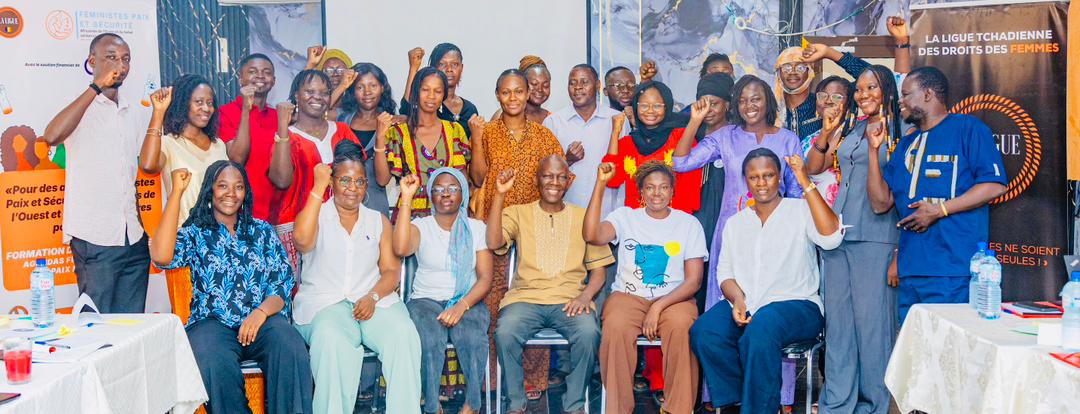
It was this conviction that brought together, from June 1 to 5, 2026, in N’Djamena, for a training-of-trainers workshop on feminist approaches and advocacy, 30 participants—women and young activists, leaders of local CSOs [(Chadian League for Women’s Rights (LTDF), Center for Assistance to Victims of Violence (MAVI), Salama Peace Initiative, Youth Network for Development and Leadership in Chad (RJDLT), Women Success, and Association of Women Lawyers of Chad (AFJT)], and gender experts from West Africa speaking on issues related to women’s, youth, peace, and security agendas.
Who are we, and where are we speaking from?
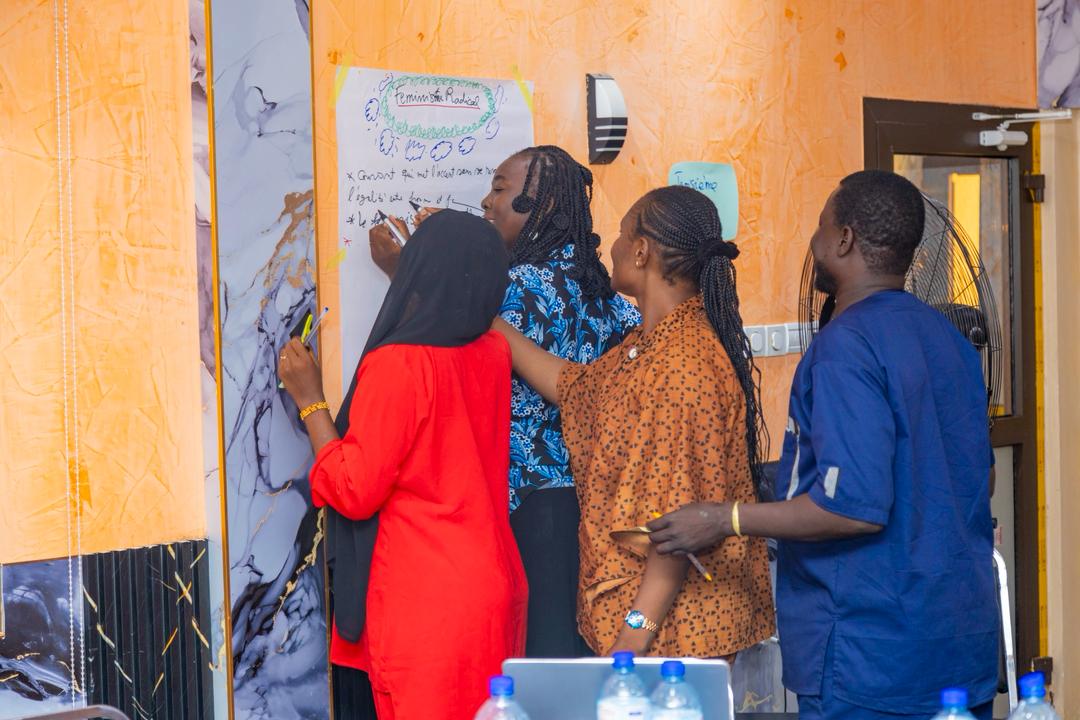
Because feminism does not begin in texts, but in bodies, experiences, scars, and acts of resistance, a review of the international, regional, national, and community-level legal and institutional frameworks that anchor the FJPS agendas in the Chadian reality has revealed both their strengths and their limitations.
By highlighting the connections between individual life stories, structural issues, and activist engagement; by gaining a better understanding of concepts such as intersectionality, reflexivity, and positionality; and by dissecting the title of Carol Hanisch’s essay, “The Personal Is Political,” our collectiveawareness that power relations and systems of oppression—in all their complexity—accumulate, intersect, and reinforce one another has grown.
By revisiting feminist theories that resonate with names, stories, and roots that are also part of each of our own lives, we were able to reflect together on the causes, origins, and effects of power relations, gender norms, and stereotypes, as well as the place of women and young people in the private and public spheres of our societies. To label the demand for equality in rights, opportunities, and status as “neo-colonialism” is to deny our own histories of feminist and decolonial struggles.
Stand up, speak out, and persuade others to bring about change
The question arose as to how to better ensure that the voices of women and young people are heard where decisions are made.
The participants’ discussions and work on the techniques, tools, and principles of SMART, inclusive, and non-harmful advocacy—incorporating approaches based on human rights, gender equality, and feminism—highlighted the indispensable role of women’s and youth CSOs as strategic agents of change.
In addition to deepening mutual understanding, sharing experiences and practices, and jointly developing advocacy strategies, the workshop’s participatory and inclusive methodology highlighted collective intelligence, all forms of knowledge—including endogenous knowledge—and networking. This approach is consistent with feminism itself, which recognizes the sum of lived experiences as a legitimate and indispensable source of situated knowledge.
The workshop concluded with the presentation of certificates, the distribution of the training materials used, and a solemn pledge by each participant to share this information with their respective partners, organizations, and networks.
From Theory to Action: A More Lasting and Inclusive Peace Is Possible
Starting over—or rather, “spreading out” once again
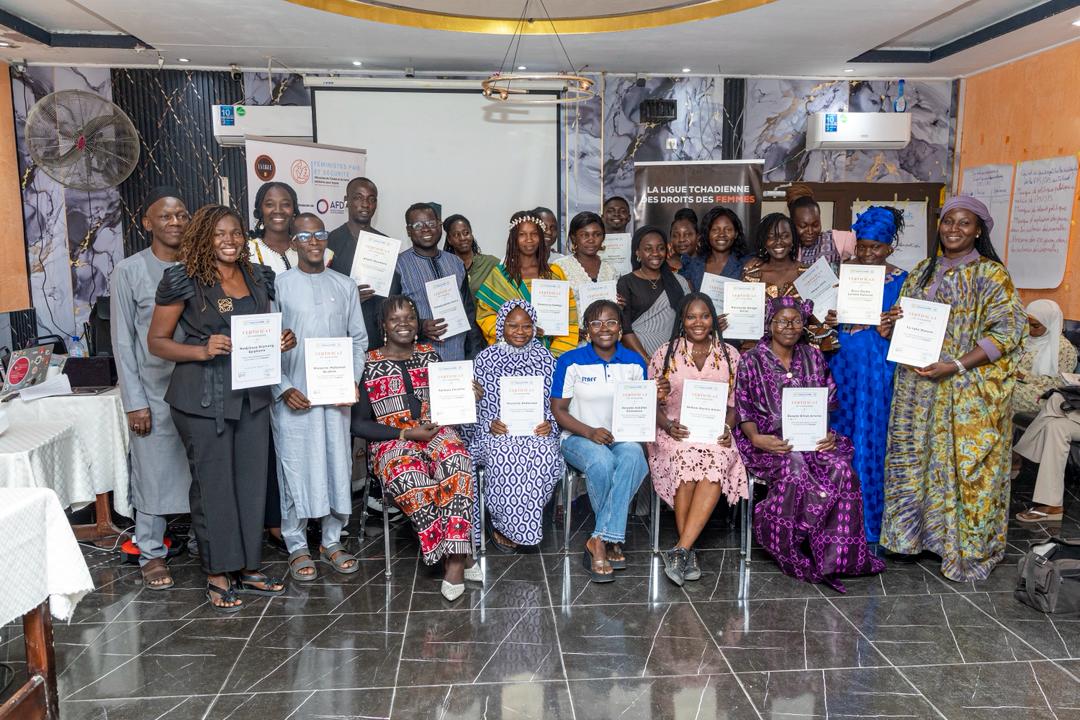
For participants, feminist approaches are no longer an abstract ideology and/or one imported from the West, but a tool for analyzing systems of oppression (patriarchy, colonialism, capitalism, etc.) and their concrete effects on people’s lives, particularly those of the most vulnerable and marginalized, such as women and young people. “By adopting a feminist perspective, we jointly develop intervention and transformation strategies that are more relevant, impactful, inclusive, and sustainable—particularly in the context of our advocacy efforts and for all our projects in general.”
A different kind of peace is possible, and THEY are already helping to make it happen
Twenty-five years after Resolution 1325, and ten years after Resolution 2250, the obstacles remain very real: a lack of political prioritization, insufficient funding, sociocultural barriers, and the persistence—or even escalation—of crises, conflicts, and gender-based and sexual violence. But this five-day workshop in N’Djamena served as a reminder: there is a vibrant, embodied African feminist thought that rejects imposed patriarchal definitions of peace and security. It calls for a real transformation of inequalities.
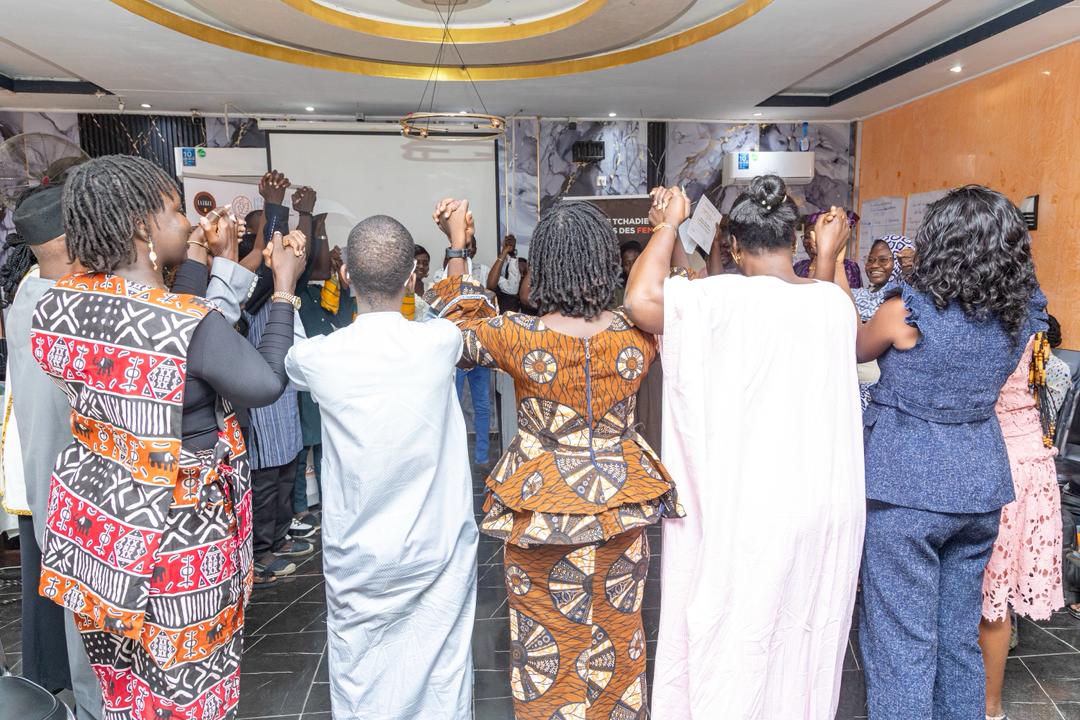
A feminist, decolonial, and African peace cannot be decreed in the corridors of the United Nations or solely through national action plans. It is built in our cities and villages, in our ministries and municipalities, in our schools and homes—here, now, and collectively with the women and young people who are no longer waiting for permission but are rising up, taking action, and demanding change!