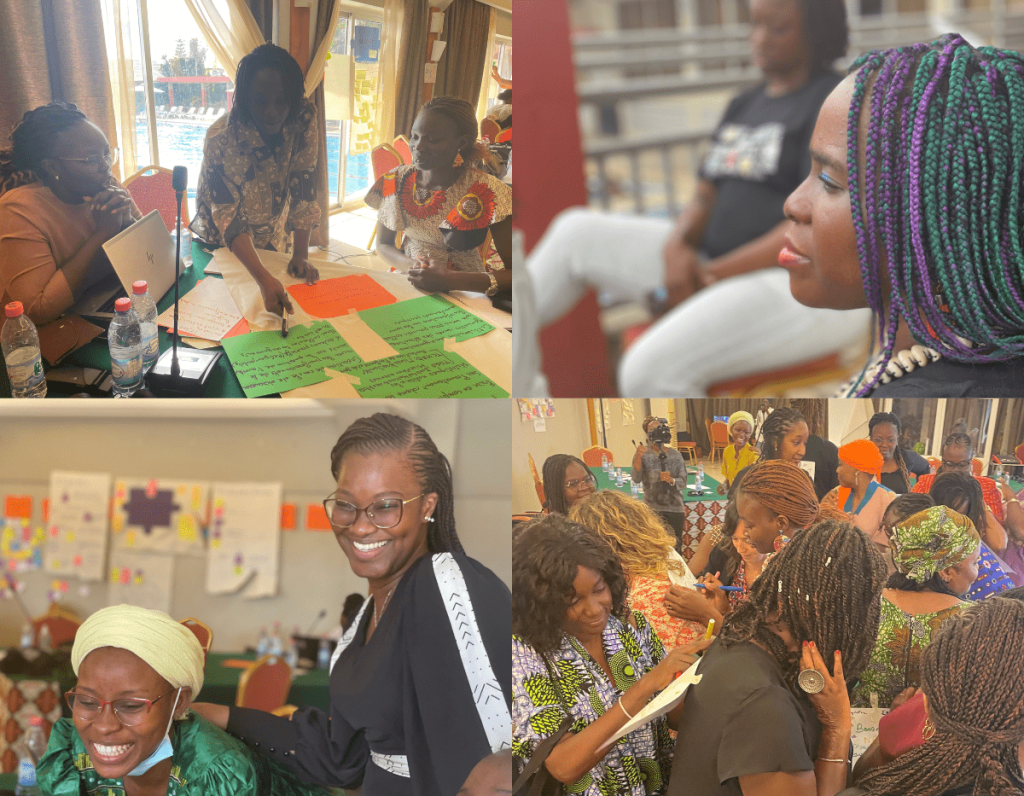
“This 2023 Feminist Agora is an opportunity to strengthen our ties, exchange ideas, and continue to build a better future for all women together.” Mariamar Conon (Benin) – A look back at the week that brought together 65 feminist activists in Cotonou last October!
After a first edition focused on resistance to anti-rights movements, the steering committee, composed of ROAJELF Benin, IPBF (Burkina Faso), Femin-in (Burkina Faso), the Ivorian League, the Club des Jeunes Filles Leaders de Guinée (Guinea), GMC (Mali), Voix de Femmes (Mauritania), the Niger Young Women Leaders Cell, ROAJELF Senegal, YWA (Senegal), and the Network of Young Feminists of West Africa, as well as Equipop, worked to launch the second edition of the Feminist Agora. This time, 65 feminist activists gathered in Cotonou, Benin, from October 3 to 7.
After a busy year, getting together with feminist activists
Since Agora 2022, participants in the first edition have faced a busy news cycle and numerous battles to fight for women's rights. For a year, they continued to exchange ideas and build towards their common goals, as they did during the Incubation lab of the regional and political mobilization campaign or at the international conference Women DeliverThey had to come together in response to several cases of cyberbullying against activists, organize and support each other in changing security and political contexts, and have difficult and important conversations within the movement. This new Agora was therefore an opportunity to welcome new energy and restart the discussions that had begun a year earlier, while continuing to forge links with activists from other spaces.
What political visions for our movements?
The first theme day gave Agora participants the chance to think about how they see and think about feminist futures. The first panel, "Thinking about feminist societies: where do we start?", brought together several activists to reflect on how, in patriarchal, racist, capitalist contexts, feminist movements are eminently political. Moving beyond the emergency, questioning the systems of domination in which feminists operate, and mobilizing emancipatory feminist concepts and thinkers.
“How do we build strategies that aren't emergency strategies? Emergency is one of the tools patriarchy uses to prevent us from moving forward. How do we create spaces where these visions and imaginations can evolve and change?” Laurence Meyer
The participants came together to reflect on and articulate guiding principles and values such as intersectionality, anti-capitalism, patriarchy, sisterhood, decoloniality, and collective care. Several feminist thinkers were called upon to support these reflections on the challenges these concepts pose for West African feminists and the actions to be taken.
"True political solidarity is learning to fight against oppressions that you yourself do not suffer." bell hooks
Taking our safety and well-being seriously
During the second thematic day of the Agora, feminists discussed the impact of crises and threats to feminists on their struggles, their organizations, and their mental and physical health. Discussion groups were organized, providing a space for feminists to share and listen to each other about the difficulties they encounter in their activism, allowing everyone to speak freely and share their experiences, but also to give each other courage and seek solutions collectively.
“The Agora is also a way of fully embracing sisterhood; it is sisterhood in action.” Souwaiba Ibrahim (Niger)
In response to current events in the Sahel, a round table brought together experts from several geographical areas to discuss the impact of crises on feminist activism and draw inspiration from the experiences of feminists in Haiti, Mali, and Niger. Following these exchanges of experiences, action directories were created by feminists to combat the specific risks to which they are exposed as women and as activists.
Fighting for the right of women and girls to control their own bodies
Abortion, and more specifically feminist approaches to abortion rights, were the focus of the Agora's final theme day. Twenty years after the adoption of the Maputo Protocol, African feminists attending the Agora were able to take stock of abortion legislation in their various countries and then collectively seek solutions to the main obstacles threatening access to safe abortion for all. Faced with anti-rights movements, socio-cultural constraints, a lack of reliable data and access to quality information, and a lack of political will on the part of certain governments, feminists from different countries compared and reflected on effective strategies.
“My body, my choice! We are talking about bodily autonomy, the right to make decisions about my body. I have the right to information, and I am the one who decides whether or not to carry a pregnancy to term.” Salématou Balde (Ivory Coast)
Finally, how can we not mention the recent feminist victories in Benin on the issue of abortion! A panel discussion on the shared experiences of Benin and Tunisia allowed Agora participants to look back on the feminist movements that led to legislation in favor of safe abortion. Feminist experts on the issue in both countries provided their analysis of the political and societal factors that enabled these legislative advances, as well as the obstacles that continue to hinder women in their countries from accessing this fundamental right.
“We need to make women aware that going to the hospital does not mean that their bodies no longer belong to them. It does not mean that healthcare professionals make decisions for them. Patients have the right to ask for information, give their consent, and participate in their own care.” Nafissate Hounkpatin (Benin)
Taking stock and thinking about the future
During the Agora, feminists used several spaces to present their positions and demands with one voice to the technical and financial partners present in Benin. One of the priorities set by the participants is to follow up on these exchanges and continue their social and political mobilization efforts, whether through the coordinated participation of feminists in upcoming regional and international meetings or through the implementation of their regional social and political mobilization campaign on gender-based and sexual violence. Another priority is to collectively reflect on the future of the Agora as a collective space for mutual learning and organization, and on the forms it could take. One thing is certain: this second edition of the Feminist Agora continued to forge and strengthen the bonds created during the first edition, paving the way for an active and dynamic regional sisterhood!