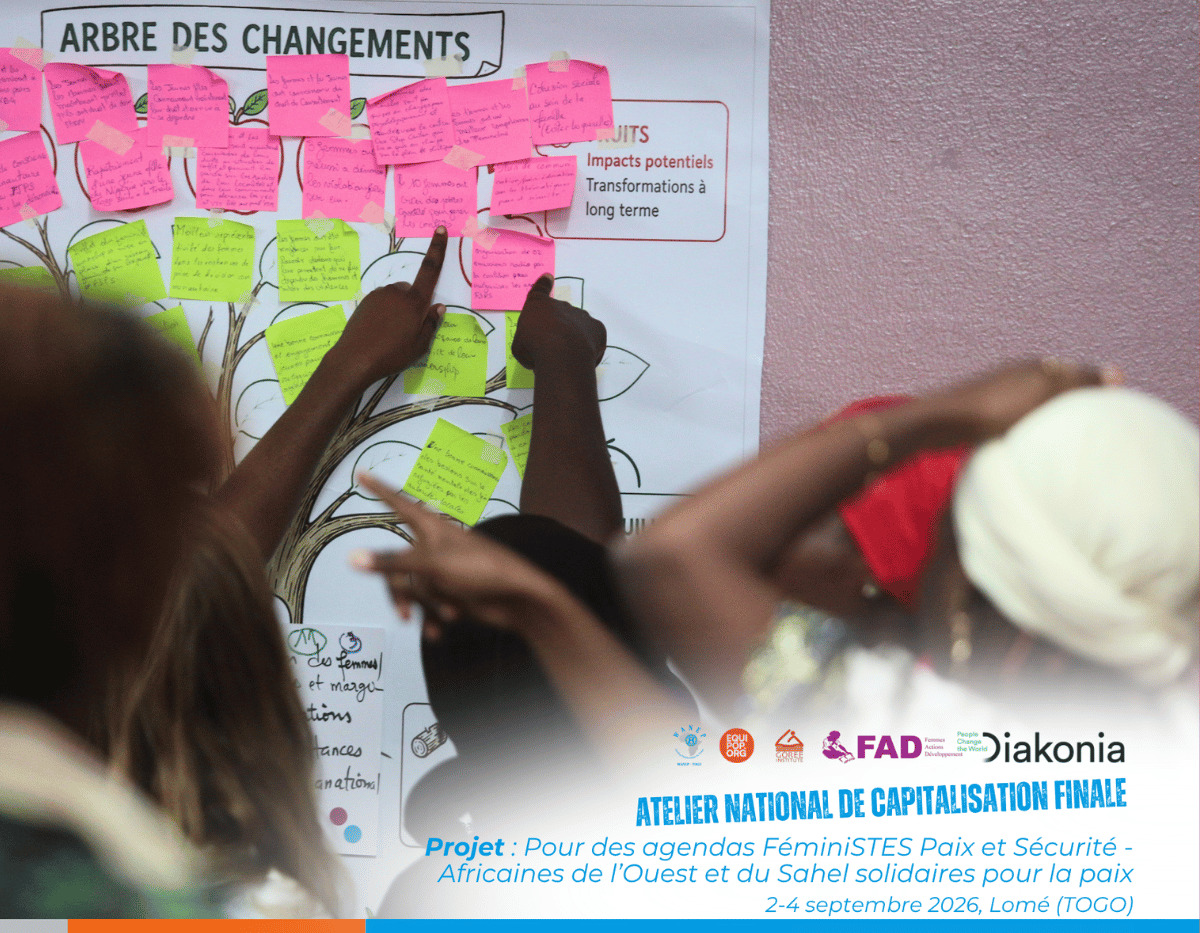
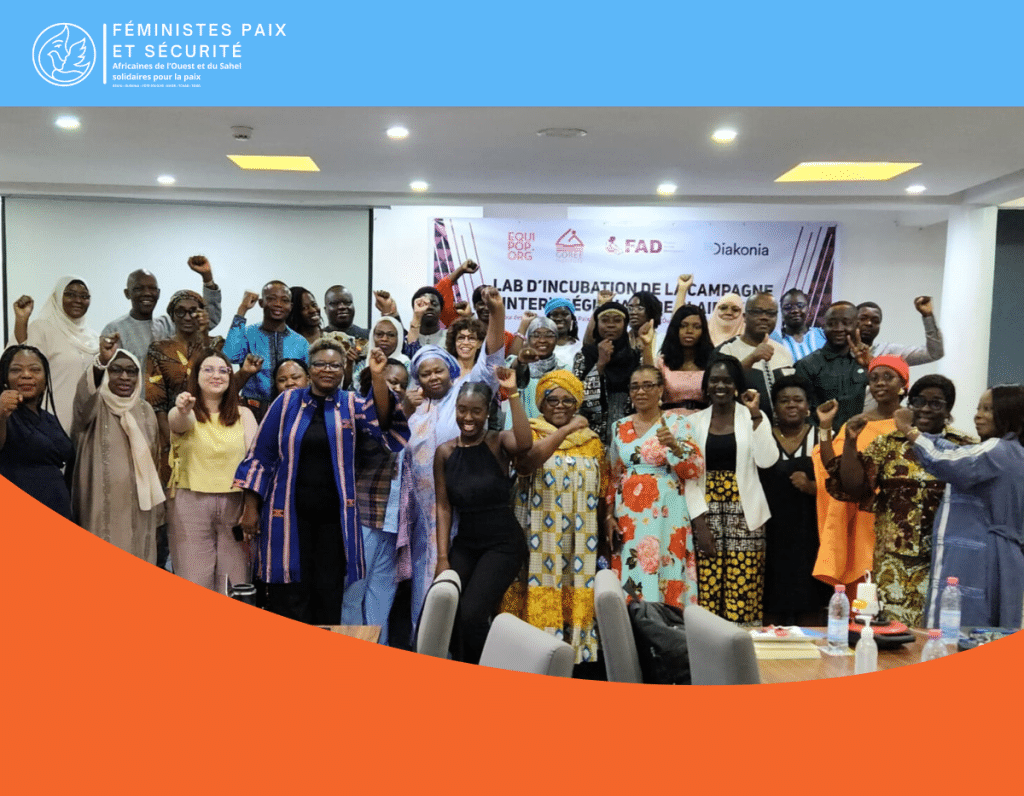
What if we could imagine together what an ambitious, collective campaign to transform peace and security policies in West Africa might look like? This was the challenge taken up by some thirty participants from Benin, Burkina Faso, Côte d'Ivoire, Niger, Senegal, Togo and Chad, as well as Cameroon, the Democratic Republic of Congo and Algeria. From June 30 to July 02, an Incubation Lab was held in Cotonou, where ideas were exchanged to sketch out the contours of a regional campaign around the Women, Peace and Security (WPS) and Youth, Peace and Security (YPS) agendas.
Re-anchoring FJPS agendas in local struggles
The Women, Peace and Security and Youth, Peace and Security agendas, which have been promoted by the United Nations since 2000 and 2015 respectively, are often perceived as technocratic tools that are far removed from the daily struggles of women and young people in crisis contexts. In Cotonou, the stories anchored these references in concrete realities: sexual and gender-based violence (SGBV)forced displacement, structural inequalities, but also resistance, mutual aid and political intelligence. These three days provided a space for analysis, projection and strategic co-construction. While the specific features of each country are unique, common findings emerge: lack of reliable data, ignorance of laws, failure to popularize national action plans, low budget allocations, and invisibilization of the violence experienced by women and young people in conflict zones. Participants stressed the widespread lack of awareness of the NAPs 1325/2250, their low level of appropriation by the population, and the lack of resources for their implementation, for example. In several countries, laws exist but are neither popularized nor applied, and violence remains invisible due to a lack of reliable data. The voices of young people and women, especially in times of crisis, continue to be marginalized in decision-making processes. Against this backdrop, the Lab reaffirmed a priority common to all the countries gathered: to re-anchor the FJPS agendas in the battles being waged on the ground. They must go beyond the stage of abstract UN tools, to become real levers of political and social transformation.
Multiple realities, a common goal
In the face of these challenges, participants expressed a strong desire to work together, to think beyond borders and to carry a collective political voice. It's possible to imagine a regional advocacy campaign together. Using a shared analysis grid, each country presented its issues, struggles and proposals. Those present at the Lab defined the first lines of a regional campaign based on the experiences and stories of local communities, addressing the shortcomings of public security policies, demanding budgets, data and an effective place for women and young people in the decision-making process. an effective place for women and young people in decision-making processes and change the dominant narratives on peace and security. In the course of the discussions, participants came up with bold proposals, driven by a common goal: to put an end to sexual and gender-based violence through concrete, strategic action. Concrete ideas emerged: a media campaign to demand a special fund for victims of SGBV drew support. Some suggested organizing a regional caravan to mobilize communities and get them to sign a petition. Others imagined an advocacy documentary addressed to the political and judicial authorities. A targeted digital campaign, the creation of integrated centers, or a hybrid approach through the Radar Peace & Inclusion project were also discussed. Multi-stakeholder dialogue, involving CSOs, community leaders, partners and governments, was seen as a complementary strategic lever.