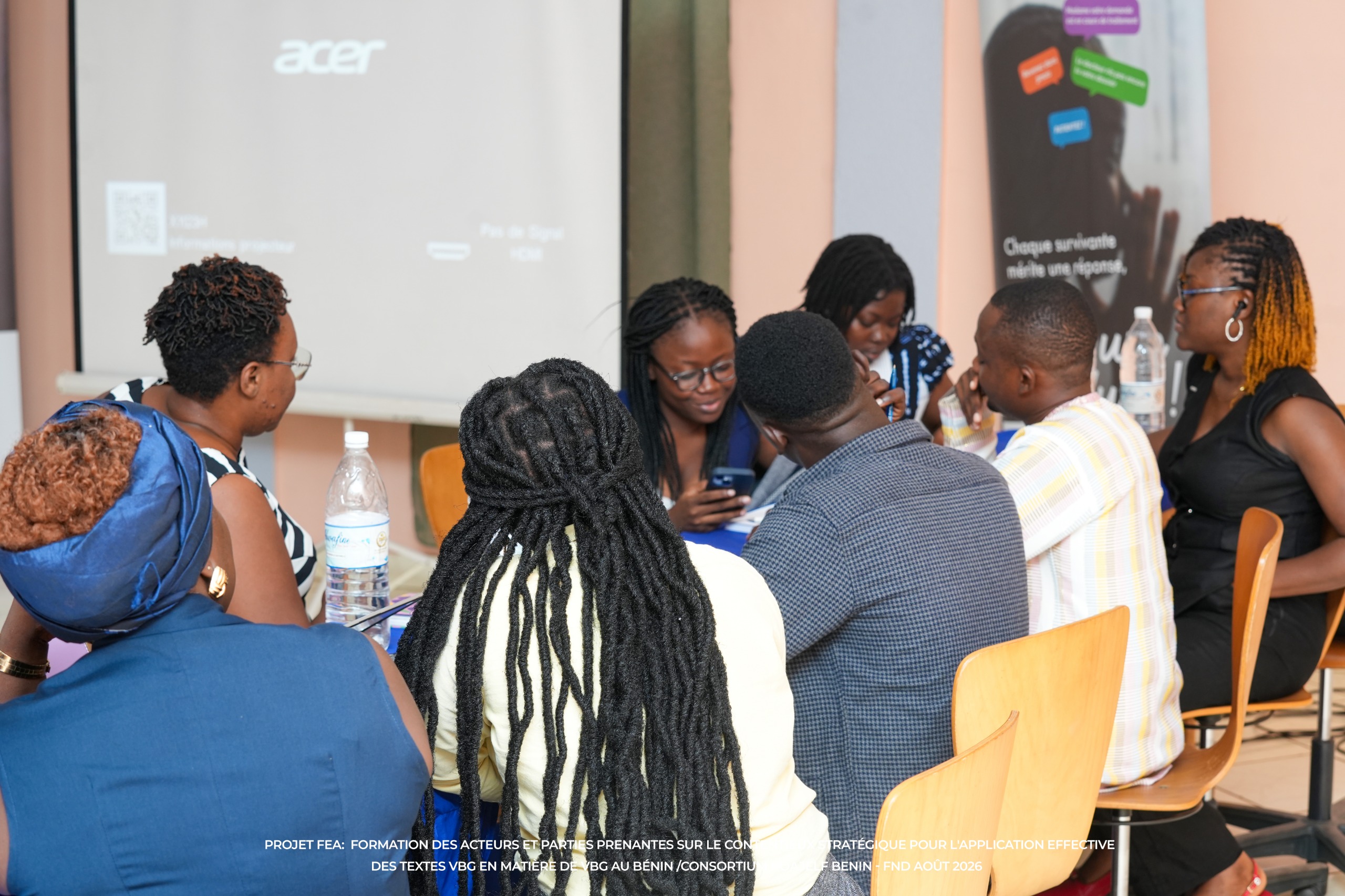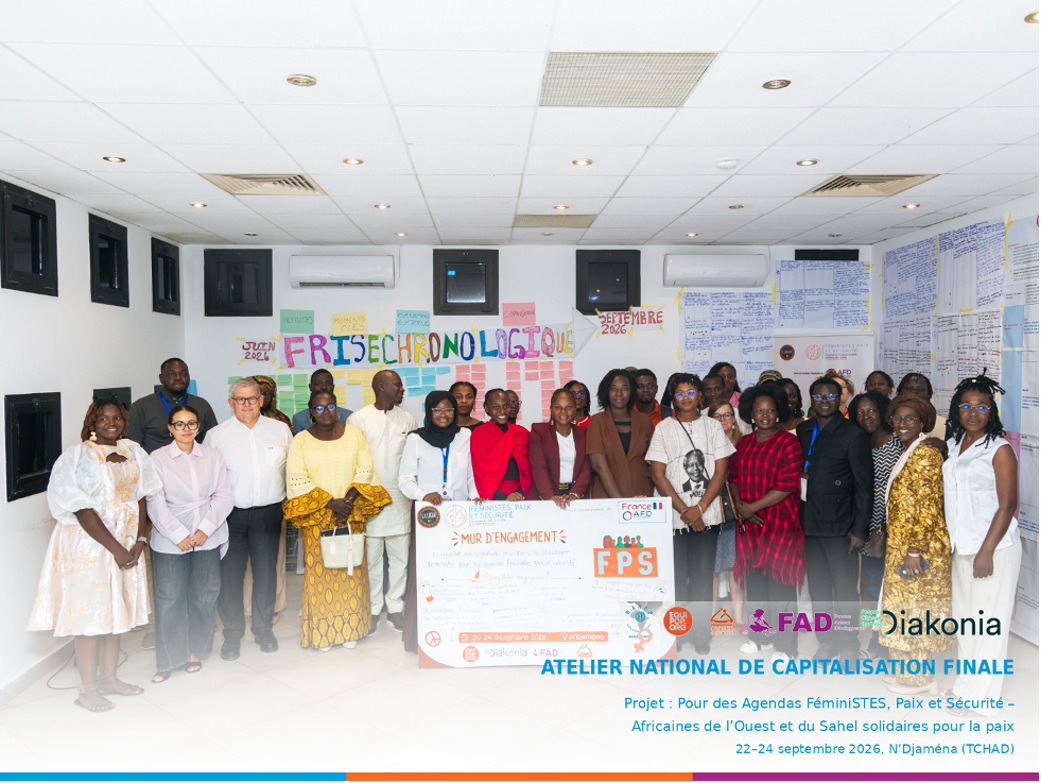

Equipop participated in the 69thᵉ session of the United Nations Commission on the Status of Women (CSW69), which took place from March 10 to 21, 2025, in New York. It was an iconic moment during which feminists made sure their voices were heard. CSW69 also provided an opportunity for Equipop to co-organize a side event on March 17 on the theme: "Investing in the leadership of young women: a path to peace and security in Africa."
It is impossible to ignore the current backlash against women's rights at all levels. But feminists are not giving up. At the 69th session of the United Nations Commission on the Status of Women, they reiterated that setbacks are not an option. This 69th session was a strategic moment: it provided an opportunity to take stock of the Beijing Declaration and Platform for Action, which celebrates its 30th anniversary in September. This assessment was necessary, given the real progress made and the persistent resistance encountered.
2025 also marks major anniversaries for the UN Peace and Security agendas: the 25th anniversary of Resolution 1325 (Women, Peace, and Security) on October 31, and the 10th anniversary of Resolution 2250 (Youth, Peace, and Security) on December 9. These dates should serve as levers to demand ambitious and transformative implementation.
It was in this spirit that Equipop co-organized a side event on March 17 entitled "Investing in Young Women's Leadership: A Pathway to Peace and Security in Africa". The goal was to amplify the voices of several young women leaders**, highlight their initiatives on the ground that advance these agendas, and discuss the challenges and opportunities for their meaningful inclusion in peace and security policies. The panel brought together feminist organizations such as Sisters 4 Peace Uganda, Young Women Leaders for Peace, Salama Peace Institute Chad, Canadian Coalition on the WPS Agenda, and Women Lead Africa. ….
Let's revisit these exchanges with Simone Mbodé Diouf, Young Ambassador for Peace of the African Union, who initiated the event.
Young women at the heart of peace and security: why align the FPS and JPS agendas?
Conflicts do not affect women and young people in the same way as the rest of the population. Yet these two groups remain largely underrepresented in peace negotiations and decision-making processes. And within these groups themselves, young women face double exclusion: too young to be considered in gender policies, too old to be fully integrated into youth initiatives.
“Aligning the FPS and JPS agendas is essential for an intersectional and inclusive approach," explains Simone Mbodé Diouf. "Young women suffer double exclusion because of their age and gender. Yet their inclusion is not an option, but a sine qua non for lasting peace."
She emphasizes that this alignment would allow for greater recognition of the specific realities of young women, who, although often on the front lines of crises, are rarely taken into account in the implementation of public policies. "They bring innovative perspectives that are ignored in traditional governance spaces. For example, they can propose solutions adapted to climate change or gender-based violence, drawing on their detailed knowledge of local realities."
Investing more in young women as actors in peace processes?
While young women have proven their key role in conflict mediation and prevention, they still struggle to obtain recognition and resources commensurate with their commitment. “Investing in young women means investing in transformative and innovative solutions rooted in local realities," insists Simone Mbodé Diouf.
Beyond military institutional dynamics, she advocates for direct access to funding for initiatives led by young women, which are currently largely underfunded. "Too often, money is captured by large organizations, while those working on the ground on a daily basis do not have the means to act on a large scale."
But investment must not be limited to funding. "We must also guarantee them real access to decision-making spaces. We must train young women in leadership through mentoring and equitable, win-win partnerships, while ensuring their access to the spheres where decisions are made."
Bringing the FPS and JPS agendas to life in the field
One of the major challenges of these agendas is their adoption at the local and community level, far from the institutional and elitist circles of capital cities and their National Action Plans (NAPs). To prevent them from remaining mere theoretical frameworks, Simone Mbodé Diouf recommends building on existing community dynamics.
“In certain provinces of North and South Kivu in the DRC, young women have used forum theater to raise awareness about issues of participation and protection. By using local languages and accessible formats, they have succeeded where institutional campaigns have failed.”
She also emphasizes the involvement of traditional and religious leaders, who are often perceived as obstacles when they could become strategic allies. “Rather than seeing them as obstacles, we need to include them from the outset so that they can carry these messages within their communities."
What strategies should be adopted in response to the worsening security situation in Africa?
As conflicts intensify on the continent, the need for effective implementation of the FPS and JPS agendas is becoming more urgent. Simone Mbodé Diouf identifies several priorities that emerged from the discussions on March 17:
- Strengthen protection mechanisms for young women in conflict situations by ensuring their access to justice and basic services.
- Provide dedicated funding for local initiatives led by young women, particularly in community mediator networks.
- Include a minimum quota of young women in peace processes and decision-making bodies. "30% of young women in mediation should no longer be a distant goal, but a reality."
- Support better collaboration with regional institutions such as the African Union and ECOWAS to harmonize policies, further promote relevant legal instruments such as the continental JPS framework, and support existing initiatives.
2025: From recognition to action
Young women are not asking to be included in peace and security processes; they are already actively participating in them. But without resources, access to decision-making spaces, and recognition, their impact remains limited.
“We can no longer be satisfied with speeches," concludes Simone Mbodé Diouf. "We need concrete action, accessible funding, and a real commitment from institutions. Young women are not beneficiaries of peace policies, they are the architects. It is time to recognize them as such.”
With the anniversaries of Resolutions 1325 and 2250, 2025 must mark a turning point: that of the genuine inclusion of young women in peacebuilding.
About the panelists:
Simone Mbodé Diouf, Young Ambassador for Peace of the African Union, co-founder of the Association for the Promotion of Leadership among Young Women in Senegal (APELJFF)
Nakabira Nashiba, co-founder and executive director of Sisters 4 Peace Uganda and African Union Youth Ambassador for Peace, East Africa
Esther Atosha, young dynamic leader and peace advocate, Coordinator of Young Women Leaders for Peace, South Kivu, Democratic Republic of Congo
Josiane Djikoloum Darwato, co-founder of Salama Peace Institute Chad and co-chair of the Wise Youth Network
Katrina Leclerc, PhD candidate researching synergies between the FPS and JPS agendas, co-founder and advisor to the Canadian Coalition on the JPS Agenda.
Mpule Kgetsi,co-founder and executive director of Women Lead Africa and African Union Youth Ambassador for Peace, Southern Africa