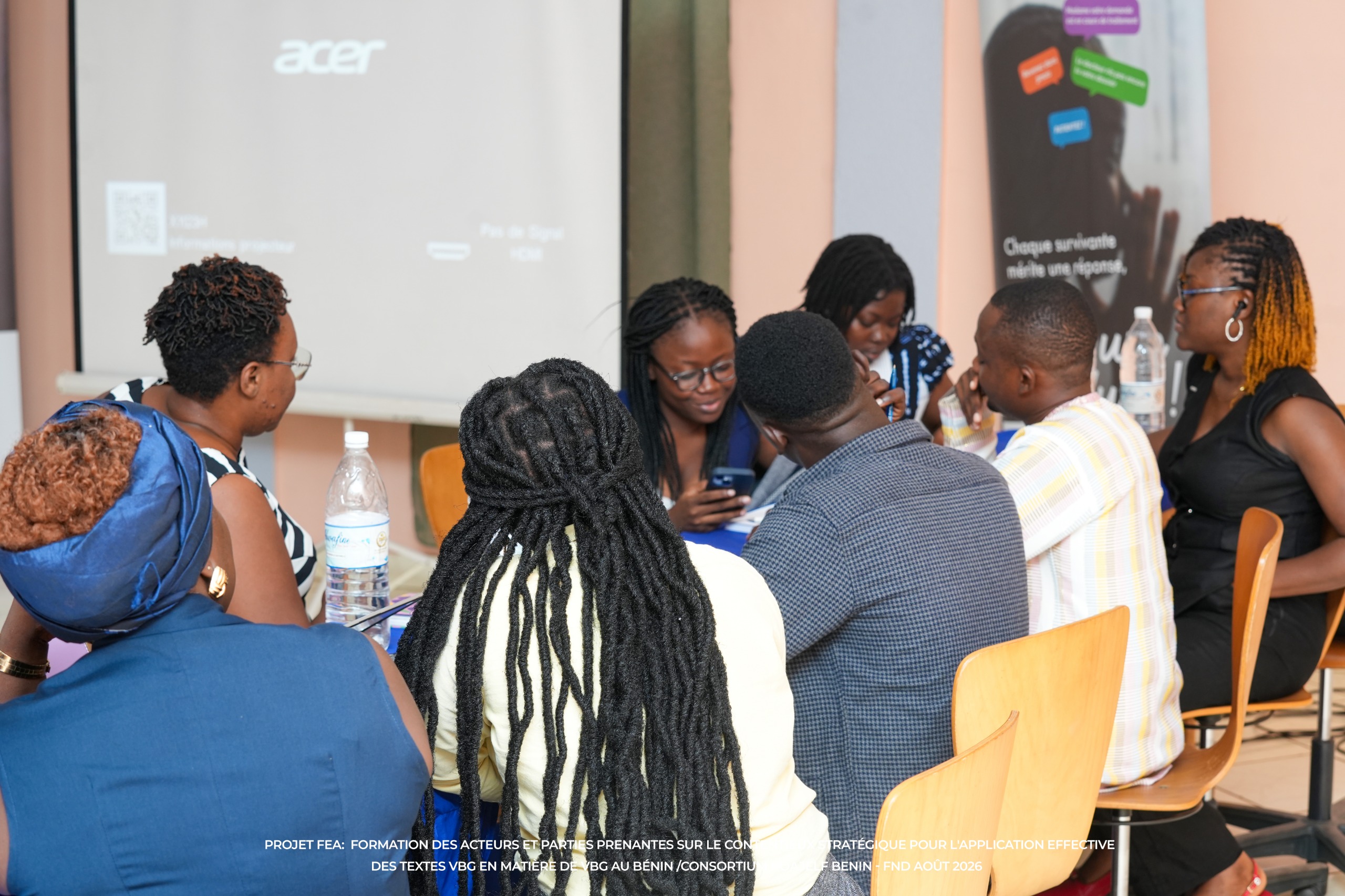

As part of the implementation of the project " Women's Rights and Health in Burkina Faso: Preventing and Reducing Vulnerabilities in the Context of the Covid-19 Crisis and Post-Crisis ," the Association of Women Lawyers of Burkina Faso (AFJBF) initiated the second training session for 30 health workers from the CSPS in Ouagadougou from March 16 to 18, 2022. The main focus for these 30 health providers was to strengthen their knowledge of the different forms of gender-based violence (GBV) and the consequences for victims.
In order to ensure and improve holistic care (medical, legal, judicial, and psychological) for women survivors of gender-based violence, the AFJBF has strengthened the capacity of 30 health care providers in the Central Region. According to the association's vice president, this involved interactive discussions on the definition of GBV and its causes and consequences. Participants learned more about the legal provisions relating to GBV and the various legal remedies available in Burkina Faso. " Through this training, we wanted to raise awareness among healthcare workers about how to care for victims according to their specific needs," she emphasized.
Coming from different health districts in the region, the health workers were trained in listening, counseling, and mediation techniques, as well as in avenues of recourse relating to GBV. They were also informed about the structures to which women victims of violence can be referred. During this session, experiences were shared and participants expressed their satisfaction with the lessons learned.
According to Ms. Dabo/Ouédraogo Fatimata, a midwife at the CMU sector 19 in Ouagadougou, the three-day session was enlightening. "We gained a clearer understanding of the definition of GBV and now know that it affects not only women but also men," she said. She believes that the training will have a significant impact on the way they work and their relationships with victims.
" Cases of violence are something we encounter every day in our professional field, because most victims, especially women, come to us. Before this training, we had difficulty dealing with them. We didn't really know what to do and we only gave them nursing care. With this training, we now have a better understanding of the avenues of recourse," she said.