At a time when gender equality and international solidarity are under direct attack around the world, Equipop has set out to strengthen its alliances in order to launch major campaigns across a wide range of institutional settings.
For a long time, feminist activists and researchers have been sounding the alarm about the rise of sweeping anti-rights movements, backed by reactionary governments, conservative wealth, and extremist religious actors. Their attacks have serious, very concrete consequences for women and LGBTQIA+ people, particularly regarding the right to bodily autonomy, and very often foreshadow broader attacks on human rights and democracy.
Gender equality has become a matter of "hard power"
This backlash is a well-known phenomenon, and Equipop has helped document it in recent years. But it is intensifying, and 2024–2025 marks a turning point. With the abrupt halt to USAID funding decided by Donald Trump, and the drastic cuts to development aid implemented by several European countries (such as the United Kingdom, France, Germany, etc.), ultimately, it is the very essence of international solidarity that is under threat. Added to this are several geopolitical crises and a growing trend toward the militarization of societies.
For decades, a wide range of actors have tried unsuccessfully to make women’s rights and gender equality a central issue in international relations. Furthermore, feminist analyses of international relations—which highlighted the link between a masculinist culture and the risk of geopolitical turmoil—have been largely overlooked. And indeed, today, it is illiberal forces that have definitively transformed the issue of gender equality and human rights into a full-fledged geopolitical issue in its own right. In the face of this, we must organize ourselves, urgently and effectively, to prevent decades of progress from being swept away. In this regard, feminist activism is more than ever a path of resistance and transformation, and its collective dimension is essential.
Diverse forms of activism
This is what Equipop works toward, sometimes by initiating initiatives, sometimes by contributing to them directly or indirectly, and very often by supporting civil society partners. This involves participating in decision-making forums, either formally or on the sidelines; producing analyses and position papers to influence public debate; conducting evaluations of public policies; raising awareness in the media; and, more generally, fostering collaboration among the nonprofit, political, media, and research sectors.
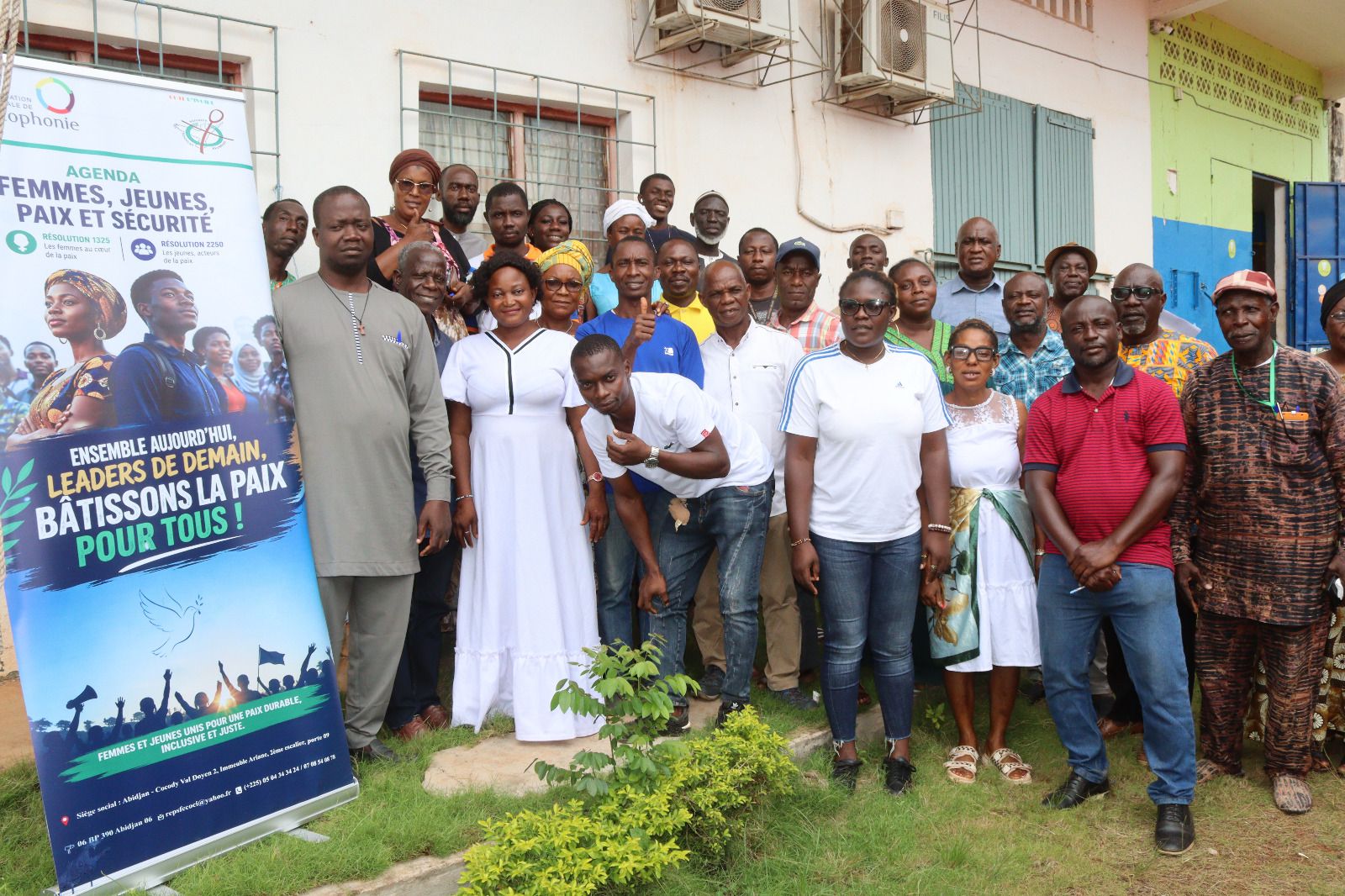
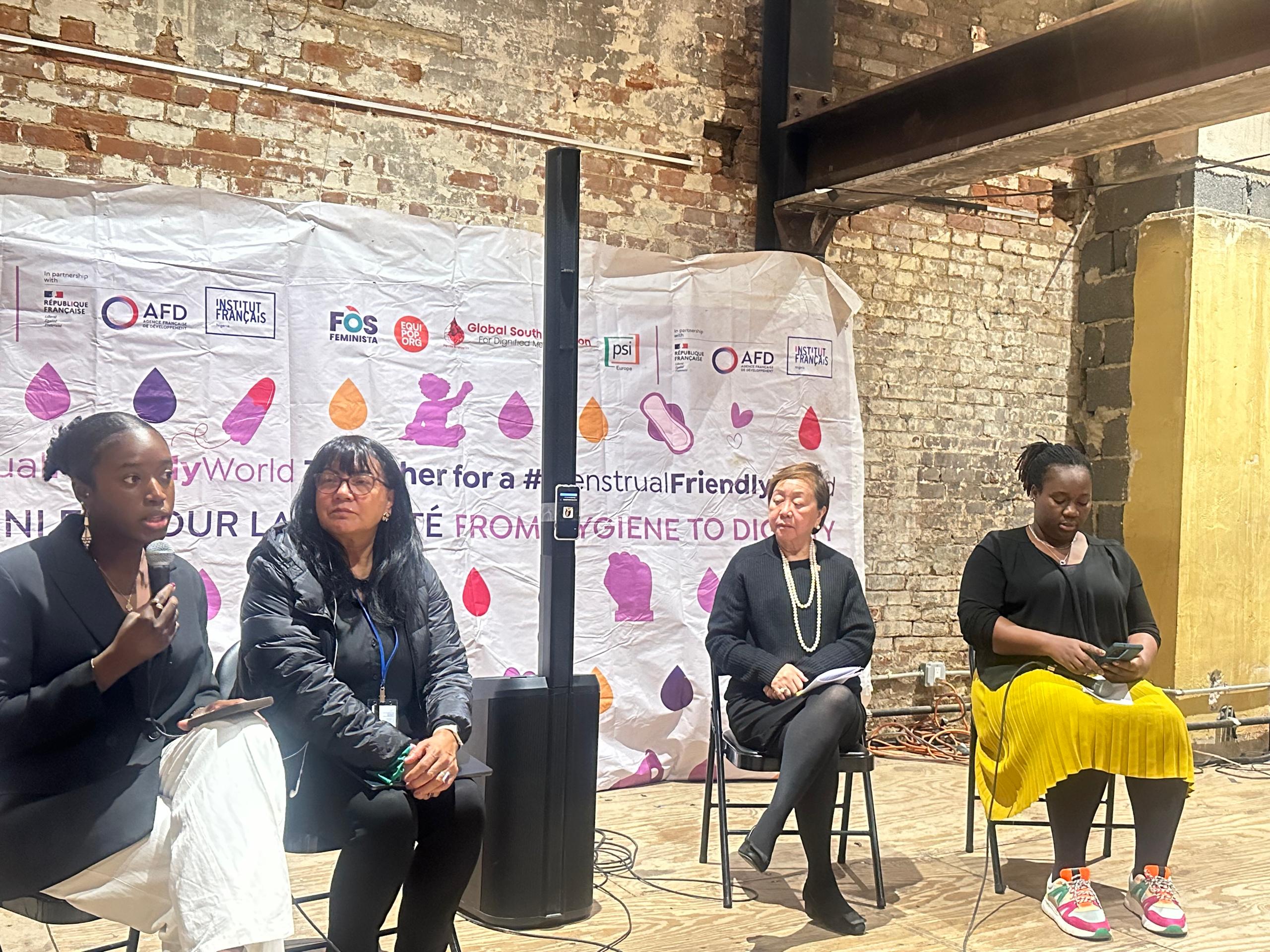
Equipop’s work on the theme of “Women, Peace, and Security” is a good example of how these approaches complement one another. While building on this institutional concept endorsed by the UN in 2000, we advocate for its expansion to include a feminist approach to international security and peacebuilding, and for convergence with the “Youth, Peace, and Security” agenda. This approach is being implemented at various geographical levels: first, through a project supporting associations engaged in national processes across several Sahel countries; second, in France, with the evaluation of the implementation of the National Action Plan that Equipop co-led through the High Council for Equality (HCE) in late 2024; and finally through events organized within the UN framework, such as the March 2025 event in New York: “Investing in Young Women’s Leadership: A Path to Peace and Security in Africa.”
At the global, regional, national, and local levels, Equipop and its partners promote feminist approaches, as well as human rights, justice, and democracy more broadly. Broadly speaking, there are five key areas of focus: funding for feminist movements and gender equality in public policy; defending established rights, including sexual and reproductive health and rights (SRHR); combating gender-based and sexual violence; and participation in decision-making bodies and access to public and digital spaces.
Globally
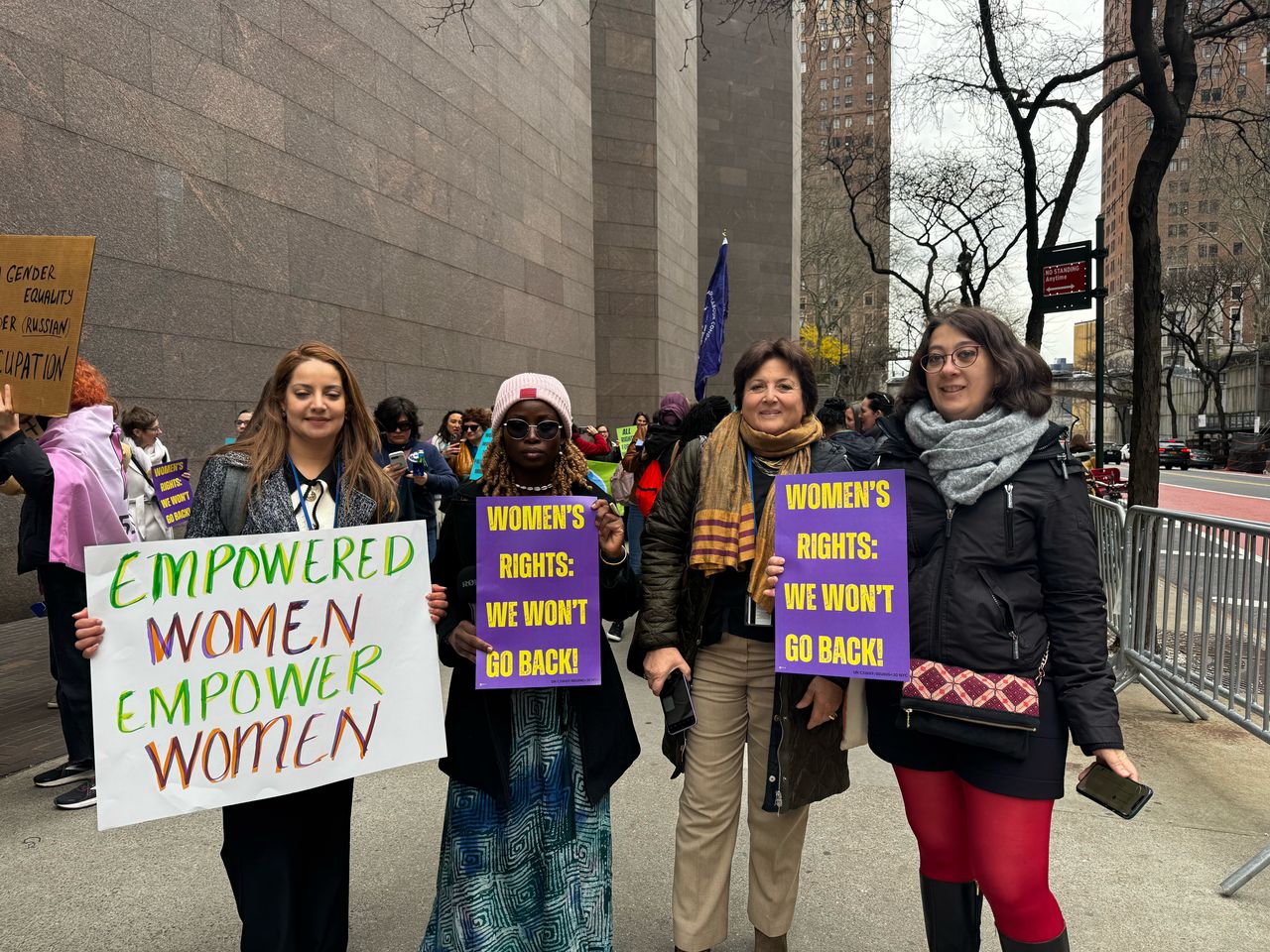
Globally, Equipop has helped amplify feminist voices, particularly those from West Africa and the North Africa–Middle East region, in four multilateral forums. For the 2024 Summit of the Future, Equipop facilitated the drafting of a joint position paper, presented in New York by a delegation of activists, and a side event titled “Our Feminist Futures.” A second highlight, which marked the launch of the Francophone Feminist Alliance (see box), was the 69th Commission on the Status of Women (CSW), held in conjunction with the 58th session of the Commission on Population and Development (CPD).
The UN process on financing for development served as a guiding thread, culminating in our participation in the Seville conference. Our efforts focused on mobilizing stakeholders to prevent setbacks in gender equality and to promote sustainable funding for feminist organizations. In particular, Equipop coordinated a joint letter, endorsed by more than 250 organizations from some 60 countries, and took action on numerous occasions to protect the support fund for feminist organizations—established by France—from drastic budget cuts.
At the regional level
In West Africa, Equipop is a member of the Alliance Droits et Santé network, which is active on numerous issues and, notably, coordinated a major campaign leading up to the adoption of the African Union Convention on the Elimination of Violence against Women and Girls. Equipop is also involved in the issue of safe abortion, through collaborations with the ODAS center, to develop a feminist approach to the issue. At the European Union level, Equipop has begun to expand its activities more substantially, focusing on two main issues:
•First, to safeguard existing rights, given the attacks on civic space and civil society organizations, the absence of a commissioner dedicated to gender equality, and the upcoming expiration of the action plan on equality;
• Second, secure funding to advance gender equality within the next multiannual financial framework.
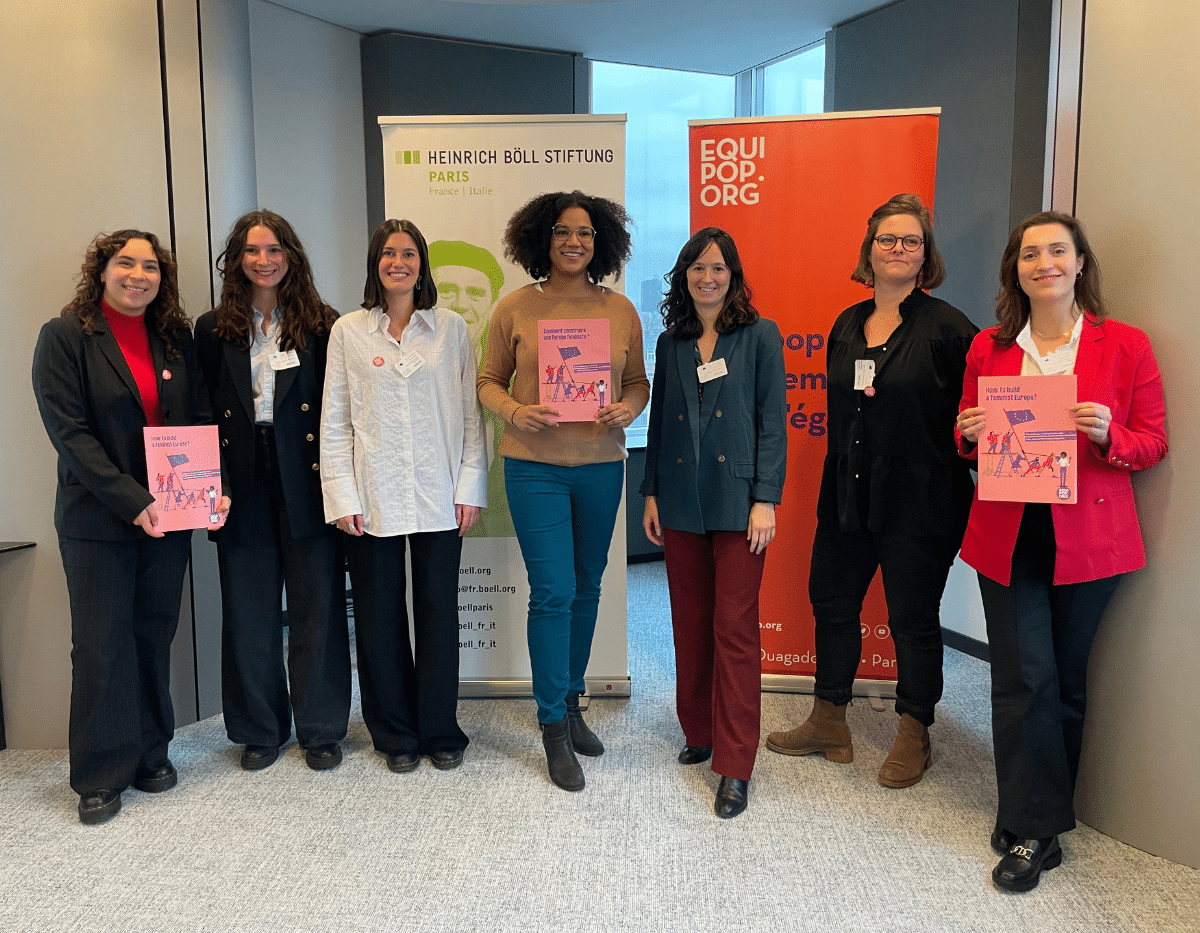
Equipop co-organized a launch event at the European Parliament with MEP Mélissa Camara for the report titled “How to Build a Feminist Europe? Challenges in the Face of the Far Right.” Produced in cooperation with the Heinrich Böll Foundation Paris, the report is part of Equipop’s series of studies on anti-rights movements. It provides an overview of the post-election EU landscape, analyzing the rise of far-right parties, their strategies, and the repercussions on the rights of women and LGBTQIA+ people. The event brought together a wide range of participants, including media representatives, organizations, students, and MEPs.
At the national level
In several West African countries, our partnerships with numerous organizations (see page 6) include advocacy support upon request on specific issues, or more intensive collaborations, for example on topics such as menstrual dignity or Women, Peace, and Security. Equipop’s partners evaluate public policies on gender equality (e.g., ROAJELF in Senegal), advocate for SRHR funding at the local level (JeD), and work to ensure the enforcement of certain laws against GBV and for the recognition of femicide (Ivorian League).
In France, in addition to supporting discussions on feminist approaches to regional international solidarity networks, Equipop helps embed feminist diplomacy within French foreign policy, through an approach that combines both the co-development and monitoring of public policies—an approach that has guided Equipop’s work since its founding in 1993. Equipop speaks out on this subject in various ways—in the media, in institutional settings, and to members of parliament—and raises awareness among public institutions about the issue of backlash. And through its seat on the HCE, Equipop has participated, as part of the steering committee led by the Ministry for Europe and Foreign Affairs, in raising the bar for the development of the strategy.
Despite the political instability currently affecting France, the first International Strategy for Feminist Diplomacy 2025–2030 has been officially launched. While this is obviously just the beginning of the work to monitor its implementation, it represents the culmination of several years of advocacy. Given the current geopolitical balances—or imbalances—even if France’s actions still leave much to be desired, the launch of this strategy sends an important signal on the international stage. There is a strong need for political leadership in support of gender equality, which should be reinforced by the fourth conference on feminist foreign policy, to be hosted by France in the fall of 2025.
The Francophone Feminist Alliance: A Crucial New Initiative
Established in early 2025 and facilitated by a consortium comprising Femmes en Méditerranée (FFMed) and the International Federation for Human Rights (FIDH), the Francophone Feminist Alliance (AFF) is an initiative aimed at strengthening the participation of Francophone feminists in multilateral forums. Currently, they face numerous obstacles to making their voices heard, such as insufficient funding, a lack of coordination and training opportunities, and language barriers. By connecting feminist activists and movements and supporting their development of knowledge about institutional spaces, the AFF helps strengthen and raise the profile of collective advocacy for gender equality on the international stage. This approach is all the more essential given that anti-rights movements have massive funding and are highly organized.
Drawing on the diversity of these activists’ backgrounds, expertise, and credibility, this collective advocacy effort is directed at governments, various public institutions, and donors. It is intended to take place in a wide range of multilateral forums.
The launch of the AFF was marked by two events: in Paris, at the Quai d’Orsay, on March 7, 2025, during the presentation of the strategy for feminist diplomacy, and a few days later in New York, attended by 150 people from diverse backgrounds: activists, diplomats, and representatives of governments, UN agencies, and the philanthropic sector.
The AFF’s first delegation to a multilateral forum thus participated in the 69th session of the Commission on the Status of Women (CSW) in New York, marking the 30th anniversary of the Beijing Declaration and Platform for Action (Beijing+30). Subsequently, the AFF engaged in two other key forums: the 59th session of the Human Rights Council in Geneva and the 4th Conference on Financing for Development in Seville.

In the face of backlash, the need for collective action by the media and organizations
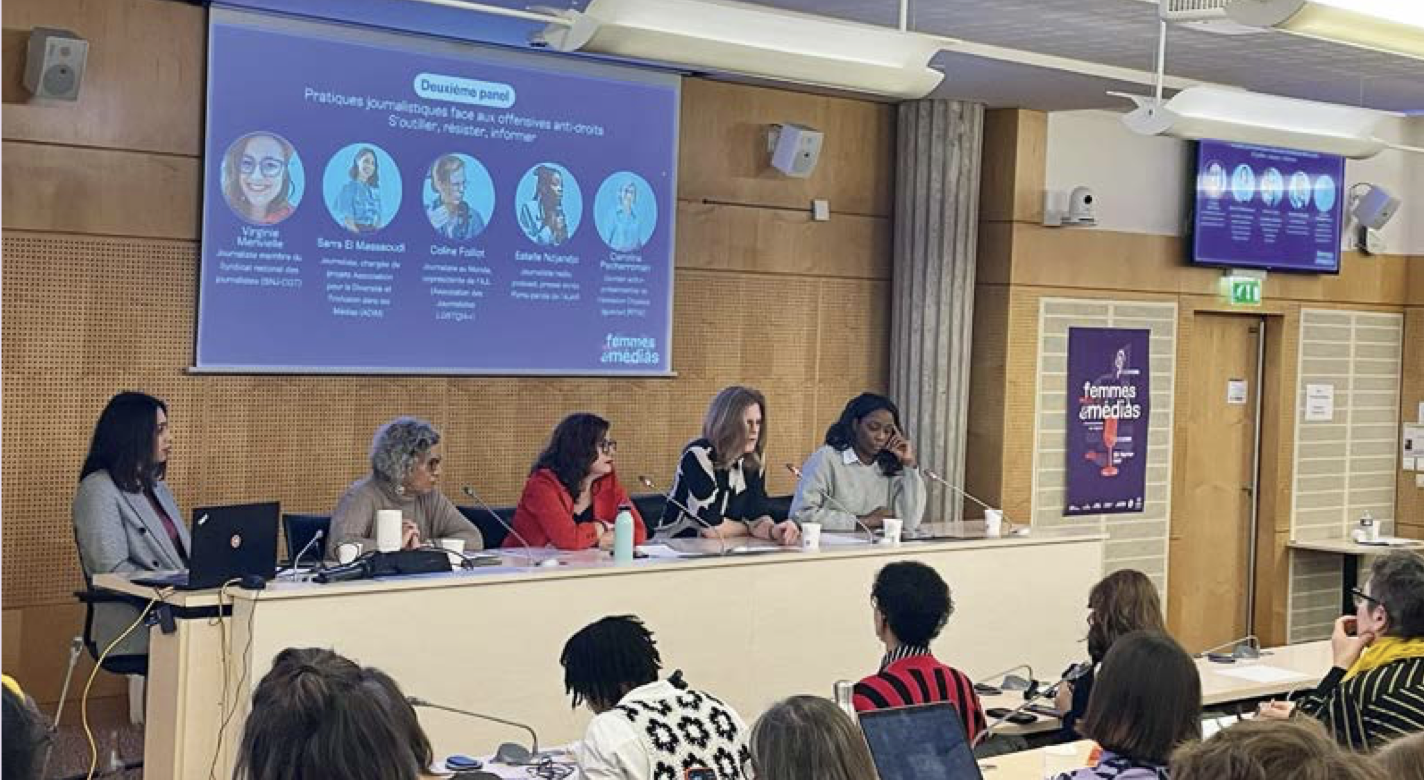
On February 25, 2025, Equipop, Prenons la Une!, and La Fronde co-organized, in partnership with the CESE, the event “Women & Media: The Equality Forum.” The day featured insightful discussions on the challenges facing the media and its role in the face of rising conservatism and the anti-gender backlash.
Women’s rights serve as a good barometer of our democracies: today, it’s flashing red.
Everywhere, reactionary networks are waging an anti-feminist, racist, and authoritarian offensive. From the United States to Europe, far-right figures are spreading a misogynistic and masculinist ideology, attacking fundamental rights, independent media, and international solidarity. In France, this strategy manifests itself in cuts to official development assistance (ODA), attempts to buy out journalism schools and publishing houses, and the creation of institutions training future far-right media figures. These forces impose their narratives through disinformation and the inversion of values.
More than 200 people took part in the event, demonstrating a shared commitment to addressing these issues. The participants reaffirmed the need for a collective response, bringing together journalists and feminist organizations. Counterforces do exist. The work of independent media outlets like StreetPress, the commitment of collectives such as Prenons la Une!, local initiatives like Ouest-France’s Réseau Égalités, and even the Belgian media cordon sanitaire show that another path is possible. Mobilization also requires vigilance in journalistic practices: refusing to normalize the far right, challenging the culture of confrontation, and documenting the underlying authoritarian strategies. These initiatives are essential today and must not remain marginal. The economic balance of power is unfavorable and the attacks are fierce: in the face of this, we must create larger spaces for resistance—like this event—and occupy all media spaces. As journalist Salomé Saqué put it: “We must move from outrage to resistance.”