
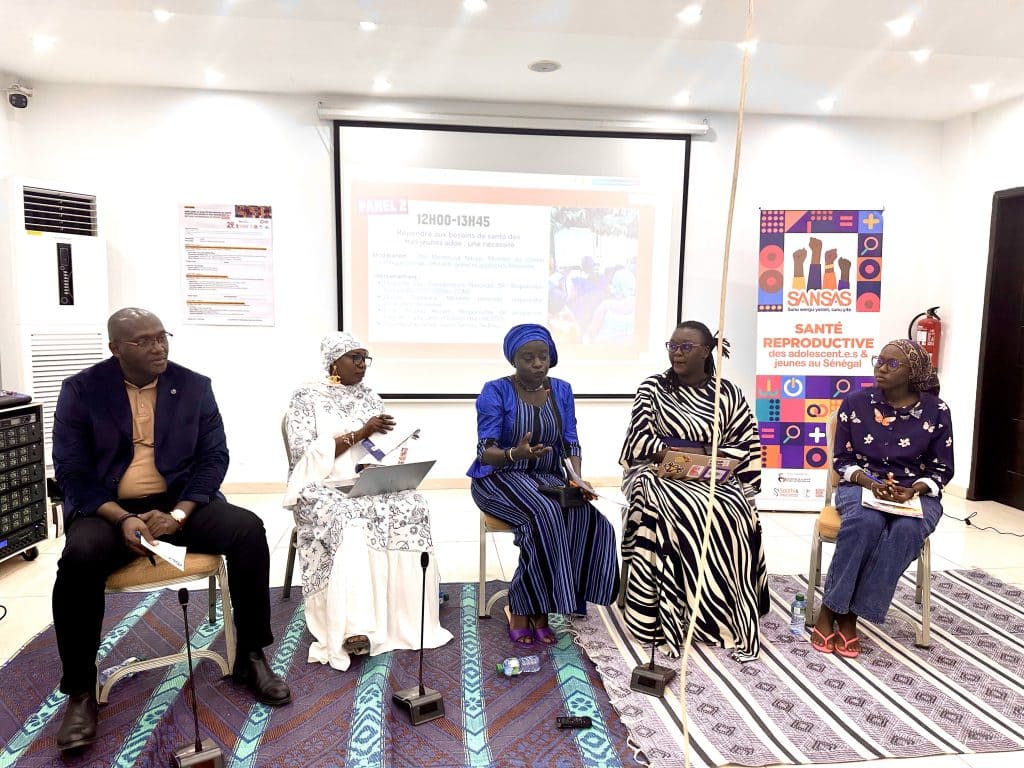
A roundtable discussion held at the end of January 2025 to share key lessons on improving sexual and reproductive health services for adolescents and young people in Senegal. This exchange brought together young people, health professionals, representatives of public institutions, and technical and financial partners, with the shared goal of pooling knowledge and identifying concrete levers for action.
Bringing different forms of knowledge together to forge collective alliances
Knowledge transfer is a central element of the SANSAS project. It aims to systematize, disseminate, and promote the appropriation of the project's lessons. In a context where SRHR is being undermined around the world by the rise of anti-rights movements, it is essential to structure collective advocacy and ensure ongoing dialogue between the various stakeholders. The exchange between academic knowledge, experiential knowledge derived from the work of NGOs and young people, and institutional expertise makes it possible to identify innovative solutions adapted to local realities. As Abdoulaye Wade, Social Link and Partnership Officer (CSO – Decentralized Cooperation – Gender – Sport) at the AFD in Dakar, pointed out: “The exercise that the project invites us to undertake today is a reflective review of practices, social representations, and youth empowerment. It highlights the fact that an innovative approach, underpinned by close collaboration with institutional and community partners, provides insights into the role of health professionals and young people in improving access to SRHR." In this context, the democratization of knowledge and the strengthening of young people's voices were at the heart of the discussions. The challenge is to consider young people as key actors, rather than simply beneficiaries of sexual and reproductive health and rights services. As Sarah Memmi Machado, training and SRHR advisor in charge of the SANSAS project at Equipop, pointed out: "To make dialogue on access to care effective, it is necessary to recognize that young people have real knowledge to share on this subject. Their knowledge of their own needs and the obstacles to exercising their rights is invaluable for improving services." The round table provided an opportunity to present policy briefs summarizing the lessons learned from the project and to fuel advocacy for expanded access to sexual and reproductive health and rights services. This dialogue is essential in a context where SRHR remains a crucial issue for gender equality and public health.
Outlook and courses of action to improve services
Workshops to break down barriers related to the perceptions and attitudes of healthcare professionals
In Senegal, although significant progress has been made, adolescents and young people continue to face numerous barriers to accessing quality sexual and reproductive health care and counseling. These barriers include prejudices and value judgments related to their sexuality, as well as the resulting discriminatory attitudes among some health professionals. These dynamics contribute to limiting adolescents' and young people's use of health services. In response to these challenges, discussions have taken place highlighting the crucial importance of enriching clinical training with interventions that take into account the individual, situational, and social factors that cause bias among certain providers. In this sense, one of the priorities identified during the conference concerns the training and support of health professionals. Several studies have shown that the attitudes and social representations of healthcare providers can be a barrier to young people's access to SRHR services. As a midwife from Mbour involved in the SANSAS project pointed out: "At first, I was reluctant to participate in certain training courses, but they helped me to better understand the needs of adolescents and change my professional approach." This support has other advantages, such as increased dialogue between healthcare providers and users and a power relationship between them, as Ibrahima Baldé, a young leader at SANSAS, pointed out.
Meeting the health needs of very young adolescents: a necessity for inclusive services
In Senegal, very young adolescents (aged 10–14) constitute a key age group, but are often overlooked in sexual and reproductive health policies and programs. This period of transformation is crucial for acquiring knowledge and behaviors that promote their health. However, persistent taboos surrounding sexuality hinder their access to appropriate information and services, exposing them to increased risks of sexual violence, early marriage, and unwanted pregnancies. Wasso Tounkara, feminist activist and president of the association Senegal Actions Féministes (SENAF), reiterated: "There is an urgent need to break down the taboos and gender stereotypes surrounding the sexuality of very young adolescents. Too often, these young people are deprived of essential information on the pretext that they are 'too young' to talk about it. Yet we know that ignorance and silence do not protect them, quite the contrary. It is imperative to adopt an intersectional and transformative approach that recognizes the power inequalities faced by young girls in particular, and to provide them with the means to access safe and inclusive services." Primary school, where the majority of 10-14 year olds are enrolled, represents a strategic opportunity to integrate reproductive health education (RHE). However, there remains a gap between policies that encourage such education and their effective implementation, leaving many students without access to essential information. Furthermore, inequitable gender norms and power imbalances further compromise the consideration of their specific needs.
Youth empowerment: a transformative approach to promoting democracy in health
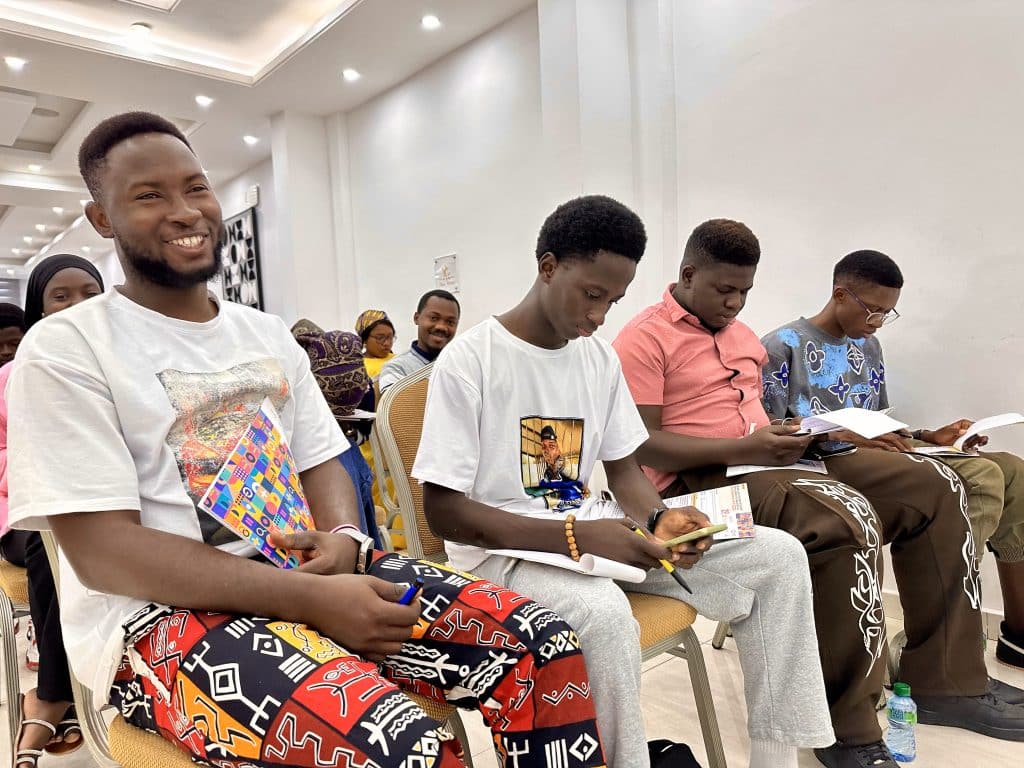
Young people are often underrepresented in decisions that affect them, particularly in matters of sexual and reproductive health. Traditional social norms can prevent them from expressing themselves and accessing the services they need. How can we respond appropriately to their needs? How can we strengthen youth citizenship and engagement? These were the questions raised at the end of this roundtable discussion. It is essential to question the place of young people in initiatives. Giving them a central role makes it possible to develop interventions that actively engage them in the design of health services. This co-construction process not only gives them access to these services, but also allows them to improve them and be agents of change, as Soukeyna Ouedraogo, an expert evaluator in SRHR, youth approaches, and health democracy, pointed out during the discussions: "Empowering young people is not just about giving them a voice, it's about giving them the tools and space to build their own arguments and influence debates. Today, we see young people who are able to speak out in front of authorities, embody change, and take concrete action in their communities." This approach is part of a process of democracy in health. In projects, young people are no longer simply beneficiaries, but co-creators of solutions that meet their specific needs. This empowerment approach also helps to transform social norms. By strengthening young people's equality and autonomy, we seek to change perceptions around reproductive health and promote a culture of gender equality. Several speakers pointed out that one of the major achievements of the SANSAS project is the empowerment of young people, a necessary prerequisite for advocacy and civic engagement.
Recommendations for the future
The discussions led to several key recommendations to ensure better access to sexual and reproductive health services for adolescents and young people, including:
- Strengthen continuing education for healthcare professionals to ensure compassionate and appropriate care for young people.
- Question norms and power relations in the design and implementation of SRHR policies, actively involving young people and ensuring that an intersectional perspective is included that takes into account gender, class, and identity inequalities.
- Adapt information services and tools to the needs of very young adolescents, taking into account the specific characteristics of each age group and ensuring confidential and secure access to information and care.
- Integrate youth empowerment as a structural priority, ensuring their participation in decision-making spaces and supporting them in the co-creation of health strategies that affect them.
- Promote a community-based, multisectoral approach to ensure a lasting change in attitudes and practices around SRHR, involving families, schools, and community actors in information and awareness-raising strategies.