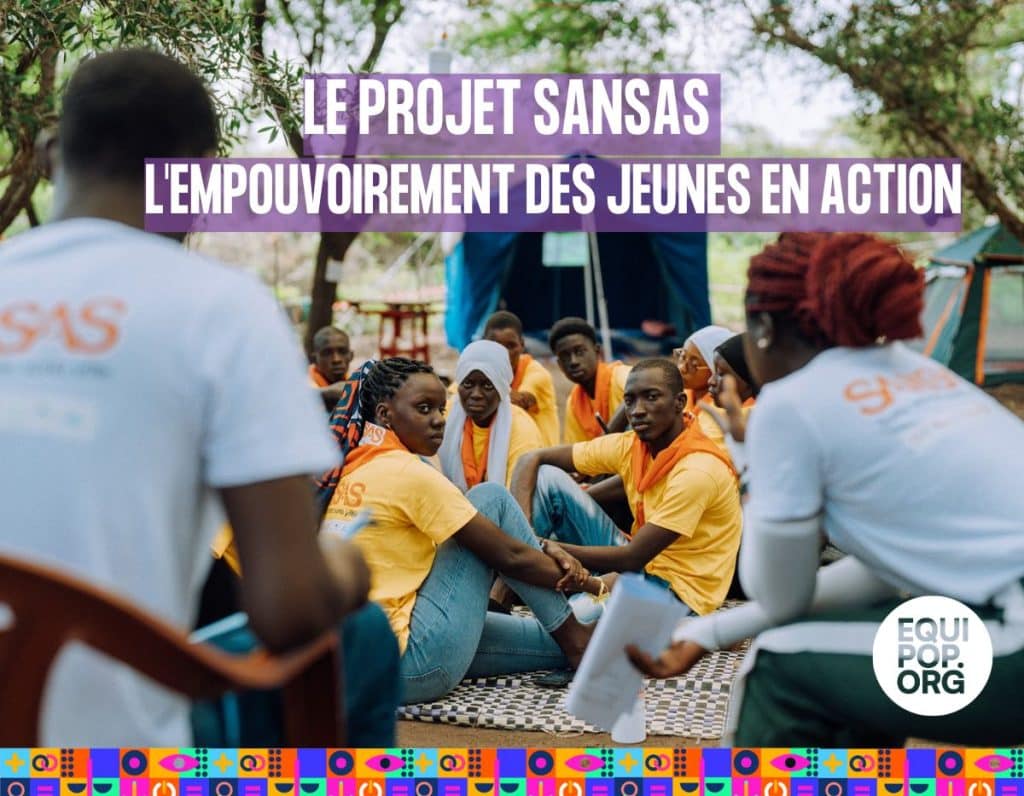
The SANSAS project experience illustrates the power of mutual aid and cohesion within a group. The confidences of the young leaders involved reveal a strong collective dynamic, driven by a spirit of mutual solidarity. "For me, the SANSAS project is about cohesion among young people, a solidarity that has taken root, " says one of them. As a reminder, the SANSAS project aims to improve access to reproductive health services tailored to adolescents and young people in Senegal.
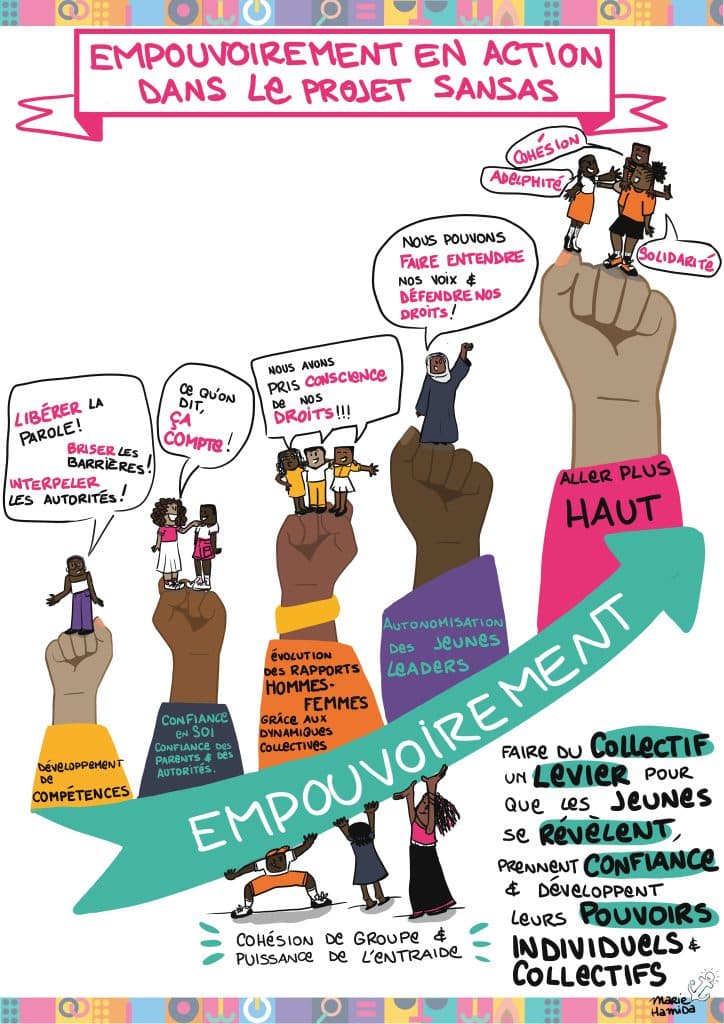
This energy provided fertile ground for young people to flourish and become empowered. At the heart of this richly collaborative human adventure, a genuine process of empowerment unfolded, allowing each individual to develop their own abilities while bringing about inspiring new collective dynamics. The strength of the collective and the bonds created thus acted as an essential lever for these young people to fully reveal themselves, gain confidence, and become agents of change within their communities. A beautiful demonstration that proves that the convergence of dynamic forces, in a spirit of solidarity and kindness, can lead to great progress! "When you organize activities and people come in droves, there's something that others see in you." The development of communication skills is one of the main drivers of the changes observed in young leaders. These new skills enable them to speak freely, break down barriers of apathy, and support their peers in discussing their own health. Daring to tackle taboo subjects, leading discussions, and challenging political authorities with determination are all skills acquired at the heart of the project. Young leaders have become pillars of quality information, earning the admiration of their community and peers. Self-confidence has become one of their superpowers, giving these young people more responsibility and a strong ability to mobilize, to be listened to and heard, including by their parents and the authorities. "What we say matters," says a young leader from Mbour. This situation is redefining traditional power relations, encouraging greater consideration of young people's voices and knowledge and, therefore, more egalitarian relationships. Beyond speaking out, the increased responsibilities and compensation paid to young people (reimbursement of transportation costs and snacks) are leading to changes in their position within their families. "With the project and the remuneration, my parents now see me as responsible for myself, and I can even buy my own supplies" (a young leader from Sédhiou). Changes have also taken place in gender relations thanks to group dynamics and the implementation of collective activities. This approach has fostered solidarity and mutual respect among young people. While girls and boys were hesitant to interact at the start of the project, they now socialize even outside of group activities. In addition, some young girls have gained confidence and awareness of their rights, while some boys have developed knowledge and empathy on topics such as gender-based violence, menstrual health and dignity, and female genital mutilation. Finally, one of the most striking results has been the empowerment of young leaders vis-à-vis the Sansas project teams in carrying out activities on their own initiative that were not initially planned by the project. "The young leaders are in a position to initiate things themselves; we have encouraged them to identify problems and make decisions" (RAES coordinator). One example is a summer camp organized by young leaders in Sédhiou (based on the Mboro summer camp model), which brought together 150 people over three days in early 2024, illustrating their ability to put their skills into practice, even with limited resources.
From individual to collective empowerment: a process in motion
The empowerment process was marked by a theoretical and practical approach. While the training courses were catalysts for change, it was mainly through immediate practical application that the young people explored their capacity for action. "All the activities are led by young people, all the training courses are for young people, they receive the invitations directly, this project is their project," explains the head of the CCA (Adolescent Counseling Center) in Sédhiou. The Mboro summer camp was a turning point, giving young people new superpowers: the power to act and make decisions. The summer camp also revealed the importance of being an active and supportive collective, which led to the initiation of numerous activities afterwards: the creation of discussions at the neighborhood and school levels, the development of parent-teen dialogue, etc. They tapped into their collective potential, realizing that "together, we can go further." This group spirit and these values of sisterhood and brotherhood strengthen young people's ability to advocate with local and national authorities, ranging from greater knowledge of their rights to demanding that these rights be enforced. Strategic alliances with authorities and health providers also contribute to this recognition of young people and their power to act. Their voices are now heard and respected, reflecting a profound change in traditional power relations. Together, young leaders have created an environment conducive to experimentation and growth in their capacity for action. This union is a source of strength and a space in which others are respected and differences are seen as opportunities for exchange and progress. The community of young leaders appears to be a framework for experimentation, trust, and mutual aid. It is clearly a space for self-empowerment, through the exercise of collective power fostered by the creation of leadership pairs and frequent group meetings. All of this is reinforced by the existence of places available to young people. "Once you walk through that door, there are no more taboos, no more complexes" (a young leader from Sédhiou).
To "go higher"
Empowerment is an ongoing process, and in order to "go further," the young people have begun to reflect on the changes they would like to reinforce by the end of the project, with a view to a possible phase 2. This would mainly involve: i) more frequent dissemination by peers to peers of the knowledge and skills acquired: creation of new clubs, training of other young people by the young leaders themselves, identification of new "young leaders" including those from marginalized groups (illiterate young people, young people with disabilities, 10-14 year olds, etc.) to better take their needs into account and make the project more inclusive. ii) in-depth awareness-raising work with parents on young people's sexual and reproductive rights and health and a better understanding of the legal framework. This work should be accompanied by support from religious leaders in particular. iii) Creating spaces for dialogue between young people and health providers to strengthen providers' understanding of young people's needs; reduce young people's apprehension towards providers; and turn providers into allies in advocacy with young people. This approach reinforces the ongoing process of democratizing health care. iv) Identifying strategies for alliances with schools to carry out SRHR awareness-raising activities from an early age and in partnership with the education sector. v) Facilitate the implementation of spontaneous initiatives by young leaders by providing resources: flexible funding available within the project, provision of friendly "meeting points," logistical support from the project team. These proposals will undoubtedly strengthen young people's commitment to better health in the long term.