Equipop mobilizes influential actors to create an institutional and legal environment conducive to human development and, in particular, to respect for the rights of women and girls.
The implementation of feminist public policies is essential to challenging the patriarchal system and achieving gender equality. When these policies have already been outlined by public authorities, they must be reinforced by the actions of associations and co-constructed with them. When this is not the case, civil society can help pave the way. With this in mind, Equipop has worked on three levels this year: monitoring the Generation Equality Forum, promoting feminist foreign policies, and promoting
feminist approaches at the regional level.
Follow-up to the Generation Equality Forum
In early summer 2021, the Generation Equality Forum (GEF) was held in Paris, at the initiative of France, Mexico, and UN Women. This major international gathering on gender equality issues resulted in multiple commitments totaling $40 billion, including $23 billion from governments. While the six thematic "action coalitions" created for the occasion helped to channel the actions to be taken, the FGE process suffered from one obvious shortcoming: no mechanism had been put in place to monitor it. It was therefore up to associations to play a monitoring role.
This year, Equipop participated in various spaces related to the WEF, whether as part of the SRHR action coalition, with the West African network "Alliance Droits et Santé" (Rights and Health Alliance), or in the "accountability" working group led by UN Women. The Collectif Générations Féministes (Feminist Generations Collective), of which Equipop is a member of the secretariat, maintained regular contact with those responsible for organizing the FGE, particularly at the highest level of French institutions. This political pressure will remain necessary in the coming months because, even though stakeholders have created a "commitment scorecard" published by UN Women, much time has been lost in implementing the commitments, which have a deadline of 2026.
In West Africa, support for associations that drive the process forward
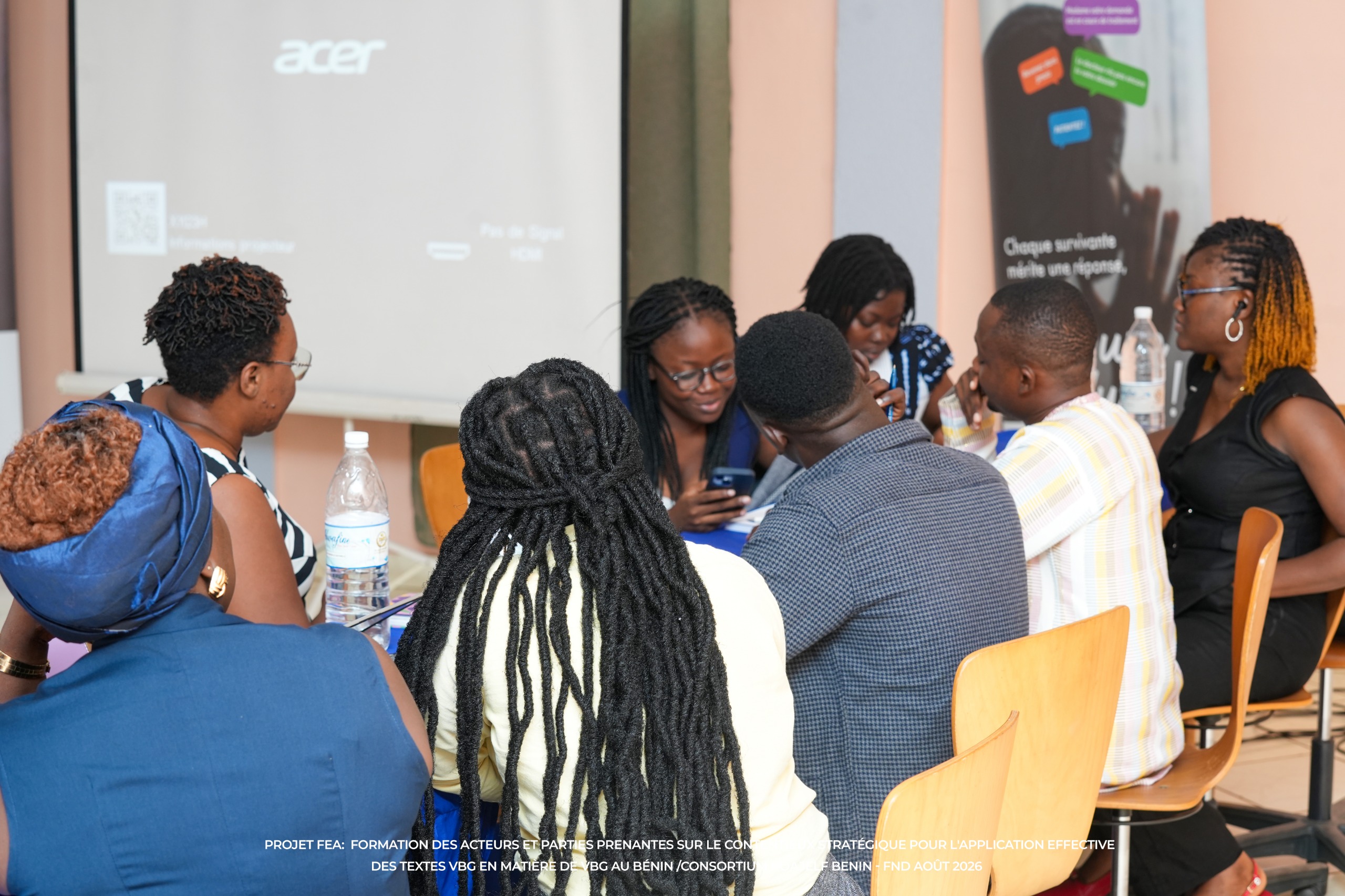
Despite relative inertia at the global level, monitoring of the EGF has been intense in West Africa. Equipop continued its support for the West African Young Feminists Network, which brings together members from eight countries. The Network organized an EGF debriefing workshop, which then helped to mobilize energies at the national level. Continuing its support for associative consortia in 2020, Equipop took part in national workshops, for example in Niger, with the Nigerien Cellule des Jeunes Filles Leaders (Young Women Leaders Unit), and in Burkina Faso. These workshops helped to create synergies within associative movements and to involve local public authorities in the implementation of commitments made at the international level.
In Senegal, for example, social and political mobilization led to a more decisive commitment by the Director of Gender Equity and Equality to support youth activities and establish a national framework for coordinating and monitoring post-FGE activities. The campaigns conducted had a significant impact in the media: 13 radio programs in different languages reached more than 65,000 people, and the digital campaign reached 21,000 people.
Promotion of feminist foreign policies
Equipop contributes particularly to the development of feminist public policies in an area where the association has strong legitimacy: international affairs. While feminist activists and researchers have been analyzing international relations for decades, it has been less than ten years since the first country—Sweden—called for the adoption of a feminist foreign policy. This is now the case for a dozen countries, at various stages of progress. Equipop is part of this general dynamic, which consists of refining the possible definitions of feminist foreign policies and charting the paths for their implementation.
A position paper has been published for this purpose. Several concrete levers for action have been identified: transforming institutional culture (in particular through the training of political and administrative leaders), strengthening the coherence of public policies, significantly increasing funding for gender equality, involving and supporting feminist activities and researchers, and ensuring monitoring and accountability for commitments in this area.
In France: moving from "feminist diplomacy" to a truly feminist foreign policy
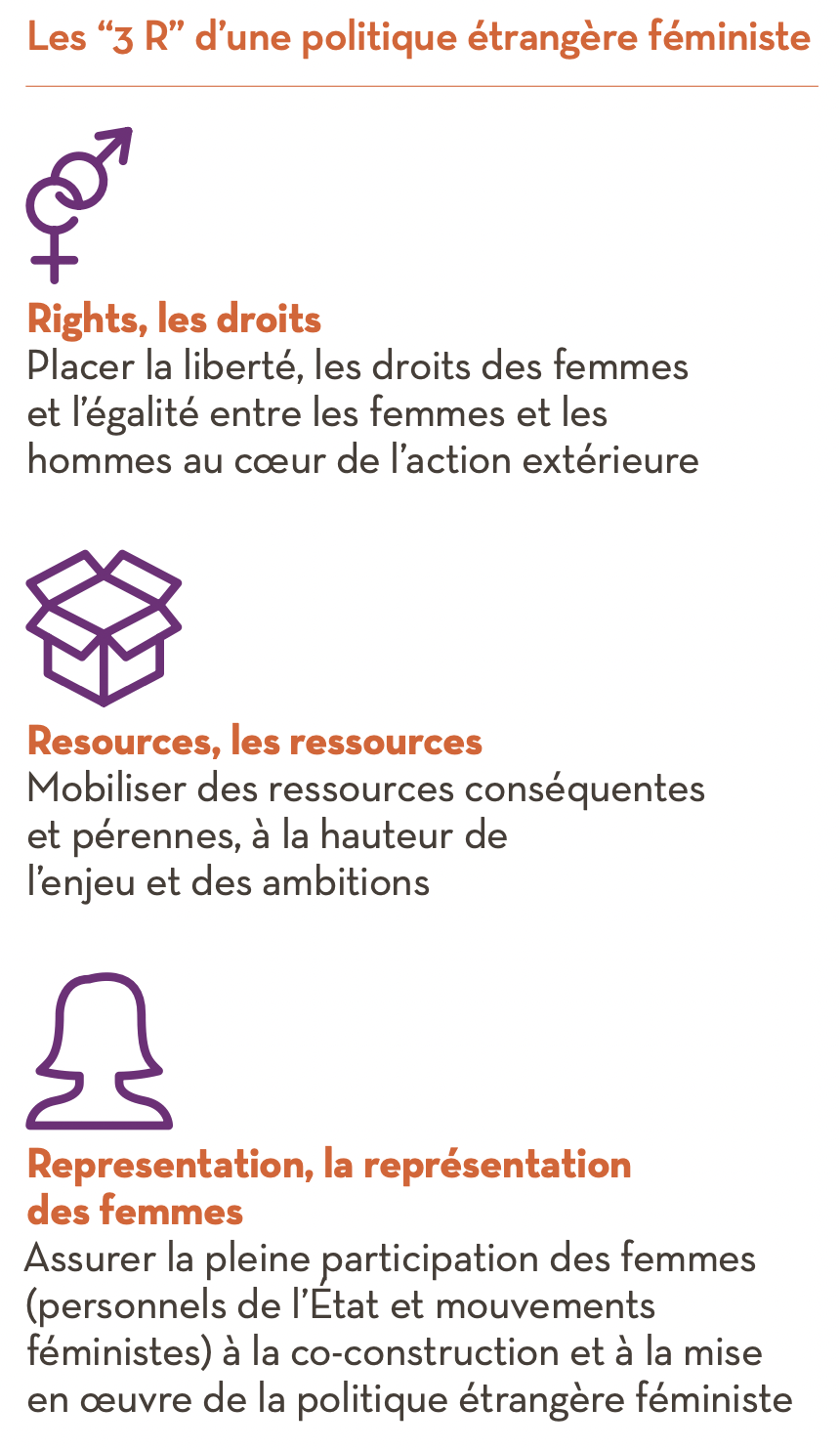 In France, Equipop maintains regular contact with the Ministry for Europe and Foreign Affairs and the French Development Agency, and ensures that the various strategies currently being defined or renewed (health, SRHR, etc.) contribute to the advancement of a truly feminist foreign policy. There is currently no official reference framework in this area. Under pressure from civil society, the French government has taken several initiatives, such as organizing the FGE and leading the SRHR action coalition, as well as creating a support fund for feminist organizations.
The Solidarity Development Act of August 2021 also enshrines "feminist diplomacy" in its first article. However, much remains to be done, particularly in terms of increasing the financial and human resources allocated to integrating the feminist approach into foreign policy as a whole, rather than just in a few key sectors such as health.
Equipop also acts through its participation in the High Council for Equality (HCE), which is responsible for officially evaluating the implementation of France's international strategy for gender equality. For the next three years, Equipop will co-chair the HCE's "Feminist Diplomacy and International and European Issues" committee. This will enable it to continue the dialogue with numerous stakeholders on various key issues, such as the "Women, Peace and Security" agenda.
Strong mobilization ahead of the French elections
This year, France held presidential and legislative elections, the two most important elections in five years, which therefore represented a major advocacy opportunity. Through various collective initiatives, Equipop helped to identify and raise key feminist issues in public and political debate, particularly feminist foreign policy. Equipop met with several campaign teams to present its recommendations, in synergy with the campaigns led by the Fondation des Femmes, as well as those of Coordination SUD, the Collectif Santé Mondiale, and the Collectif Générations Féministes. This awareness-raising was essential, as feminist foreign policy is an area that political parties have little knowledge of or are even unfamiliar with.
Integrating feminist perspectives into regional dynamics
As rights issues are inextricably linked, regardless of their geographical location, Equipop promotes feminist approaches at all levels, from local to international, and pays particular attention to linking these different levels of decision-making. One level is particularly relevant to invest in: the regional level.
In West Africa, the women's rights agenda and the family planning agenda have not always converged. Certain events, such as the 2019 conference in Nairobi (ICPD+25), have helped to bring the two sides closer together, but tensions remain. Equipop's position, therefore, is to promote dialogue based on a rights-based, people-centered approach, which must take precedence over a quantitative approach to public policy.
This year was marked by the announcement of the Ouagadougou Partnership's (OP) new civil society strategy. Equipop contributed to the discussion in various forums (consultations, regional workshops, etc.) in order to anchor this revision in a "human rights" approach and in stronger collaboration with youth associations and feminist activists in the region.