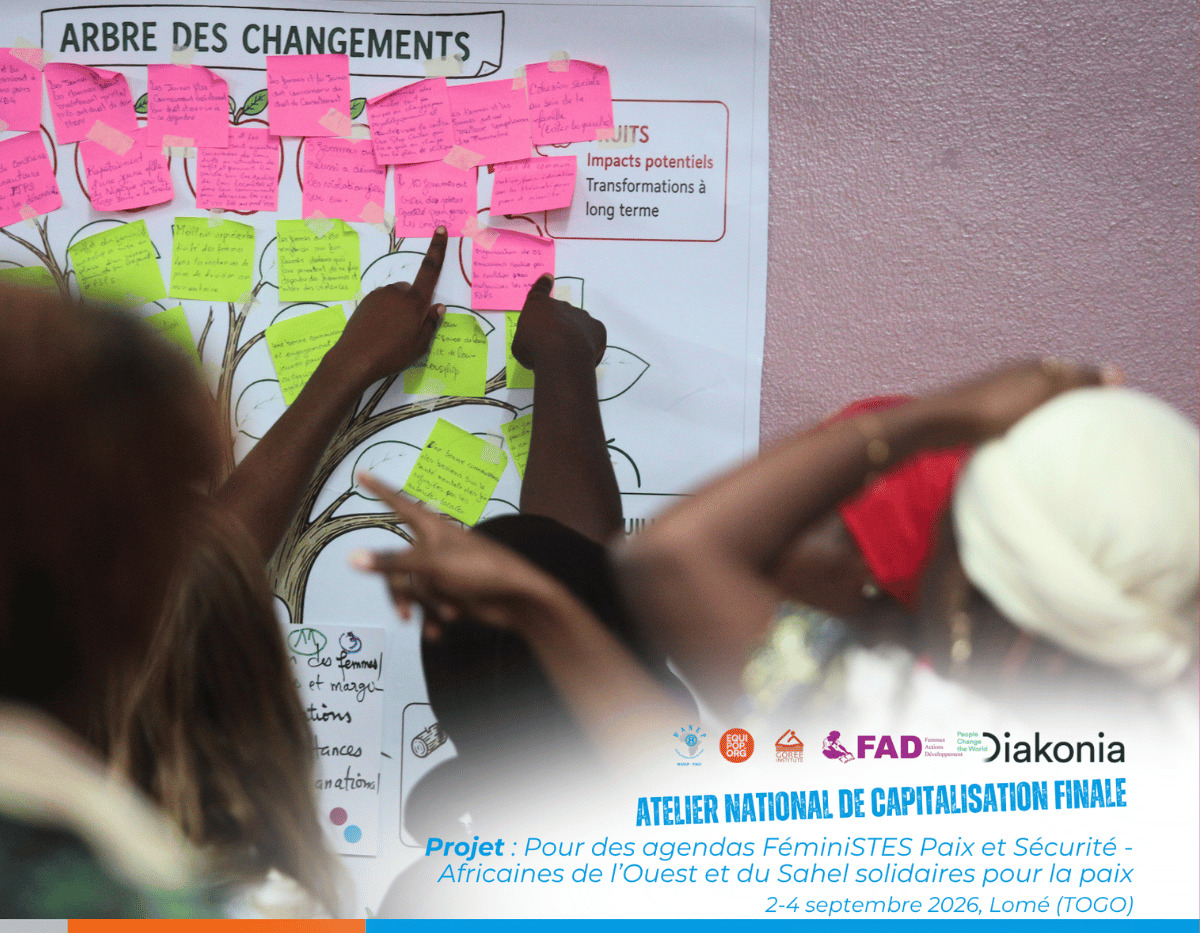
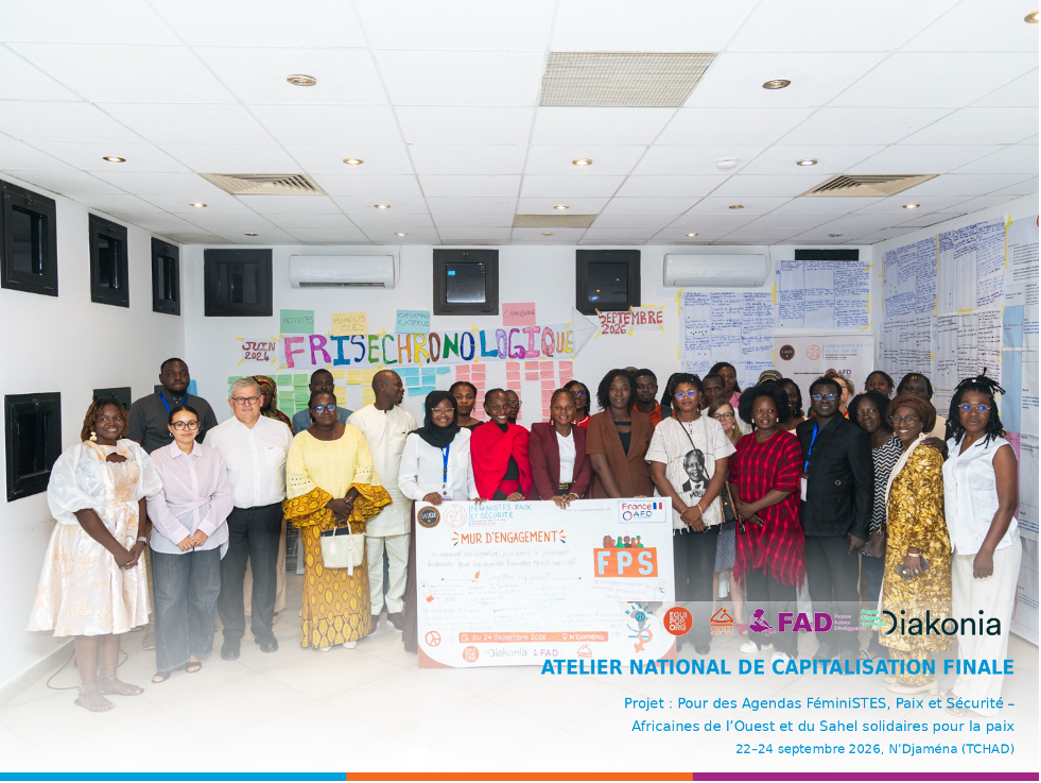
From the increased participation of women and young people in decision-making bodies to the emergence of new spaces for feminist activism, and the strengthening of alliances to combat gender-based and sexual violence: the experiences of six Chadian feminist civil society organizations, supported as part of a project led by Equipop and its partners with financial support from AFD, illustrate the concrete changes that flexible funding and support tailored to local realities can foster.
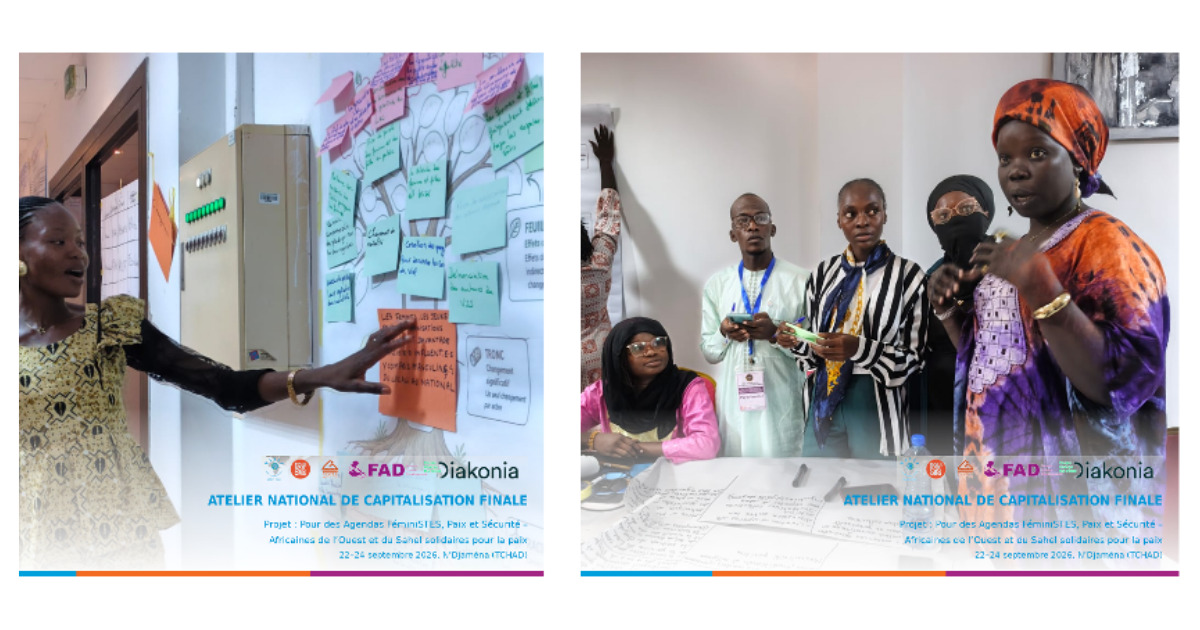
From September 22 to 24, 2026, in N’Djamena, six Chadian feminist civil society organizations gathered for a national knowledge-sharing workshop to present the results achieved as part of the project “Toward Feminist Agendas, Peace, and Security—West African and Sahelian Women United for Peace.” Implemented by a consortium comprising Equipop, FAD of Niger, Diakonia Sweden of Burkina Faso, and the Gorée Institute of Senegal, this project—carried out in six countries in West Africa and the Sahel—aims to provide technical and financial support to feminist civil society actors engaged in the Women, Peace, and Security and Youth, Peace, and Security Agendas (FJPS). Through training, individualized guidance, flexible funding, and support for both formal and informal initiatives, the approach implemented by Equipop has enabled each organization to operate in close alignment with local realities.
Today in Chad, feminism is championed not only by young women but also by committed young men, who travel to the country’s most remote—and even the most dangerous—areas to raise awareness among communities about the pillars of the YPS and Women, Peace, and Security Agendas, as well as the rights of girls, women, and youth. The flexible and multifaceted technical and financial support mechanism established as part of this project has yielded results far exceeding expectations.
The first concerns the increased participation of women and young people in strategic deliberation and decision-making forums from the local to the supranational level. Indeed, young people and women are often excluded from decision-making bodies even when those decisions specifically affect them; as they often say: “They’re on the menu but not at the table.”
They are now key players, as illustrated by this statement from a member of the NGO Salama Peace Initiative: “Three years ago, we organized World Peace Week using our own funds. Today, the authorities and international partners are supporting us. They have recognized the significance of our efforts, which were aimed at spreading messages of peace throughout the country.”
Several CSO members involved in the project have also joined the Technical Committee tasked with drafting the National Strategy on Youth, Peace, and Security—which is currently being developed under the leadership of the Ministry of Youth—as well as the monitoring committee for the Women, Peace, and Security Strategy.
The second change concerns the growing involvement of women and young people in feminist and advocacy spaces at all levels.
With the project’s support, they have gained self-confidence and launched large-scale initiatives to make their voices—and those of their marginalized peers who are often overlooked—heard more clearly.
Under the leadership of the Chadian Women’s Rights League, feminist CSOs organized Chad’s first feminist symposium, bringing together some 50 Chadian feminists from West and Central Africa. This symposium led to plans to create Chad’s first feminist network, which aims to bring together all national feminist CSOs.
The League’s president explains: “We invited women from remote areas because they rarely have the opportunity to participate in this kind of forum; they don’t have access to the information we receive in the capital. Participating in these exchanges among feminists provided the ideal setting for us to speak freely and share our experiences.”
The third major change highlights the ability of women and young people to build alliances and mobilize influential allies at all levels. Just a few years ago, in remote areas of Chad such as the Lake Region, no one would have imagined that young people and women would not only be able to speak out against gender-based and sexual violence (GBV), but also find advocates among influential figures in their communities.
The most remarkable example is that of a paralegal and municipal councilwoman in Bol Province who, despite harsh criticism from her family members, has dedicated herself to defending women’s rights—particularly those of survivors of sexual and sexual violence.
“At first, men either ignored us at best or mocked us at worst when we carried out activities to promote women’s rights. Over time, they came to understand the benefits they could gain from this. We are involved in family mediation as well as community mediation, and we’ve been able to resolve a large number of conflicts. Today, the canton chief, the council of elders, the neighborhood leaders, and even the district attorney have become our allies. When a case of domestic violence is reported to us, we can’t always intervene directly with the families to avoid exposing ourselves to retaliation, but we notify the district attorney, who takes action without anyone knowing who reported the violence.”
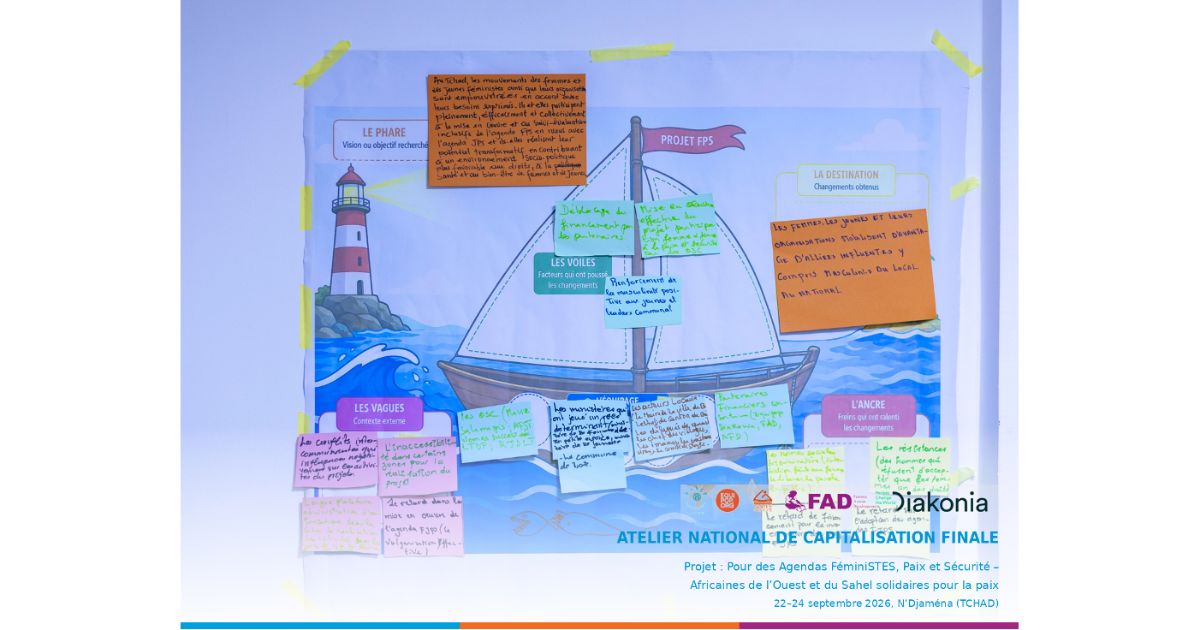
The project “Toward Feminist Agendas for Peace and Security—Women of West Africa and the Sahel United for Peace” is funded by the French Development Agency (AFD) and implemented by a consortium comprising Equipop, FAD in Niger, Diakonia in Burkina Faso, and the Gorée Institute in Senegal, across six countries in West Africa and the Sahel: Benin, Burkina Faso, Côte d’Ivoire, Niger, Chad, and Togo.
Press contacts:
ASSINOU Ahouefa Essi:aassinou@wanep.org– WANEP - Togo
HOUNKPATIN Romance:romance.hounkpatin@equipop.org– EQUIPOP
Priscille BANSE:priscille.banse@equipop.org– EQUIPOP