After participating in the 87th ordinary session of the African Commission on Human and Peoples’ Rights (ACHPR) in Banjul, Equipop participated in the 89th session, this time in Dakar, as part of the Francophone Feminist Alliance (AFF) alongside five Francophone feminist activists from Algeria, Benin, Senegal, and Chad.
From October 7 to 13, feminist voices filled the plenary session halls and loudly championed messages calling for the protection of hard-won rights. Their presence underscored a commitment to continue engaging with continental advocacy institutions.
Be present, or conserve your energy?
Should we be present, or conserve our energy? Against a backdrop of massive rollbacks of rights and activist burnout across all continents, this question can quickly arise and is the subject of debate. How can we confront “coordinated, funded, and interconnected” anti-rights actors and movements?
For the Francophone Feminist Alliance (AFF), as for Equipop, the solution begins with a commitment: to continue engaging in decision-making and advocacy forums to ensure that the voices of feminist activists are heard. On the African continent, there are many such forums, and it is more important than ever to be present in them.
Invest. Yes. But with purpose and coordination. From preparing the delegation to drafting the messages, right up to reading the statement in the plenary session, it was the strength of the collective that made the difference between isolated action and messages delivered together, all moving in the same direction.
Understanding these forums is the first step. Established in 1987, it is important to note that the ACHPR is the primary continental mechanism for the promotion and protection of human rights in Africa. In our review of the 87th session, we noted that it ensures the implementation of the African Charter on Human and Peoples’ Rights (Banjul Charter) and its protocols and interprets their provisions. Among these, the Maputo Protocol is the central treaty for women’s rights in Africa, including sexual and reproductive health and rights (SRHR): among other things, it prohibits female genital mutilation, sets the minimum age for marriage at 18, and recognizes the right to safe abortion in specific cases (sexual assault, rape, incest, or danger to health or life).
On paper, the commitments are there. The Protocol has been widely ratified (46 out of 55 States), but its implementation remains uneven: some States maintain reservations, particularly regarding child marriage (Art. 6) and safe abortion (Art. 14), and restrictive interpretations limit its scope. The result is a persistent gap between the commitments made by States, the laws enacted, and the reality experienced by women, girls, and marginalized groups.
This is where the ACHPR serves as a catalyst. Working in partnership with civil society, it provides a framework to support and hold states accountable, particularly with regard to lifting reservations. Its ordinary sessions—and the NGO Forum that precedes them—are strategic forums for dialogue, advocacy, and coordination among various stakeholders: from states and African institutions to civil society organizations and technical and financial partners.
From Advocacy to Concrete Action: Amplifying Feminist Voices
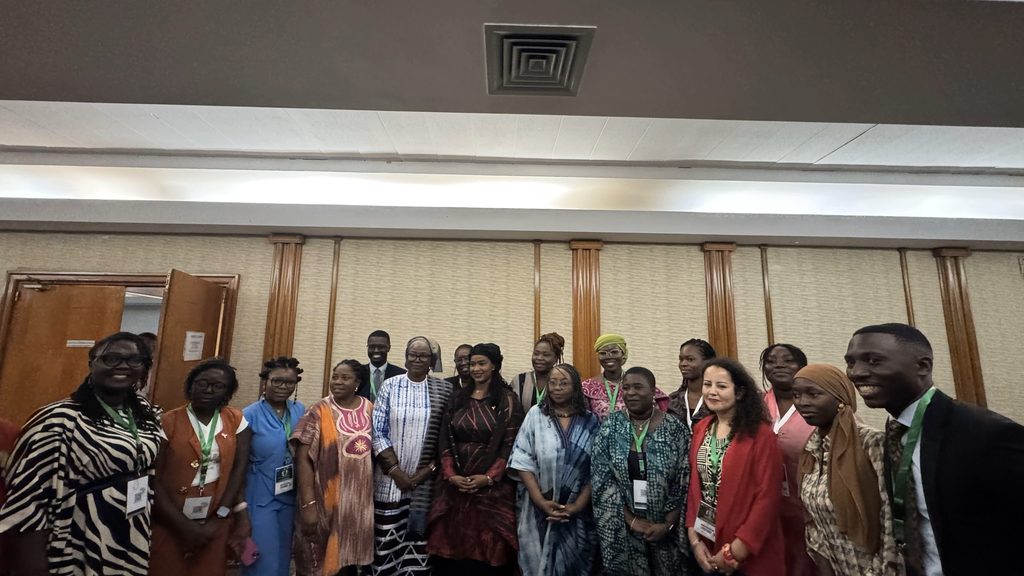
“The Maputo Protocol is not contrary to ‘African values’; and besides, what are these ‘African values’ [that anti-rights activists invoke to reject it]? […]” – Folashadé Sarah Saizonou
At the ACHPR, civil society has several ways to make its demands heard. During this 89th session, the delegation from the Francophone Feminist Alliance, coordinated by FIDH, followed the proceedings in their entirety and chose to engage in two complementary initiatives: a side event and a statement presented during the plenary session.
The AFF delegation joined forces with the ODAS Center and other feminist and human rights organizations for the side event “Not a Step Backward: Voices of the Movement for the Maputo Protocol,” attended by Commissioner and Special Rapporteur on the Rights of Women in Africa (SRRWA), Janet Sallah-Njie. Two activists supported by the AFF took the floor.
Melissa Wouténé described the situation in Chad, where the Maputo Protocol has been signed but not ratified, thereby depriving women and girls of all backgrounds of the specific protections that its ratification and implementation would provide.
Folashadé Sarah Saizonou highlighted the African heritage of the Maputo Protocol—a benchmark for feminists—which women, girls, and marginalized groups must embrace more fully in the face of anti-rights movements and actors.
Her message is clear: women’s rights, in all their diversity, are not foreign to African societies, and decision-making forums must make more room for the feminist activists who defend them.
The event concluded with the reading of collectively drafted recommendations and the official presentation of an advocacy brief to the Commissioner and Special Rapporteur on Women’s Rights in Africa. “Not a Step Back” was not just a title, but a call to move from commitments to action. Among their demands, the activists first called for the relaunch of the continental campaign for the decriminalization of abortion—which the Commission has been leading since 2016—by involving organizations from the Francophone community. They also called for action in countries where the Protocol has not yet been ratified: advocacy missions to the relevant French-speaking countries (Burundi, Chad, Madagascar, Niger) and a dialogue with Cameroon regarding the withdrawal of its reservations. Finally, one of the direct requests to the Commission itself was to adopt a resolution reaffirming the primacy of the obligations under the African Charter and the Maputo Protocol over any non-binding political text, and reiterating that no State may use such texts to evade its commitments. The challenge is to protect the gains and continental frameworks for SRHR, which are currently under attack from all sides.
A collective statement to call on governments to take action
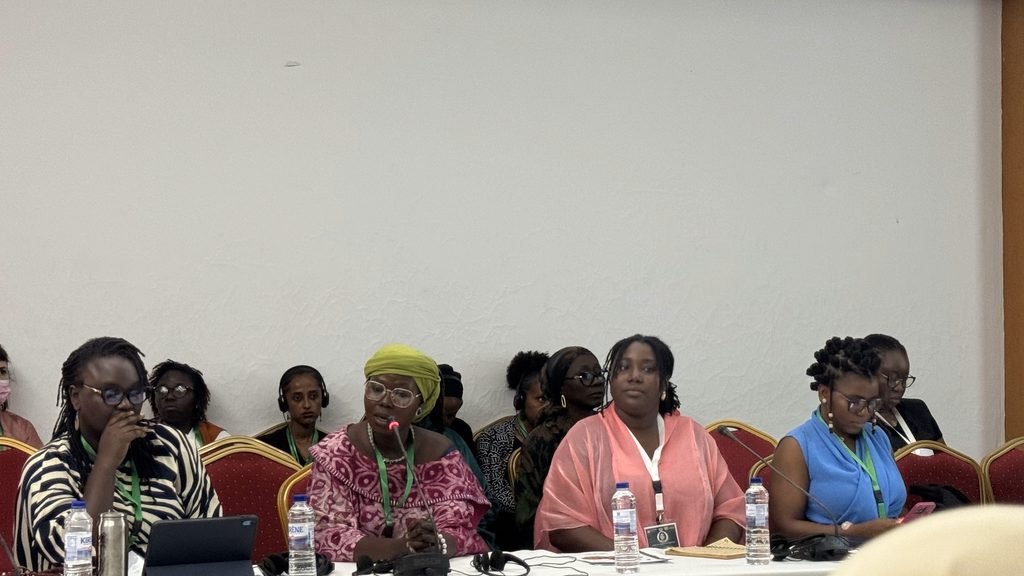
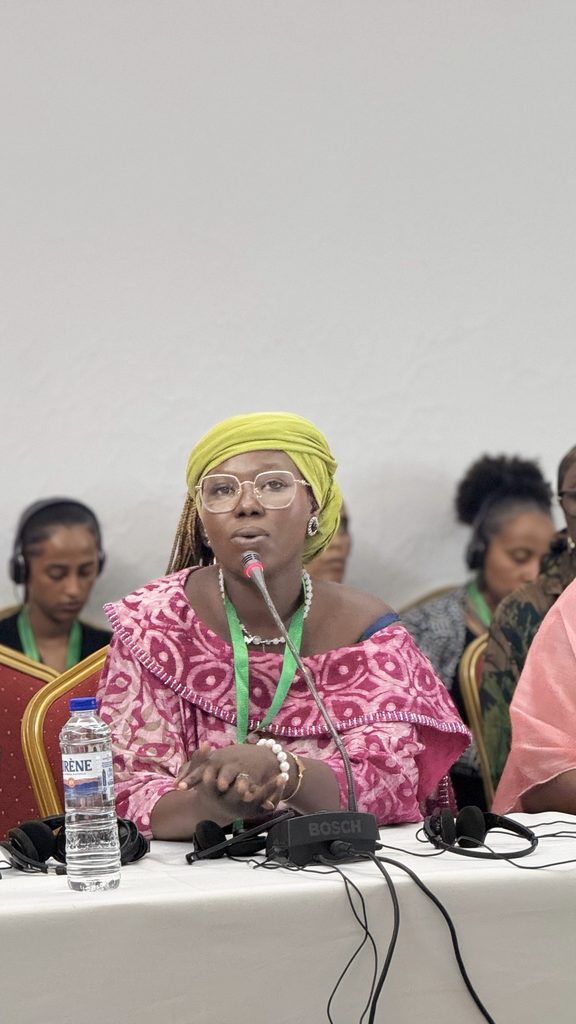

Another way to get involved: statements read during the plenary session, in the presence of the Commission President, among others. Co-drafted by activists from the delegation and then read by Folashadé Sarah Saizonou, the AFF statement first called on states to bring their laws into line with the Maputo Protocol: to guarantee effective access to safe abortion in the cases provided for, to remove administrative and judicial barriers, and to ensure appropriate care for survivors of gender-based and sexual violence. It also called for equitable access to sexual and reproductive health services, regardless of place of birth or economic status, without the “conscience clause” depriving women and girls of their rights. Finally, it called for denouncing and combating anti-rights movements, preserving hard-won gains, and strengthening protection for women human rights defenders in the face of threats, harassment, and reprisals.
Based on these statements, the activists reached a unanimous conclusion: feminist voices are not marginal, but there is still a gap to bridge before these spaces can be truly inclusive and representative of diverse experiences. This is because anti-rights movements are also making inroads into these spaces.
Protecting what we've achieved: don't give up our spaces
What did the activists take away from this session? That hard-won gains cannot be protected from afar. In UN forums as well as in continental bodies, anti-rights movements are present—even in places where human rights are supposed to be protected, promoted, and advanced—and they are organizing there. In the face of this, sexual and reproductive rights and health—and everything that feminist movements have fought so hard to achieve—will only endure if there are still voices left to defend them.
So they put it bluntly: the “empty chair” strategy no longer works. We need to be in the rooms, take our seats, and, when necessary, shake things up. This requires a group that stands united and makes its presence felt collectively rather than individually, as well as lobbying to gain access to the commissioners and participate in panel discussions. Rather than creating new spaces, it’s sometimes better to infiltrate existing ones—and stay there.
That is the purpose of these missions: to preserve and protect the gains we have made—with the Maputo Protocol at the forefront—at a time when there are efforts to roll them back. Rights must be defended not only when they are under attack, but also in the very places where policies and recommendations are shaped and narratives are formed.
For us at Equipop, as with the AFF, the way forward is clear: we must keep moving forward together and make room for those who aren’t there yet.