As part of the Feminists in Action (FEA) project, the LIGUES consortium, comprising the Ivorian, Beninese, and Nigerien Women's Rights Leagues, conducted an assessment in each country of the systems for collecting data on gender-based and sexual violence (GBV) with the aim of understanding why there is so little information available on these tragedies.
The findings are similar. :
- The data on existing VSSs (requested by states via statistical institutes) are not always accessible, made public, or popularized;
- The lack of financial, technical, and human resources affects the collection of data on VSS by statistical institutes and CSOs.
- There are not enough personnel trained in data collection;
- The compartmentalization of the various data collection services (CSOs, state actors, health, police, justice, parliamentarians, etc.) prevents the centralization of data.
- Shortcomings in the quality of the data collected have been identified (indicators are not always disaggregated, few feminist and intersectional approaches in the definition of indicators, concealment of certain types of violence: psychological, gynecological and obstetric, economic, patrimonial violence, etc.);
- The data is not very representative of local realities (large number of unreported cases)...
Quantifying violence is essential to ending it!
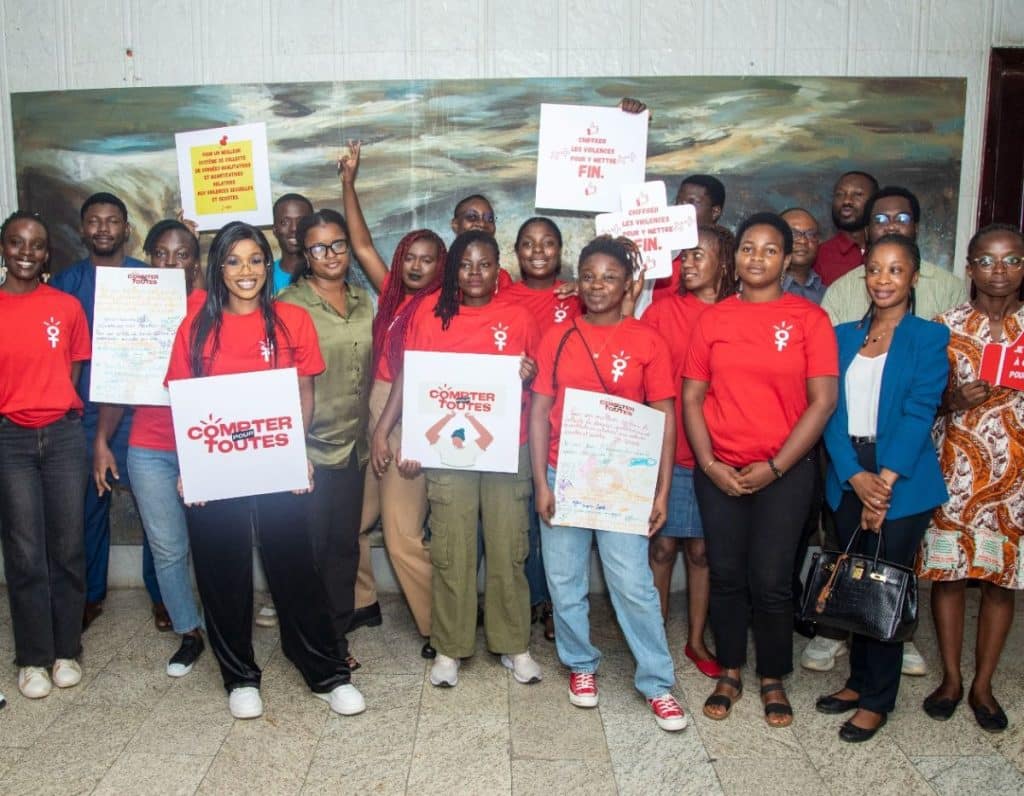
Gaps in data collection on SVV hinder understanding of the phenomenon, its causes and consequences, the needs of survivors, and the barriers they face in accessing effective care. Yet understanding SVV is essential for developing and implementing effective, appropriate, and high-quality policies. Partnered with the campaign Counting for Allof the "Young Feminists of West Africa" project, the Leagues are calling on governments to urgently invest more in the collection, analysis, and dissemination of specific data on gender-based and sexual violence.
A shared ambition, different means of action
In order to influence national authorities to include a budget line in finance laws to improve systems for collecting quantitative and qualitative data on VSS, the leagues have opted for different strategies:
- The Ivorian League will promote cross-sector collaboration to establish synergy in action and financial investment.
- The Beninese League will work to improve SIDOFEE (Integrated System of Data on Families, Women, and Children) to justify additional funding.
- The Niger League will partner with the National Institute of Statistics to shift budget lines in favor of VSS collection.
Since April 2023, two consortia of feminist organizations in West Africa have been mobilizing to call on their governments to address the scourge of gender-based and sexual violence (GSV). Feminist Action Funds (FAF)provide feminist organizations with financial, human, and material resources to support them in their fight for the rights of women and girls. As part of Channel 3, assessments have been carried out and the conclusions require concrete commitments and actions from States.