To mark the International Day of Peace, celebrated on September 21, we take a look at initiatives led by women and young people in West Africa and the Sahel. Despite ongoing conflicts and inequalities, their actions show that lasting peace necessarily requires greater social justice, equality, and inclusive participation.
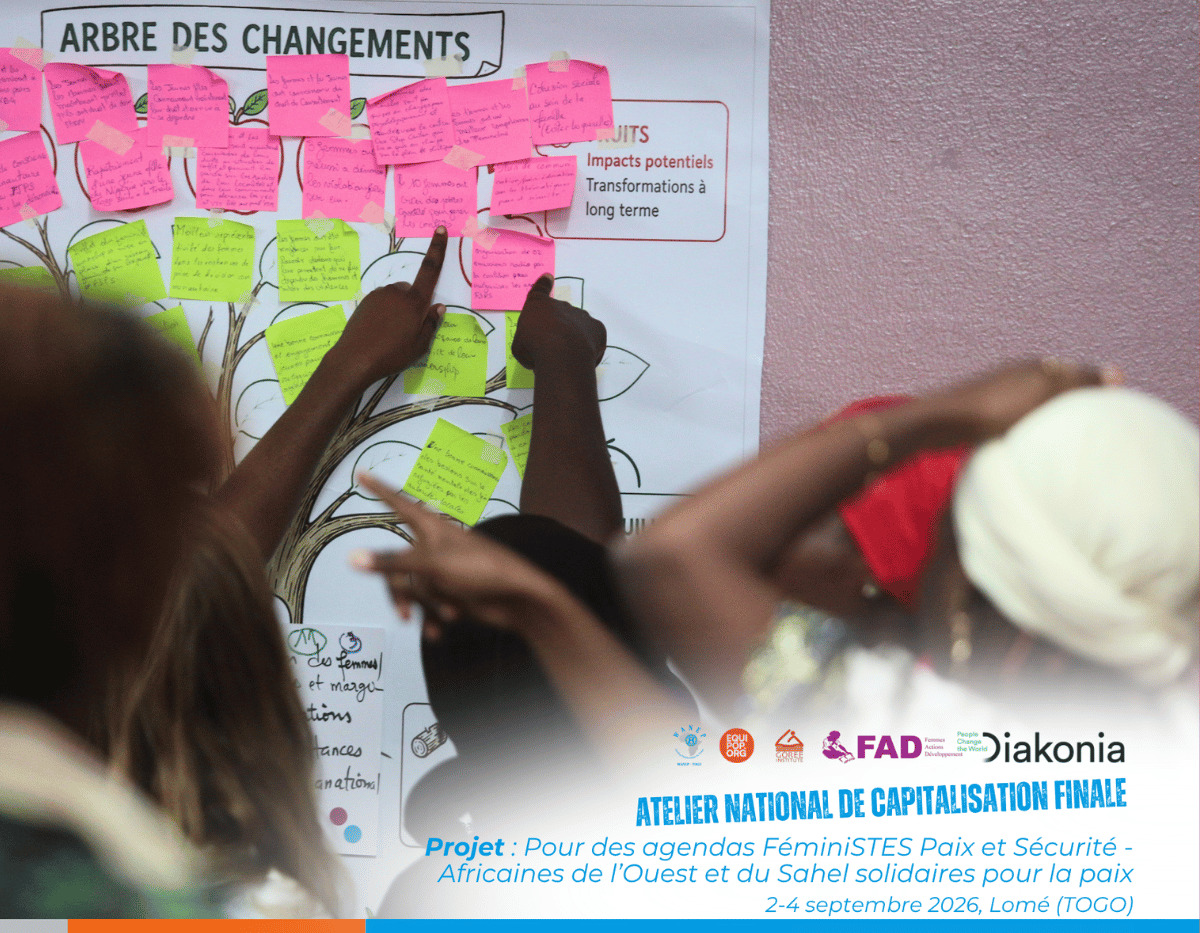
Every year on September 21, the International Day of Peace reminds us that peace remains an ideal shared by many citizens around the world, even though it is still far from being achieved. However, the initiatives led by women and young people in West Africa as part of the project “Toward a Feminist Agenda for Peace and Security—West African and Sahelian Women United for Peace” offer reasons for hope. Funded by the Support Fund for Feminist Organizations through the French Development Agency (AFD), this project is implemented by a consortium comprising Equipop (lead partner), Femmes Actions et Développement in Niger, Diakonia Sweden in Burkina Faso, and the Gorée Institute based in Senegal. It aims to contribute to building more just, equitable, and peaceful societies by providing financial and technical support to feminist civil society actors in Benin, Burkina Faso, Côte d’Ivoire, Niger, Chad, and Togo.
Women and young people are now recognized as key players in the peace process
Women have long been confined to the status of vulnerable individuals—eternal victims in need of protection—while young people were relegated to the role of “social underdogs” who were not supposed to take an interest in issues reserved for “responsible adults,” particularly those related to peacebuilding and security. Today, however, women and young people are asserting themselves as indispensable actors in the peace process.
Every day, they launch projects that address the basic needs of their communities, support local populations, and implement local solutions tailored to their specific circumstances. This role is now recognized and supported by the majority of development partners (the international community, governments, and national and decentralized institutions).
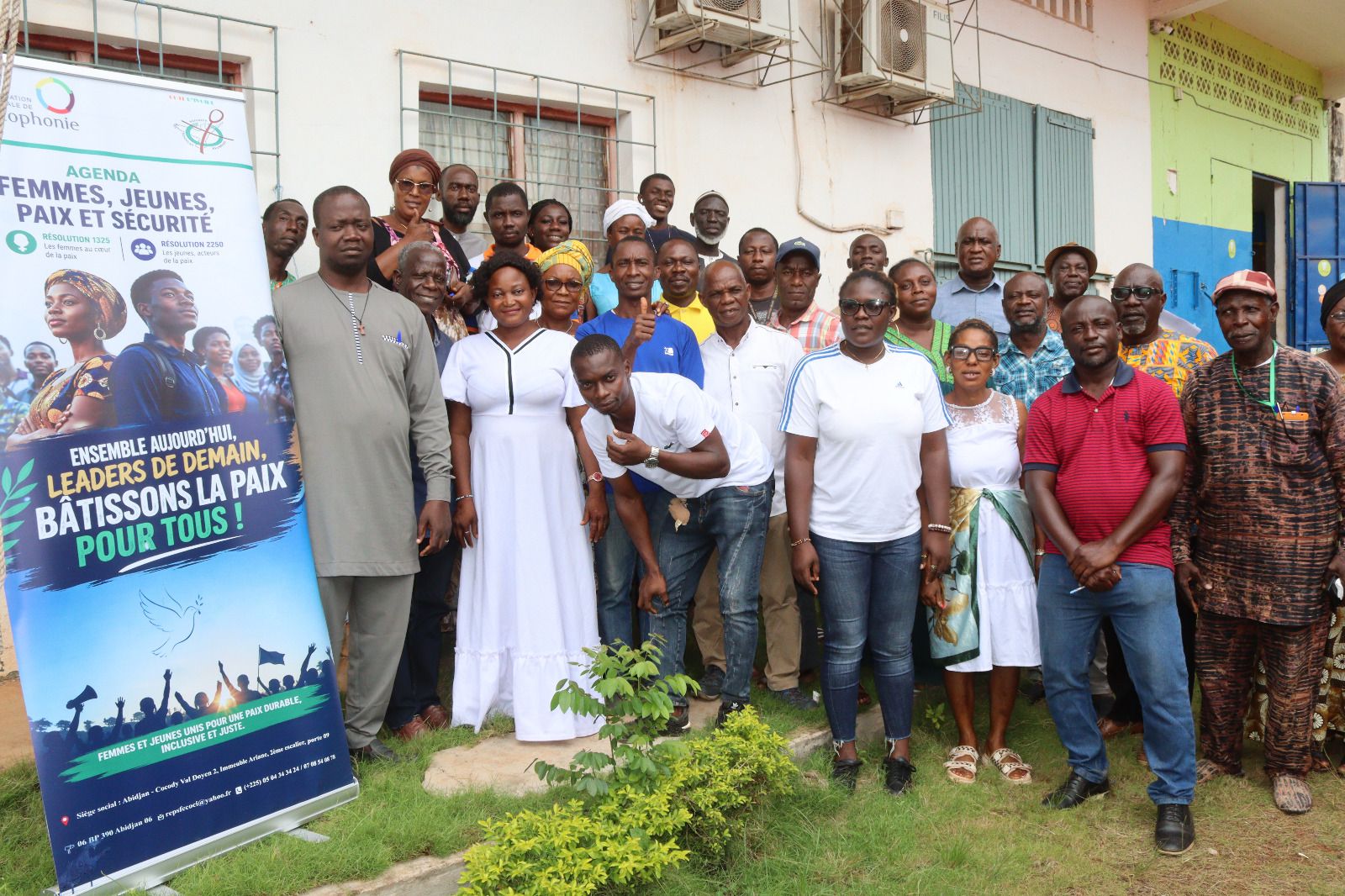
This recognition is part of the broader effort to support the implementation of Resolutions 1325 and 2250, adopted by the United Nations Security Council on October 31, 2000, and December 9, 2015, respectively, and serves as the spearhead of the “Women, Peace, and Security” and “Youth, Peace, and Security” agendas. Their adoption marked a major shift in the field of international security: for the first time, women and youth were no longer viewed solely as victims of conflict, but also as essential actors in peace processes.
Other resolutions—1820 (2008), 1888 and 1889 (2009), 1960 (2010), 2122 (2013), 2242 (2015) subsequently reinforced this framework, placing particular emphasis on the prevention of sexual violence and the integration of gender considerations into peacekeeping operations. They reaffirm the central role of women and youth in conflict prevention and peacebuilding, while providing more specific guidance for the implementation of Resolution 1325. These documents also establish a link between gender equality and development policies. The empowerment of women and youth is no longer viewed merely as a matter of rights, but also as a prerequisite for stability and development.
Moving from a regulatory framework to genuine transformation
To better understand the implementation of these resolutions in the six countries involved in the project, the consortium commissioned a study1 in-depth study, conducted by the West African Research Center in Dakar. This study takes both an empirical and a critical approach. It seeks to re-anchor the 1325 agenda in local practices and to examine how female actors on the ground have adopted it. It thus highlights the persistent gaps between the strategies devised in the capitals and their limited dissemination to peripheral areas.
In the six countries studied (Benin, Burkina Faso, Côte d’Ivoire, Niger, Chad, and Togo), the implementation of Resolution 1325 faces common challenges: chronic insecurity, the weight of patriarchy, and women’s limited institutional participation. These challenges, however, take different forms depending on each country’s sociocultural context.
The study also shows that economic inequalities and patriarchal hierarchies reinforce one another. According to the author, the “feminization of poverty” does not result simply from a lack of development, but from a socio-economic power structure based on dependence, invisibility, and exclusion. For United Nations tools to address the realities on the ground, they must therefore integrate security and political economy issues. Lasting peace requires a concrete redistribution of resources, power, and recognition.
Support peace initiatives led by women and young people
Women, in particular, are playing an increasingly prominent role in community mediation. In Côte d’Ivoire, women peace mediators have become key players, particularly in the northern border region of the country. In 2025, they conducted some 60 mediation sessions with the project’s support. These cases involved spousal and domestic violence, gender-based and sexual violence (GBV), including forced marriages, as well as community conflicts, particularly those related to land disputes. Their work is therefore no longer limited to protecting women; it contributes more broadly to the safety of the entire community. This experience demonstrates the effectiveness of the mediators’ local presence in the early detection and rapid response to incidents.
For many women, peace is not merely the absence of war, but also requires an end to gender-based and sexual violence—which is already all too widespread at all times and is exacerbated by conflict. This violence, present in all societies and on every continent, is now being tackled head-on by women’s and feminist civil society organizations in West Africa and the Sahel. Some notable progress has already been made.
In Togo, as in Côte d’Ivoire, for example, women have access to hotlines that allow them to report sexual and reproductive violence (SRV) and gender-based violence (GBV). In the Central Region of Togo, in Sokodé, religious authorities are also involved in this effort. In this region, where Islam is deeply rooted, the organization Dimension Humaine trains imams to spread messages about preventing such violence. Some now alert civil society organizations when they observe such incidents. Imams have also been made aware of the consequences of early marriage and refuse to perform certain weddings when the bride-to-be has not reached the legal age for marriage.
Preventing Violence Through Economic Independence
Peacebuilding also relies on preventive measures, particularly in areas affected by violence that transcends national borders. These preventive measures can take various forms. The approach favored by women’s and feminist organizations involves, in particular, reducing the temptation of “easy money” by developing income-generating activities (IGAs).
Economic empowerment is, in fact, a major driver of change. Women working on the ground strongly emphasize that raising awareness alone is not enough. Asking young people and women in vulnerable situations to reject offers from criminal or extremist groups without offering them economic alternatives remains ineffective. They are therefore calling for concrete projects. In all six countries, special attention is thus being given to the development of AGRs affiliated with the Village Savings and Credit Associations (AVEC), which not only enable women to finance their activities but also to network with other women.
In Benin, the organization Rescue and Hope, based in Parakou and active in the northern part of the country, identifies people who are particularly vulnerable to recruitment by armed groups. It works primarily with internally displaced persons, bar waitresses, and sex workers. It trains them to strengthen their ability to counter violent extremism and supports them in setting up income-generating activities (IGAs).
Bringing About Lasting Change in Power Dynamics
All of these examples demonstrate a growing trend toward the meaningful participation of women and young people in peace initiatives, whether led by government authorities or by civil society organizations themselves.
However, as the study points out, this participation remains constrained by the conditions set within a power structure that is still largely male-dominated. Until these power dynamics are truly transformed, women will not be fully recognized as key players in recovery and the building of lasting peace.
Making peace a reality therefore requires not only supporting initiatives led by women and young people, but also providing them with the resources, empowerment, and recognition they need to take sustainable action. This is what the Consortium, with support from AFD, has been working to achieve since 2024 in six countries in West Africa and the Sahel, by enabling them to carry out their own projects using their own methodologies—without seeking to impose a single model—while taking into account their highly diverse social and political contexts.
The international political and military context should convince us that, today more than ever, these local and national peace initiatives by women’s and youth CSOs must be encouraged, supported, and funded, because peace begins within the family, the neighborhood, the village, the school, and social networks.
- Resolution 1325 in West Africa and the Sahel: A Feminist Analysis of National Dynamics, Convergences, and Local Resistance, WARC, Gorée Institute, AFD, 2026. ↩︎