“There is no issue that is not a feminist issue.”
— Chancellor Mevowanou, at the Symposium on SRHR in Cotonou (2024).
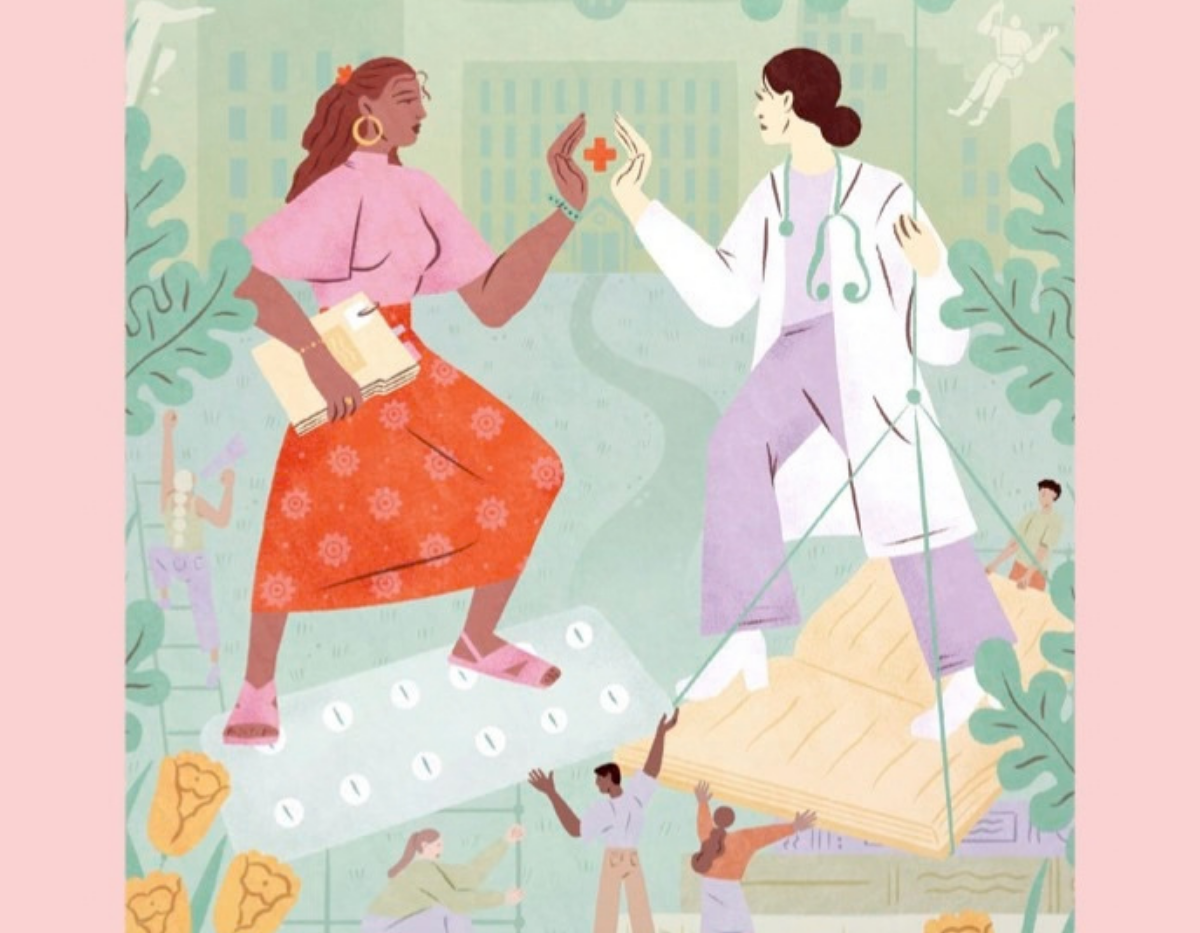
This statement resonates particularly strongly when applied to the field of health care. Providing care is never a neutral act. Being healthy is not just a personal matter: it is a matter of rights, power, and social justice. While health is a universal right, it remains a socially situated privilege, shaped by gender, class, race, immigration status, disability, or sexual orientation.
In light of these systemic inequalities and the global trend of erosion in sexual and reproductive health and rights (SRHR), Equipop is publishing a summary of its “Feminisms and Health” discussion series .
Drawing on six years of collective reflection (2019–2025), 12 meetings, and the voices of 25 contributors—researchers, healthcare providers, activists, and advocates—this book highlights how power dynamics shape access to care.
A political, educational, and strategic tool
The book is organized around three main themes:
- Providing Care in a Sexist World: Analyzing gender as a social determinant of health, deconstructing institutional violence, and challenging the hierarchy between academic medical knowledge and experiential knowledge.
- Feminist struggles to support change: promoting community-led responses (such as gynecological self-defense initiatives in Senegal), combating obstetric violence, and resisting anti-rights movements.
- Our bodies, our choices, our knowledge: putting the voices of those most directly affected back at the center, without, however, relieving public institutions of their responsibilities.
This report proposes concrete alternatives for transforming healthcare. Infusing feminist thinking into the heart of public health, improving the patient experience, and breathing new life into global health advocacy raise a fundamental question: How can we build a better healthcare system for everyone?