
When it comes to gender-based violence (GBV), feminist organizations are confronted daily with situations where the responses provided do not always succeed in removing the obstacles faced by survivors. Difficulties in accessing services, stigmatization, inadequate care, slow procedures, or institutional failures: behind each individual situation, deeper structural problems may lie.
What if some of these situations could help bring about changes in practices?
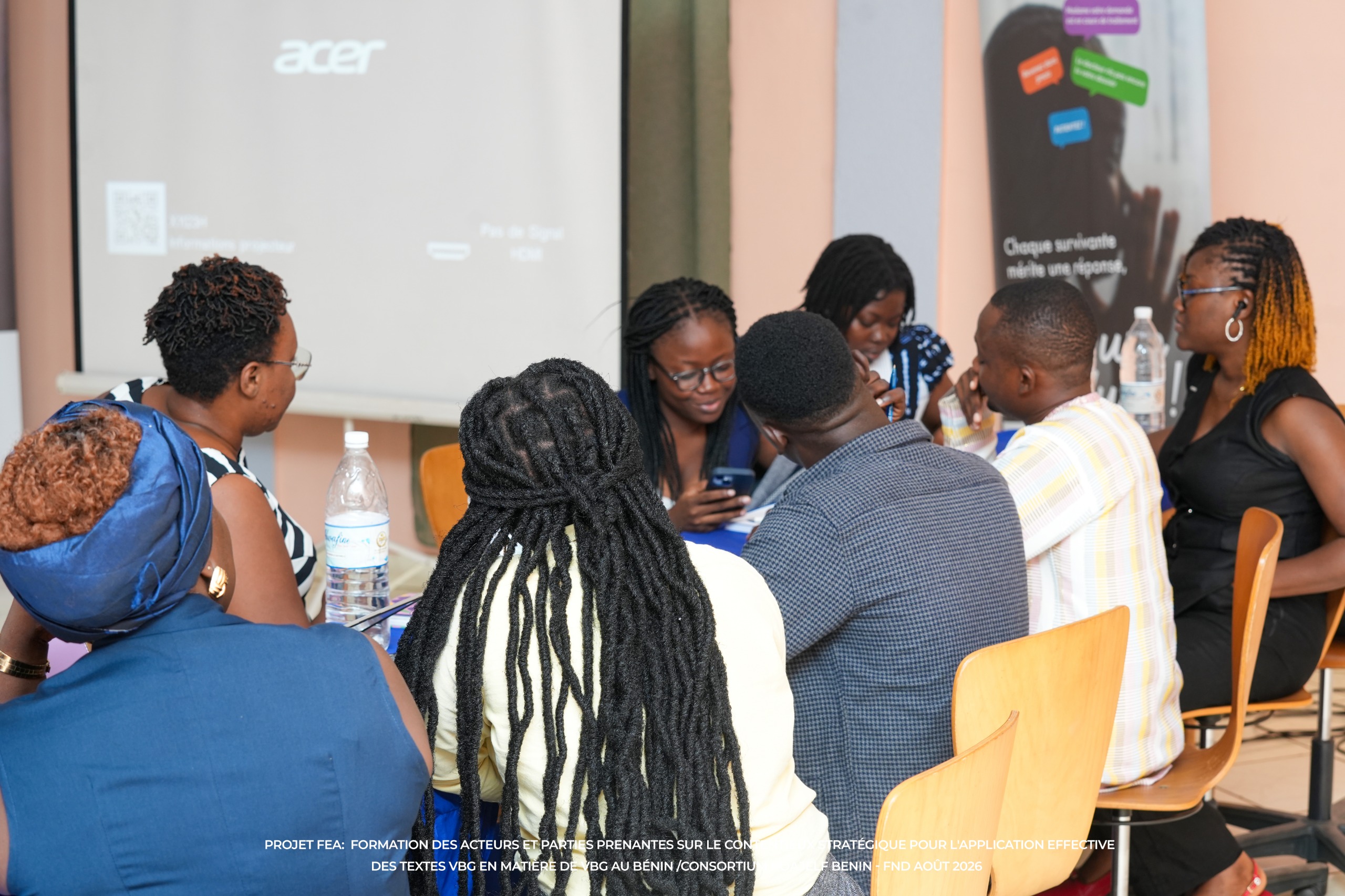
This is precisely what strategic litigation can achieve: taking an individual case as a starting point to highlight a structural problem, bring about a change in practice, or strengthen advocacy efforts. This approach was at the heart of a workshop organized in Bohicon by ROAJELF Benin, as part of a project aimed at improving care for survivors of GBV, with support from the Feminists in Action Fund (AFD funding).
The challenge is to go beyond merely noting the difficulties encountered on the ground to identify what can be changed. A situation can thus lead to questioning an institutional practice, documenting a shortcoming, mobilizing a recourse mechanism, or fueling advocacy aimed at broader change.
But this requires asking the right questions: What change are we seeking to achieve? Can this situation truly contribute to that change? And how can we act without further exposing the person involved?
This reflection calls for strengthening the bridges between grassroots organizations, legal professionals, and other actors engaged in the fight against GBV, in order to develop responses that are relevant, strategic, and protective.
Turning Field Experience into a Force for Change
The situations encountered in support work provide valuable insight into the obstacles that persist and help identify areas for action. Better documenting, analyzing, and contextualizing these situations can help bring common issues to light and strengthen advocacy strategies. Individual cases then become a starting point for examining the system and improving it.
With this in mind, ROAJELF Benin organized a training session on strategic litigation that brought together about 20 participants, including organizations working in the fields of health, prevention, and protection of survivors of GBV, as well as female attorneys and journalists.

And now, let's move from learning to action
Two months after the workshop, the challenge for the organization and its partners is to keep this momentum going: to continue documenting, strengthen analytical capacities, and develop collaborations among feminist organizations, legal professionals, and other relevant stakeholders. The goal is simple, yet demanding: to transform on-the-ground experiences into the capacity for collective action. Because reducing violence is not just about responding more effectively to situations as they arise. It also involves identifying the practices and systems that allow violence to persist, and finding ways to change them.
It is now up to us to turn every documented experience into a learning opportunity, every partnership into a driving force for action, and—when the conditions are right—every situation into a potential springboard for change.
What about you? What levers do you think are most effective today for moving from assessment to transformation? And what if, beyond each individual situation, we also looked for levers capable of bringing about lasting change in practices and systems?