
Backlash against women's and LGBTQIA+ rights, the rise of the far right, climate misinformation, attacks on international solidarity: in this context, the media are not mere witnesses, they are at the heart of a veritable "battle of narratives."
Based on this observation,Equipop, Prenons La Une, and La Fronde have jointly created a 60-page magazine designed as a tool for journalists and journalism schools:
Journalists & Feminists:
Better information to preserve democracy


This publication offers an international analysis of reactionary strategies, reports from journalists and associations in the field, and concrete recommendations for transforming media practices.
An unprecedented alliance between journalists and feminists
This magazine is the result of a unique collaboration between a feminist international solidarity association (Equipop), an association of journalists committed to equality in the media (Prenons La Une), and a feminist training agency (La Fronde).
The project was born out of a day organized at the CESE in February 2025, "Women & Media – Les Rencontres de l’Égalité" (Women & Media – Encounters for Equality), which brought together journalists, researchers, and activists in early 2025 to discuss a simple question: how can we work together to confront the rise of the far right and the offensive against women's rights, press freedom, and international solidarity?
The magazine is based on a strong conviction that runs through all of its articles: journalists and feminists share the same adversaries and a common responsibility in defending democracy.
Deciphering the backlash and reactionary strategies
The first part of the magazine focuses on deciphering the global reactionary offensive. It includes, for example, an interview with the feminist organization AWID about the #FreezeFascisms campaign, which shows how fascist and fundamentalist movements are attacking women's rights, gender justice, and the multilateral system.
Other articles analyze the decline of press freedom in Hungary under Viktor Orbán and in Italy under Giorgia Meloni, where control over public and private media goes hand in hand with a hardening of anti-rights policies. In the United States, Donald Trump's second term is presented as a textbook case: attacks on the media, a "bulldozer" of disinformation, suppression of public content, and dismantling of development aid.
The magazine also highlights the role of Big Tech in spreading masculinist, racist, and anti-feminist discourse, and how the crisis inofficial development assistance primarily affects women's rights and feminist organizations.
Media anti-feminism, femonationalism, and the trivialization of the far right
Another section of the magazine explores the mechanisms ofanti-feminism in the media. It shows how the far right is working on its image to appeal to young people and make itself socially acceptable.
The texts also analyzethe infiltration of racist language into media discourse ("great replacement," "ensauvagement," "wokism," "culture war," etc.), which is sometimes repeated without critical reflection. One chapter is devoted to femonationalism, the exploitation of women's rights for xenophobic and anti-immigration purposes, particularly in European and French election campaigns.
The magazine also questions journalistic practices themselves: fascination with certain figures of the far right, complacent portraits, lack of journalists specializing in these issues even as the far right gains ground.
Voices from the field and practices of resistance

Throughout the publication, journalists, collectives, and independent media outlets share their experiences:
- Salomé Saqué debunks the myth of "journalistic neutrality," often used to discredit feminist, anti-racist, or environmentalist issues.
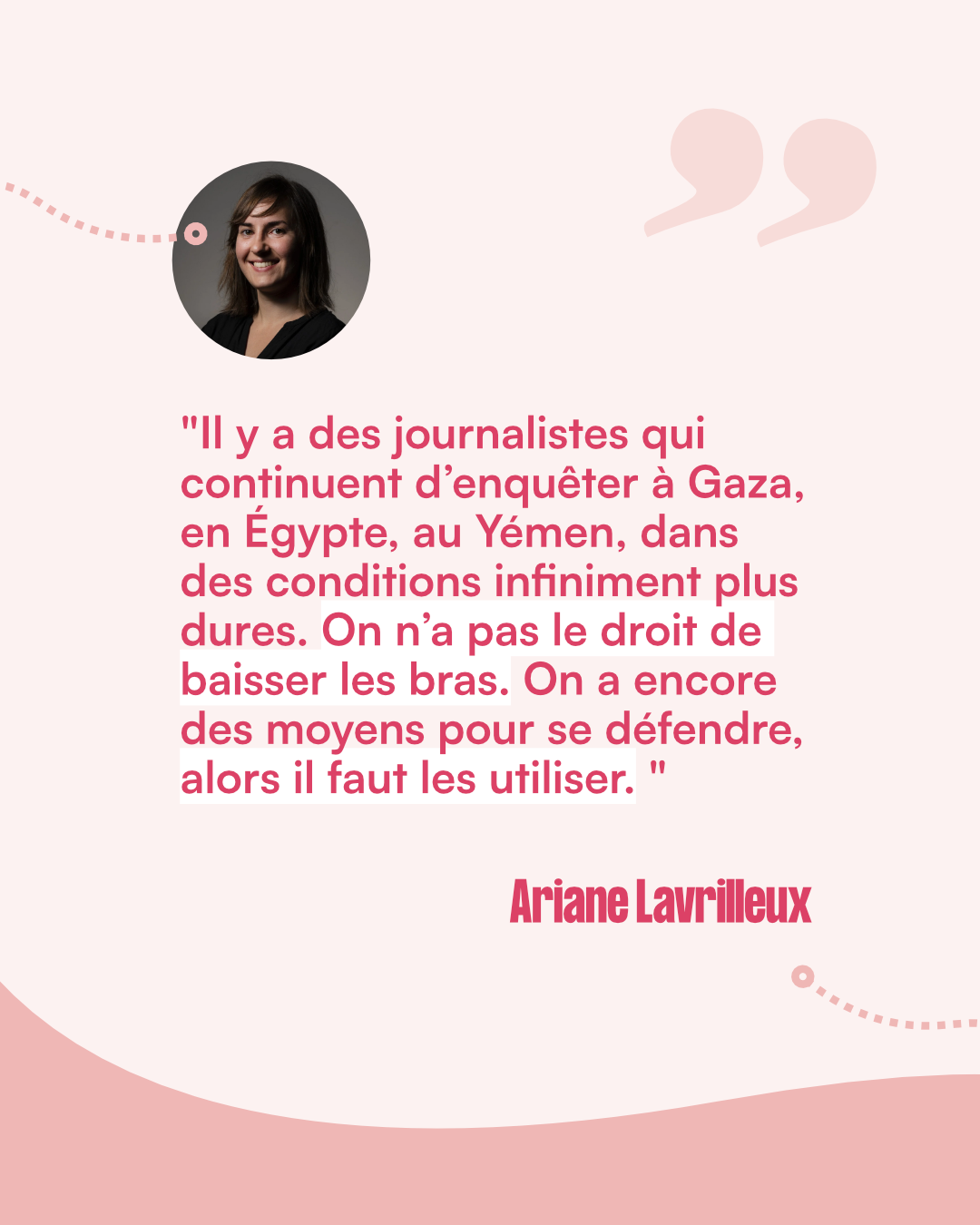
- Ariane Lavrilleux recounts the consequences of surveillance and legal proceedings against investigative journalists.
- Coline Folliot (AJL) analyzes transphobia in the media and reiterates the importance of accurately naming realities.
- Estelle Ndjandjo (AJAR) describes the denial of racism in French newsrooms and argues for talking about structural racism rather than simple "stereotypes."
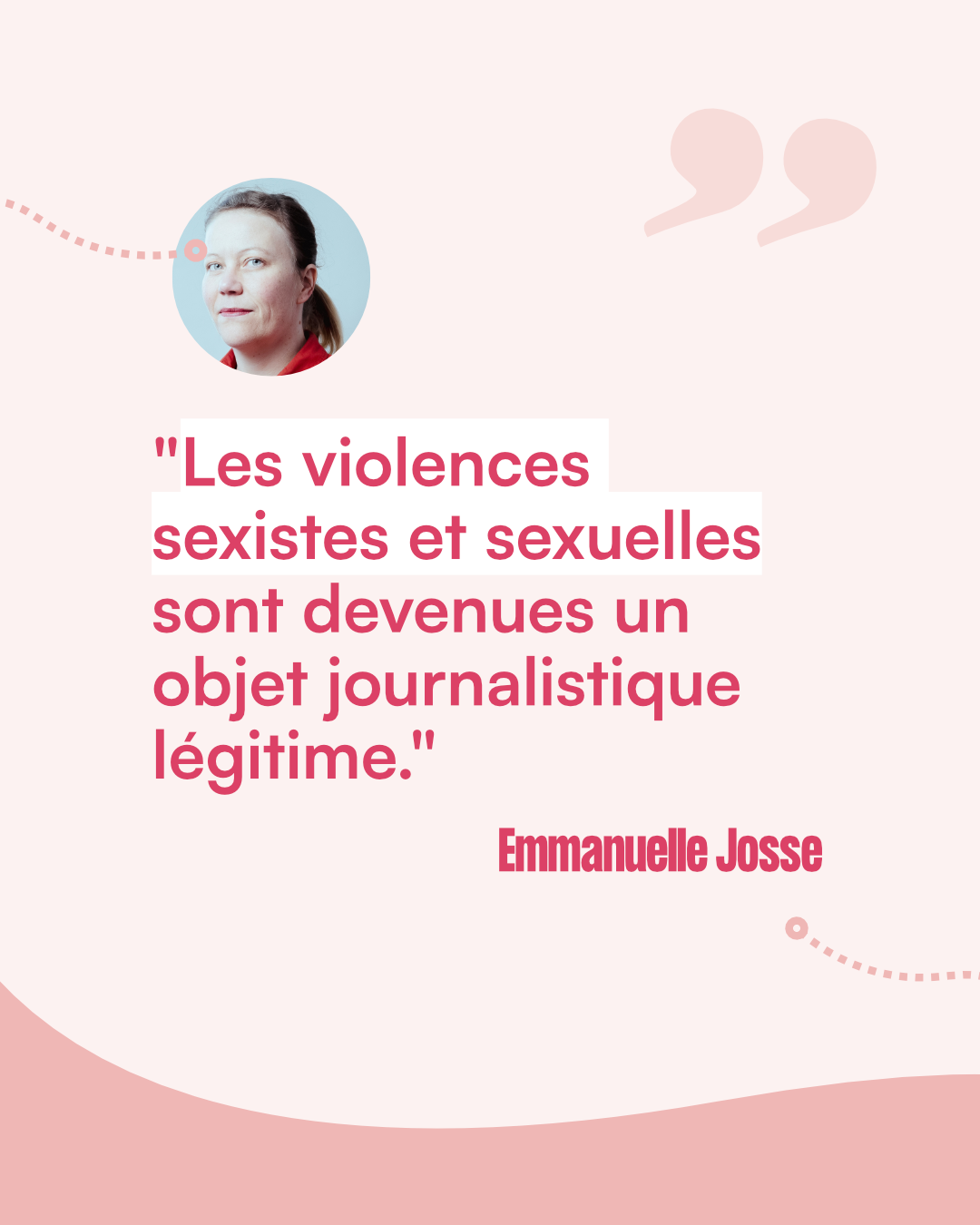
- Emmanuelle Josse, co-founder of La Déferlante, talks about what it means to run an independent feminist media outlet today.
- Francesca Festa, co-founder of the Sphera network, shows how independent European media outlets are organizing collectively to resist political and economic pressures.
Concrete examples of collective resistance complement these accounts: mobilization of journalists from the Bayard group in the face of ultra-conservatism, a media cordon sanitaire in French-speaking Belgium, the pioneering role of Spanish public television on equality, and initiatives such as Quota Climat to document climate misinformation.
Concrete recommendations for newsrooms and journalism schools
The magazine does not limit itself to observations. It concludes with practical recommendations for editorial teams and journalism schools. These recommendations focus in particular on:
- continuing education on issues of gender, racism, class, and the fight against gender-based and sexual violence;
- the creation of gender editors and race editors, who act as internal watchdogs for content;
- the protection of journalists against cyberbullying;
- rigorous treatment of the far right;
- support and funding for a free, independent, and feminist press.
This magazine was designed to provide articles and reports, but also editorial meetings, journalism school courses, and internal discussions.
_ _ _ _ _
A publication that has been added to the Equipop Resource Center.