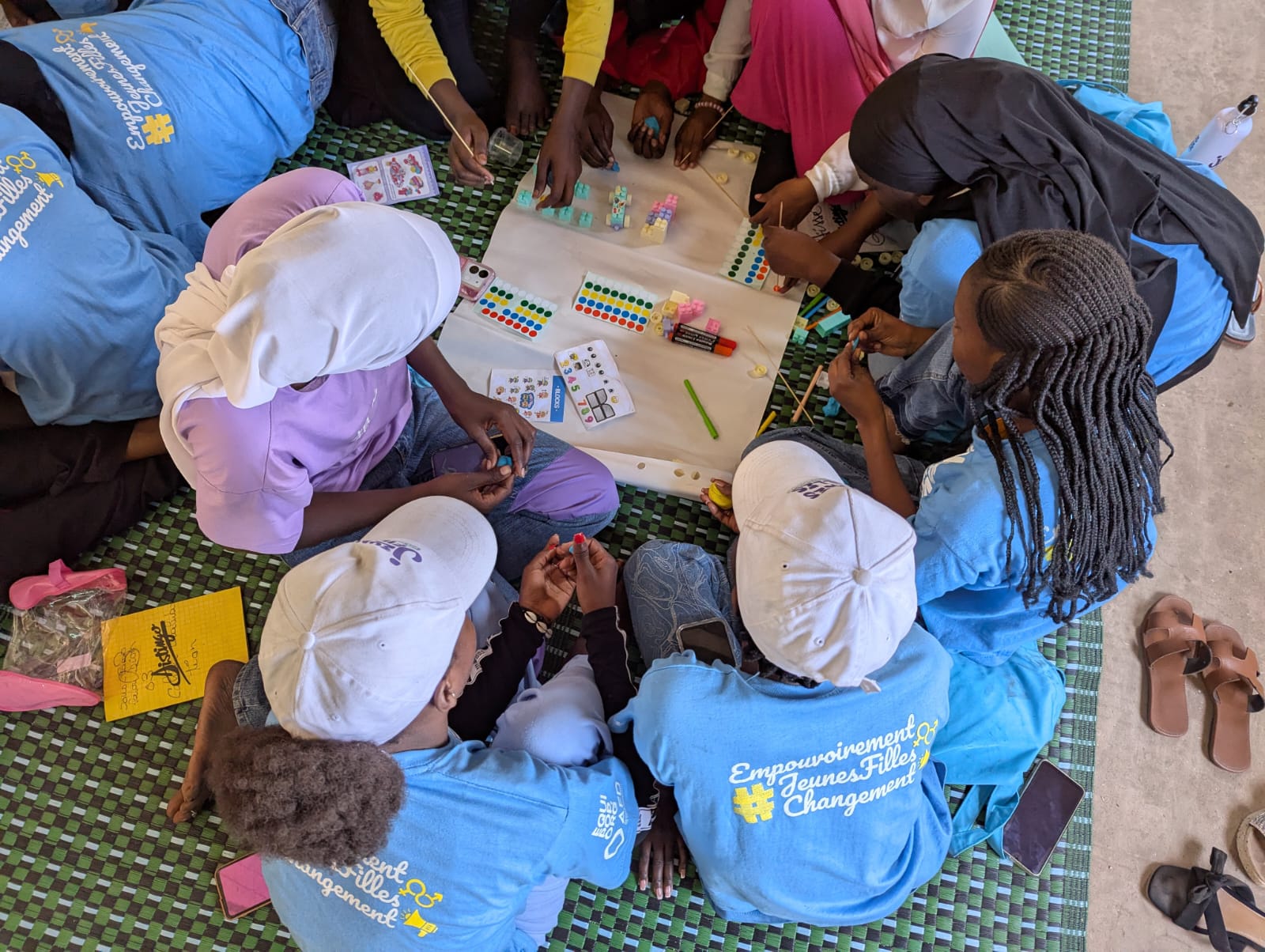
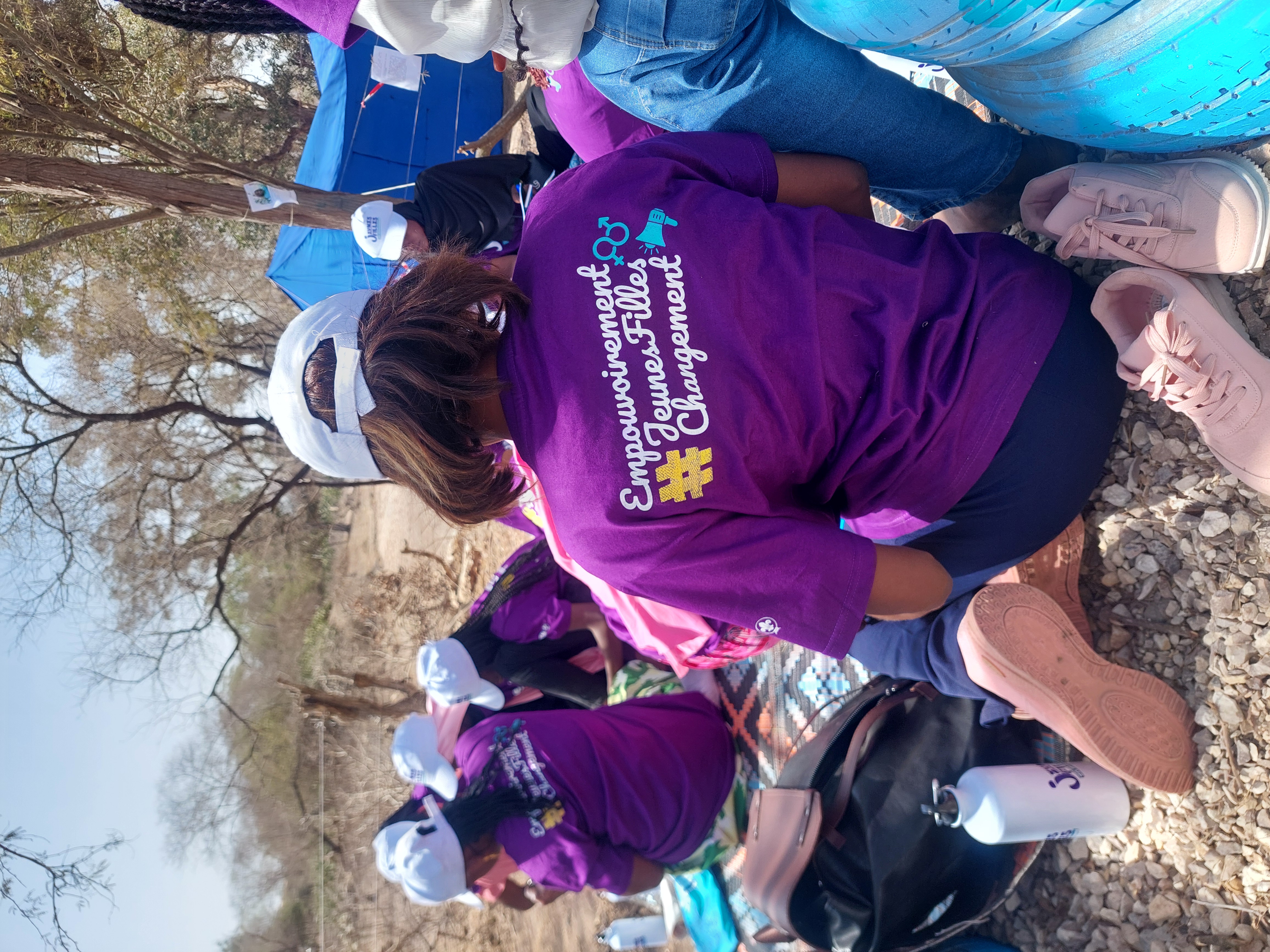
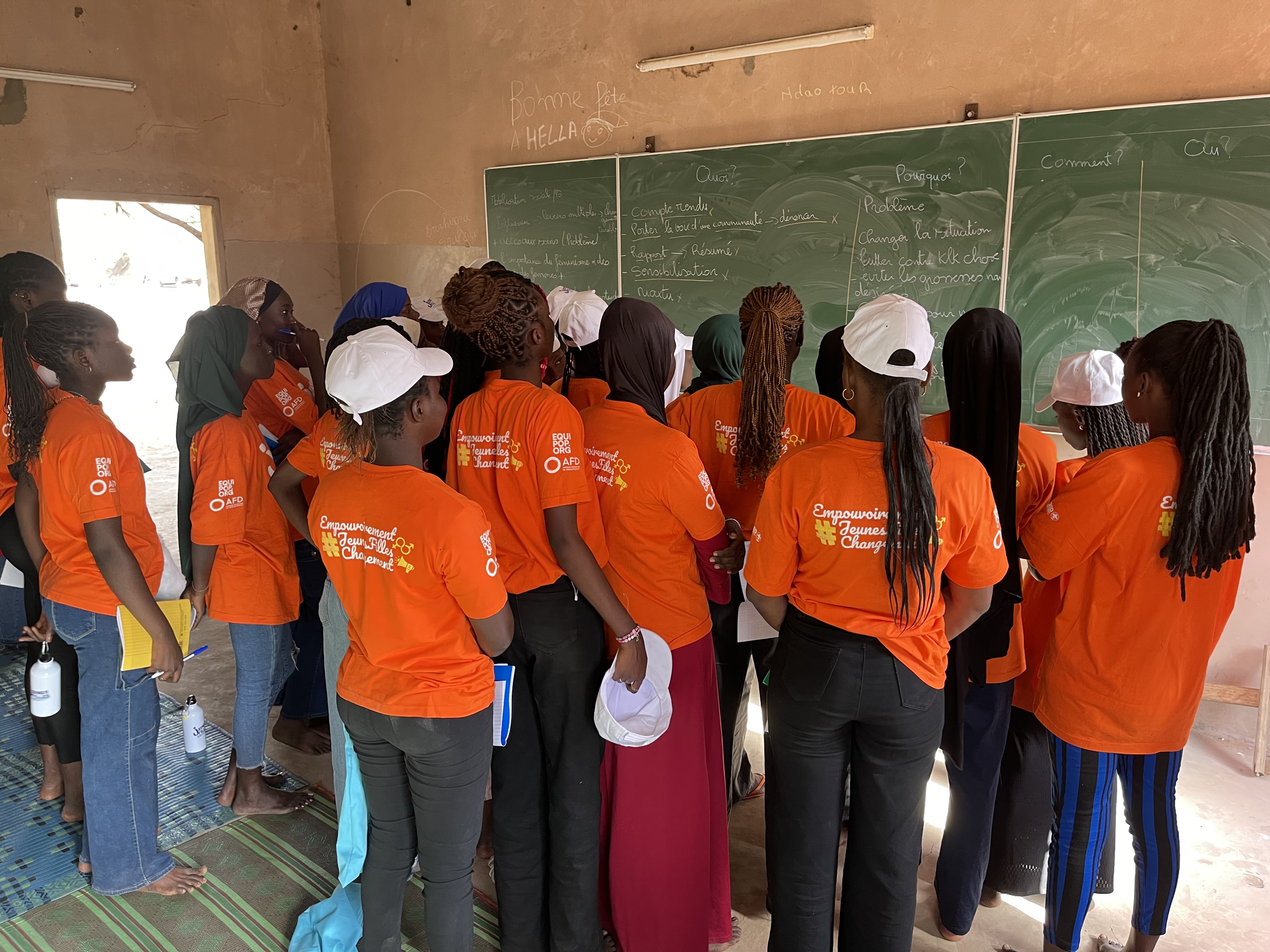
From April 2 to 7, 2025, the Professional Training Center (CIFOP) in Mboro, Senegal, welcomed 135 Young Women on the Move (JFM) from Mbour, Fimela, and Matam. Accompanied by teams from Jeunesse et Développement (JED), Equipop, and a Senegalese feminist consultant, these young women took part in a unique incubation lab .
Advocacy strategies co-created with a gender and feminist approach
From the outset, the Lab was intended to be a space for free and supportive reflection, where young women could put into words what they are experiencing, feeling, and want to change. Over the course of five days, discussions around sometimes vague or misunderstood concepts such as feminism, patriarchy, sisterhood, and gender helped to clarify perceptions.
With empowerment at the heart of Equipop's approach, the JFMs were helped to understand how to conduct effective, consistent advocacy rooted in local realities. Based on their own observations and knowledge of sexual and gender-based violence in their regions, the JFMs began to reflect on the following questions: What are the issues at stake? What are the root causes? What is needed for things to change?
The discussions were enriched by testimonials, shared experiences, and a great deal of listening and kindness. Little by little, each regional group defined a central issue and built an advocacy strategy around it.
- In Mbour, the aim was to improve care for rape survivors.
- At Fimela, we fight against unwanted pregnancies by strengthening education on emotional and sexual matters.
- In Matam, the JFM chose to demand strict enforcement of the law criminalizing rape in order to break the silence and end impunity.
JFMs, agents of change
Through EquipopLab, a participatory and dynamic method, ideas were tested, debated, and selected collectively. The young women learned to transform their intuitions into concrete actions, to argue their case, and to prioritize. They created storyboards, built prototypes, and prepared public presentations of their projects. Some even used theater to recount their reality and draw attention to the injustices they have experienced. These were moments of strong emotion, as the topics addressed are so important to the JFM.
The collective energy and shared determination to tackle violence and injustice and give young girls a voice were the driving forces behind the JFM, creating an opportunity for young girls to take their rightful place and project themselves as legitimate and competent agents of change, defending their own rights and those of other girls in their regions.
The Jeunes Filles en Mouvement incubation lab in Mboro is a foundational step in a broader journey. The project adds personalized socio-professional and psychosocial support for each of these 135 young women (provided by JED) to guide them in building their lives.
Focus on advocacy plans
Matam
The Matam JFMs are calling on the governor to end the silence and impunity surrounding rape, demanding compliance with the law that criminalizes rape. Their project, focused on freedom of speech and political mobilization, is based on monthly discussion groups bringing together young women from diverse backgrounds, accompanied by a feminist psychologist. The lessons learned from these exchanges will feed into a collective advocacy letter submitted to the governor with a clear objective: to obtain concrete commitments for protection and justice.
Mbour
In Mbour, Saly, and Malicounda, JFM advocates for better care for rape survivors by mobilizing the community and calling on municipal authorities. Trained and supported by feminist allies, they will lead community dialogues, collect local data, and then organize a panel to secure the signing of a memorandum by the mayors. Their goal: to obtain concrete commitments for the financing of medical, legal, and psychosocial care for survivors.
Fimela
In Fimela, JFM works to prevent unwanted pregnancies in schools by advocating for the involvement of key players in the VSS ecosystem to actively and continuously participate in school activities, particularly cultural events and FOSCOs. Their strategy combines community mobilization (marches, conferences, local meetings) and lobbying of education authorities to ensure comprehensive sex education and strengthen prevention in schools and cultural spaces. The goal is to obtain concrete commitments from local authorities to protect the future of young girls.