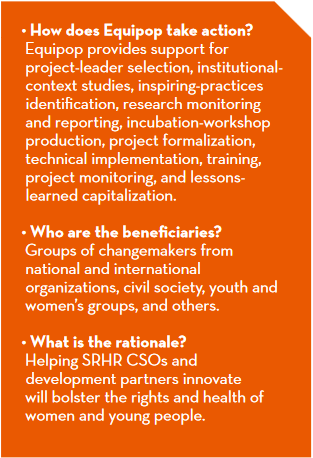
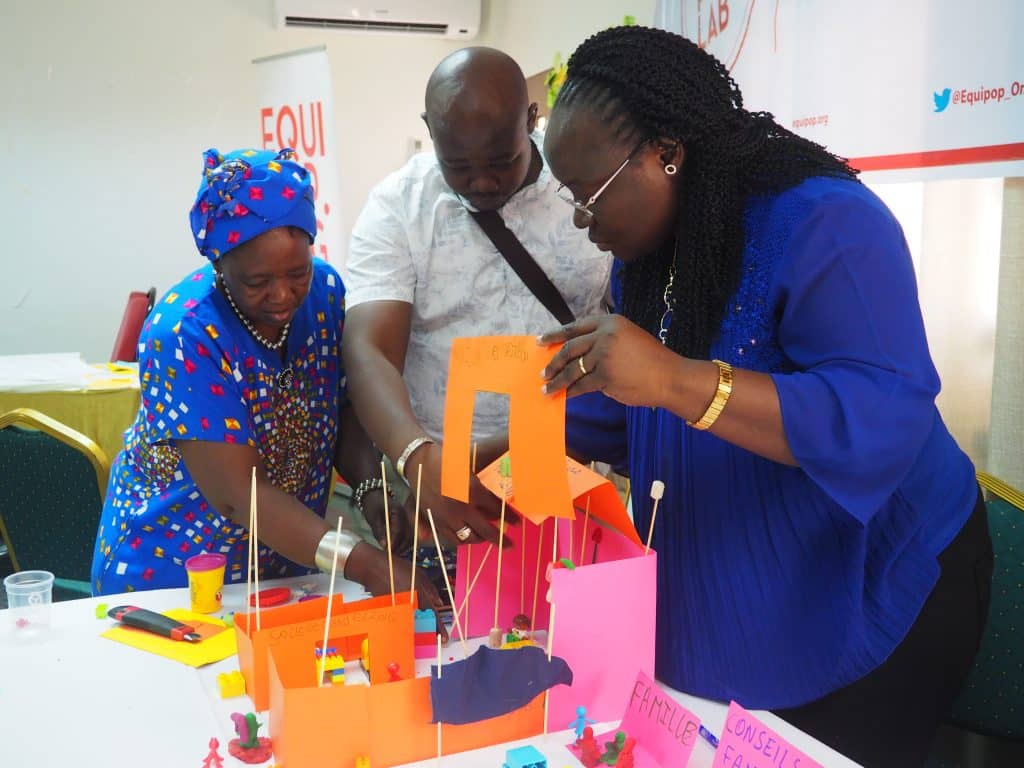
Equipop, convinced of the transformative potential that collective and multidisciplinary action represents, decided in 2017 to extend its range of support for changemakers. It now offers Equipop Labs, a new method of supporting project planning and development within the Equipop Innovation Fund.
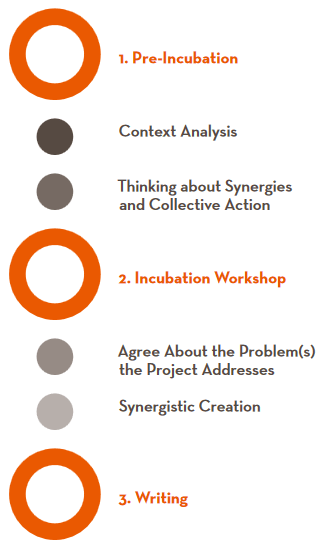
What are Equipop labs? Equipop Labs are project-incubation spaces that aim to enable CSOs, institutions, and anyone else working for the protection and respect of SRHR to take the time to strategize–and plan collective actions. Created in partnership with Design-Thinking specialists, Equipop Labs follow three main steps, as summarized in the diagram below:
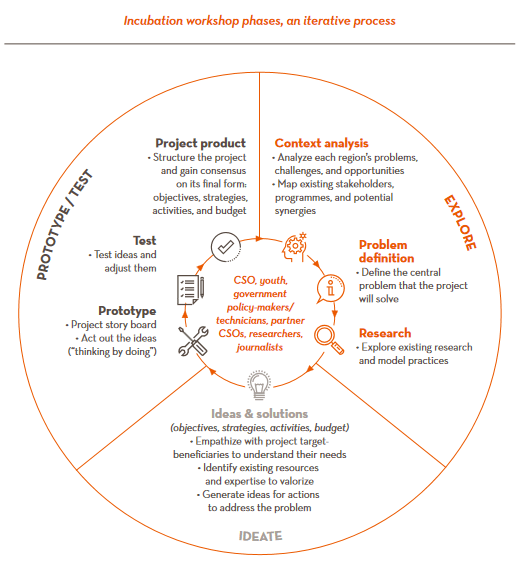
An approachh that revisits the concept of partnership Equipop has put in place a system that aims to separate project design, which requires time and consultation, from looking for fun–because when those two phases are joined, they tend to hinder collective thinking and analysis, the keys to innovation. The key to this system is the Innovation Fund, which provides funding for incubated projects. Thus, an Equipop Labs project incubation requires setting up the conditions for multiple–multiple actors and different types of experts to collaborate right from the beginning – the pro-Equipop invites a variety of partners – government officials, CSO staff, lawmakers, young people, UN-system experts, academics, researchers, and journalists – to share their in-depth knowledge about an area and identify target-audience needs that call for action. Pooling such expertise facilitates the emergence of transformative solutions, making it possible to take stock of existing initiatives and evaluate what works well and what does not; it also helps produce a pro–ject in a facilitating environment. Mobilization that begins with the design phase has another great advantage: it anchors the project in an area, creating new partnerships and ensuring that the stakeholders who will implement the project will take better ownership of it. A cross-cutting approachh After two years of experience with Equipop Labs, a wealth of incubated projects cove–a wide range of subjects has confirmed the value of the method’s cross-cutting nature. Incubated projects in most countries combine supporting activities with youthleadership development, targeted advocacy actions, and citizen mobilization through the arts and media. These actions are intended to strengthen and ensure national commitments to respect and implement SRHR for young people. Equipop Labs have been applied to various contexts, from the simplest to the most complex, and to social and political community-mobilization actions and projects. Equipop has conducted about 15 Equipop Labs for projects run by youth groups, CSO consortia, and institutions such as UN agencies.