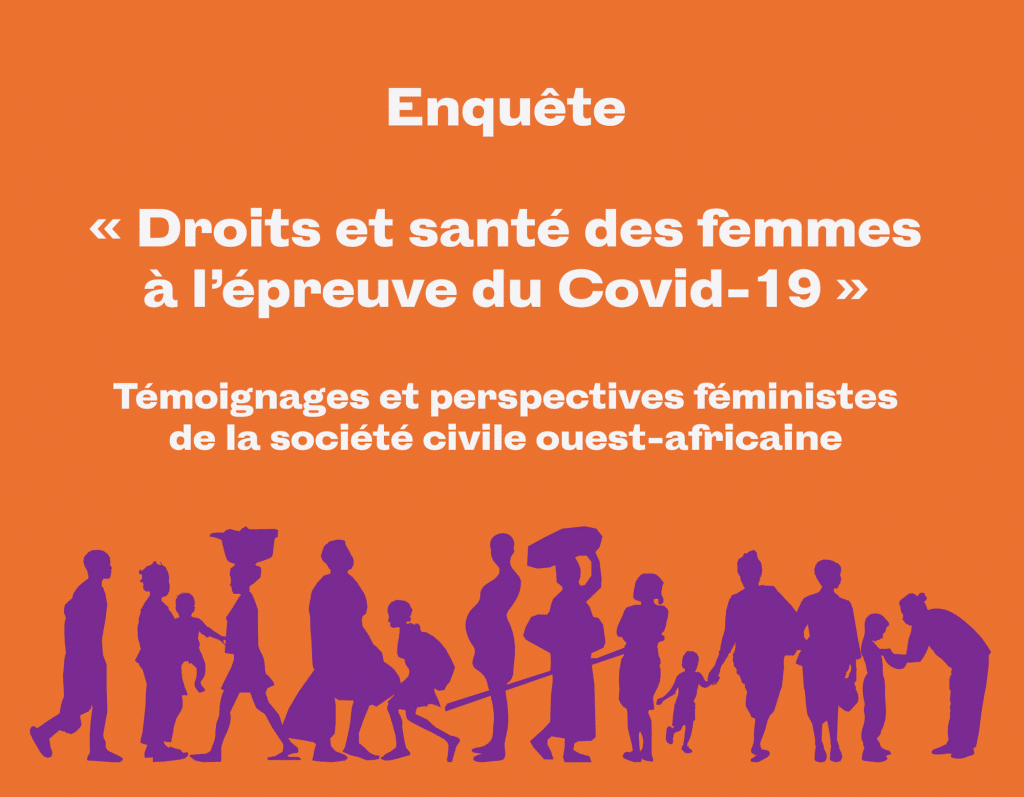
Around the world, associations and activists working to promote gender equality have played an important role in the response to COVID-19. Observing the disproportionate impact of the crisis on women and sounding the alarm about rights violations and social distress, they have also been involved in preventing and addressing the social and health consequences of Covid-19. In French-speaking Africa, a region of the world where Equipop has forged strong partnerships over the past 20 years, women's rights organizations have been particularly active. This report echoes their voices and recommendations by presenting the results of a survey conducted among our partners in Benin, Burkina Faso, Côte d'Ivoire, Guinea, Mali, Niger, and Senegal.
Those interviewed denounce the overexposure of women in their countries to the virus, the increase in their workload, the economic damage they suffer, the explosion of gender-based violence, and the decline in their power to act, all of which are consequences of the social roles assigned to them and the structural inequalities that undermine societies. Our partners also testify to the impact of the pandemic on women's health, particularly their sexual and reproductive health, due to a simultaneous decrease in both the supply and demand for services. Certain groups, such as young women and adolescents, are particularly affected, and the medium-term effects are expected to be severe.
Despite this situation, the political and programmatic responses to the crisis have been largely insensitive to these issues. Activists and associations are voicing a pressing need: for governments and donors to listen to them, involve them, and support civil society in times of crisis as an indispensable partner. They also express their hope that the authorities will learn from the realities they have experienced and change their practices by committing to strengthening public services and community organizations, in order to contribute to the emergence of more just and resilient societies.
Read the full survey "Women's rights and health in the face of Covid-19. Testimonies and feminist perspectives from West African civil society."