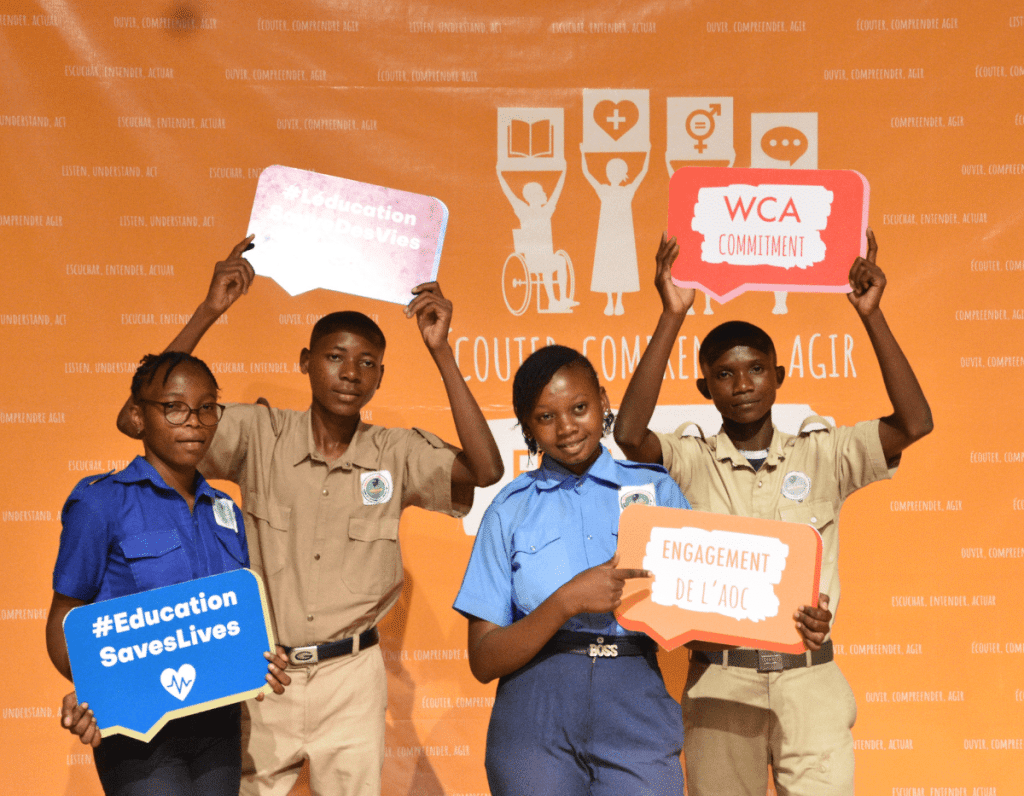
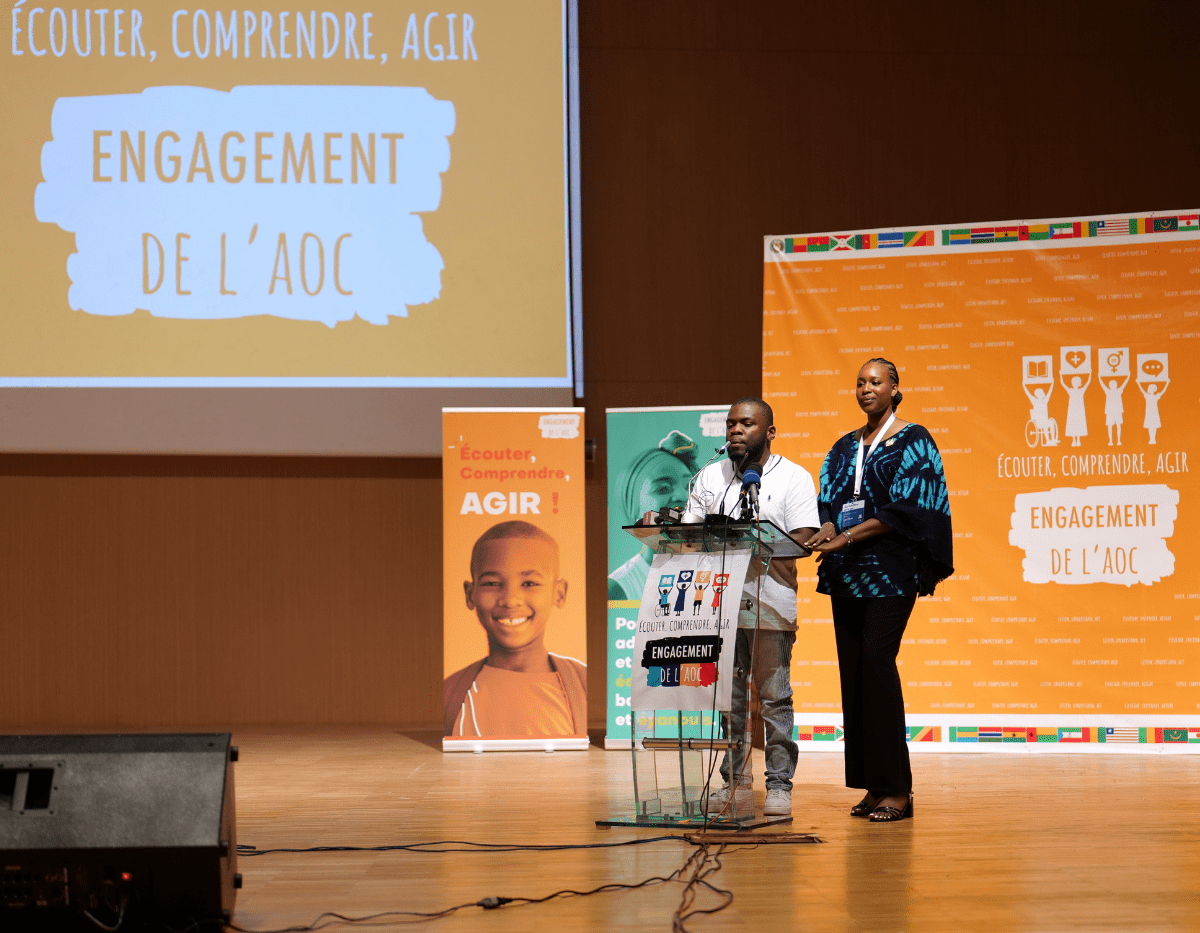
In early April, as part of its involvement since 2018 in a regional multi-stakeholder working group, Equipop traveled to Brazzaville (Republic of Congo). The ministers of health and education from 23 West and Central African countries officially proclaimed their commitment to "comprehensive education and information" (CEI) programs, quality sexual and reproductive health (SRH) services, and the fight against gender-based violence (GBV). This is the result of seven years of national and regional discussions and consultations with a variety of stakeholders, a process in which Equipop supports the participation of young people.
Equipop, advocate of the rights-based approach in this regional engagement process
Advocating for Comprehensive Sexuality Education (CSE) is of paramount importance in the face of conservative thinking permeating institutional spaces at various levels. These tendencies tend to reproduce power and knowledge relations that limit access to SRHR for all. The convergence of anti-rights, anti-gender, and anti-democratic agendas could thus jeopardize the progress made over the last two decades. In response to this, and beyond this regional process, Equipop advocates for the adoption of a systemic, transformative, and feminist vision to rethink public action in favor of SRHR. The ECS is an essential lever in the fight against gender inequality and violence, and more broadly in the shift towards fair and sustainable development. As a member of the Alliance Droits et Santénetwork, Equipop has co-chaired the Technical Working Group since 2021—alongside the regional offices of UNESCO and UNFPA—whose mission is to coordinate the process and prepare for its operationalization. This working group provides an opportunity to take stock of the implementation of ECS programs in the region and to mobilize in defense of a vision based on a rights-based approach and meaningful and inclusive youth participation. To support this vision, Equipop has notably supported the establishment of a youth community bringing together more than 500 members from 23 countries in the sub-region. Since September 2022, young people have been able to meet online every month to share their knowledge and experiences, reflect together on the accountability framework for the commitment, and drive national dynamics in their respective countries in order to prepare for the follow-up to the Commitment.
A proclaimed commitment and new courses of action
The commitment made by ministers on April 6 is based on three pillars: access to sexual and reproductive health services, "comprehensive education and information," and combating gender-based violence. The text is intended to be co-developed by civil society organizations (CSOs), young people, authorities, practitioners, teachers, and international and UN organizations. Equipop welcomes this proclamation, which also enables young people, CSOs defending SRHR, and feminist organizations to remind states of their commitments and to carry out advocacy actions in their countries. In this context, Equipop will continue to defend the principle of meaningful and inclusive youth participation by continuing to provide technical support to the community and promoting their knowledge and expertise.
The association now invites all stakeholders to anticipate the challenges that will arise in the aftermath of the commitment ceremony. As the young people in Brazzaville requested, "this commitment must not remain just another commitment." Mobilizing resources to ensure follow-up is essential. This must be done primarily in favor of CSOs and youth organizations, which have a real understanding of the issues surrounding ECS (awareness-raising, information, empowerment) and work on education and health issues from a gender perspective and in a transformative manner. The voices of young people have been heard and recognized, and have elicited numerous responses in Brazzaville. However, it is important to ensure that this participation is meaningful and not merely consultative. This is why Equipop has taken action and will continue to do so. More broadly, the association develops initiatives to promote access for young people—especially young women—to information that enables them to form their own opinions about their SRHR and to take ownership of knowledge related to their education and health. And it does so with the same goal in mind: to help realize the transformative potential of ECS.
Photo credits: ©UNESCO