Throughout the 16 Days of Activism Against Gender-Based Violence, Equipop interviews its partners about their actions to combat gender-based violence.
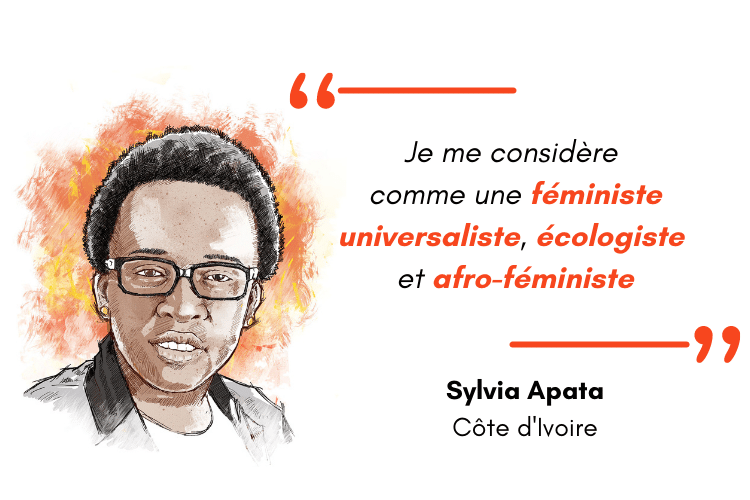
Sylvia Apata is Executive Secretary of the organization Citizens for the Promotion and Defense of the Rights of Children, Women, and Minorities (CPDEFM), a lawyer, human rights expert, and adjunct professor of international relations. She is also a cyber activist: her blog allows her to raise awareness among thousands of people by denouncing discrimination and violations of the rights of women, particularly African women. Since 2019, she has been the focal point in Côte d'Ivoire for the International Human Rights Network (RIDH). She is also a member of the West African Young Feminists Network.
What are the current issues related to violence against girls and women in Côte d'Ivoire?
In Côte d'Ivoire, the most pressing and important issues for me right now are domestic violence, because, as everywhere else in the world, we have seen an explosion in cases of domestic violence during the COVID-19 pandemic. In reality, this violence was already present, but lockdown has made it visible, for example to neighbors. Another observation is the numerous cases of sexual violence, rape, and child abuse reported during this pandemic period.
How do you combat this violence?
We conducted a survey on domestic violence, femicide, rape, child sexual abuse, and access to contraception during lockdown. We conducted face-to-face interviews, questioning people in the streets, in shops, outside their homes, and in government offices. What emerged from this survey was that women were overlooked in the measures taken in response to COVID-19. Issues relating to the protection of women's rights and sexual and reproductive health were neglected. For example, many women did not have access to contraception during lockdown.
Based on the data collected, we will be able to conduct strategic and powerful advocacy and call for concrete measures to improve the situation of women. More shelters and psychosocial support for survivors are needed.
At the same time, there must be an economic component. Poverty is part of the violence perpetrated against women and girls. Women who are victims of domestic violence are often in a relationship of economic dependence on the perpetrator. If we want to combat this violence, we must give women the means to be independent, free, and able to make their own decisions. In concrete terms, this means developing income-generating activities (IGAs) for women. Funds or (micro)loans often lead to high levels of debt for women. The repayment terms are too onerous. The government must ensure that banks allow women to take out loans with more favorable repayment terms and that they are provided with support in managing and accounting for their finances.
What advocacy messages are you promoting today?
In Côte d'Ivoire, marital rape is poorly regulated in the Penal Code. Before the 2019 reform, there was not even a legal definition of rape, but with the reform, rape is better defined.
Today, in Côte d'Ivoire, a married woman is still perceived as consenting. This presumption of consent must be changed in the Penal Code. And as CEDAW (Convention on the Elimination of All Forms of Discrimination against Women) requires, there must be a special legal regime for violence against women and girls.It is important to note that it was young women activists who first began to speak out about domestic violence. We must encourage these young Ivorian feminists who, like me, have the courage to speak out. At the national level, we need support and protection. We receive a lot of encouragement for our work, but also threats of rape and sometimes death. We need the safety of women's rights defenders to be guaranteed.