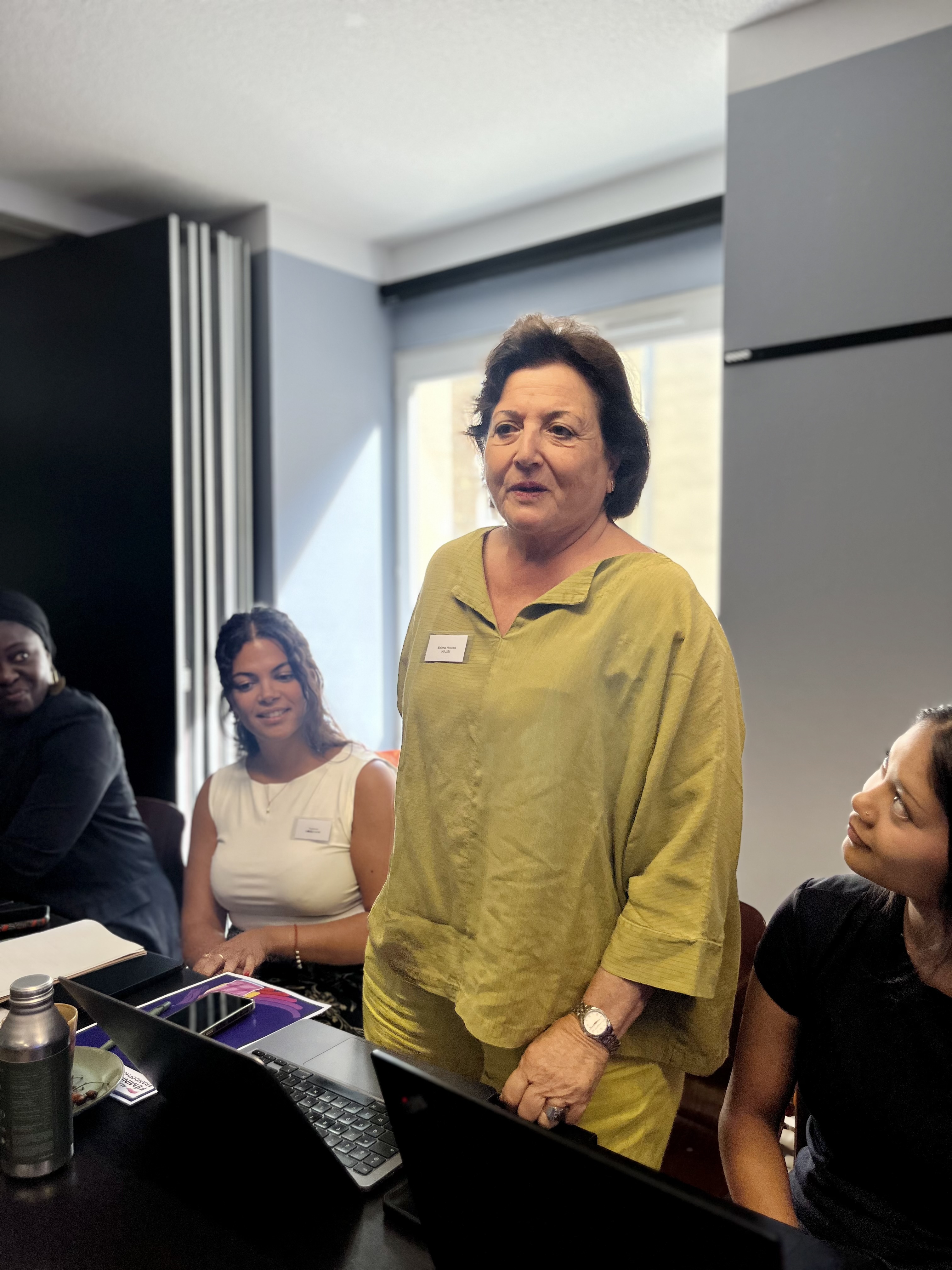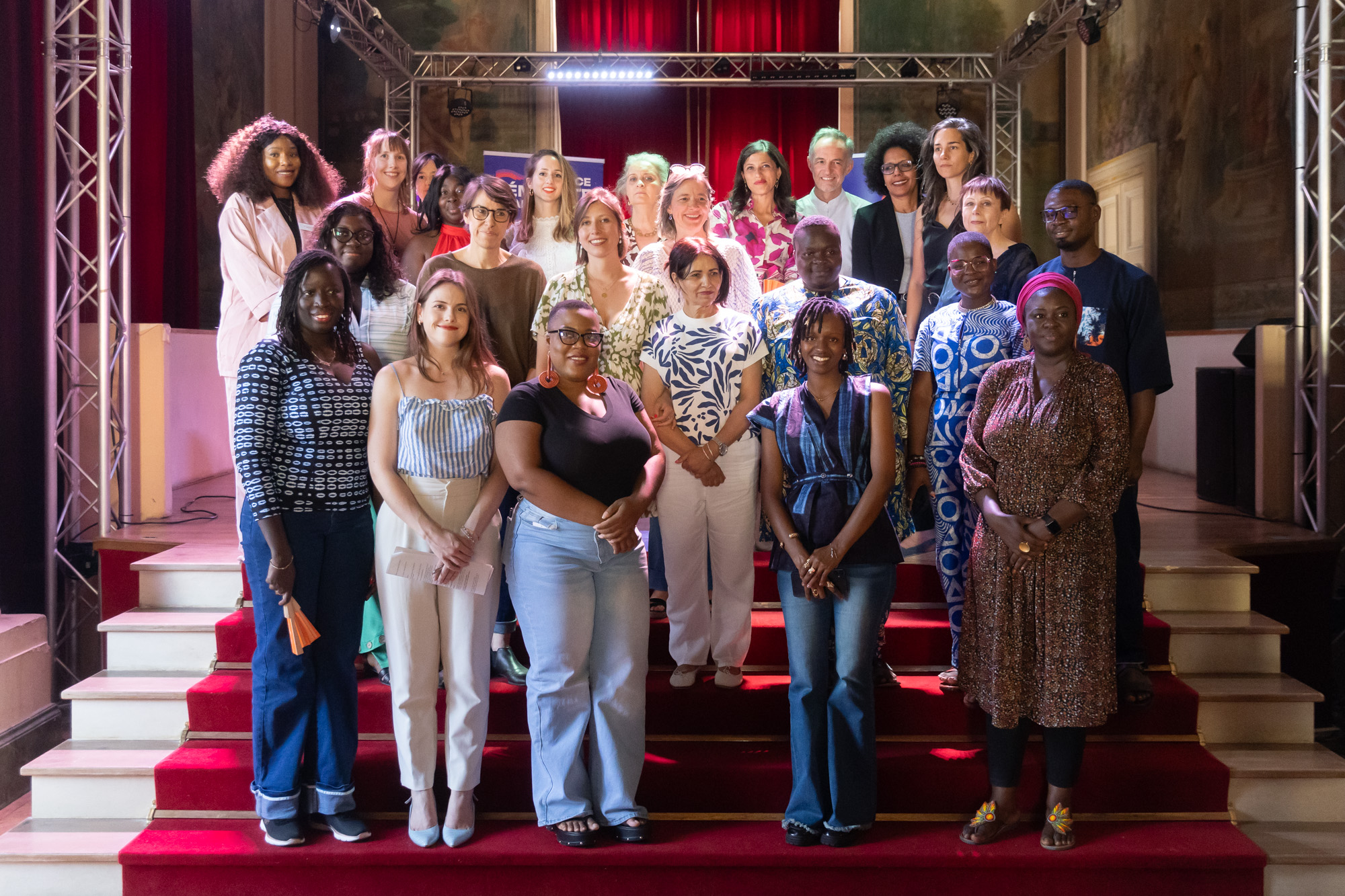
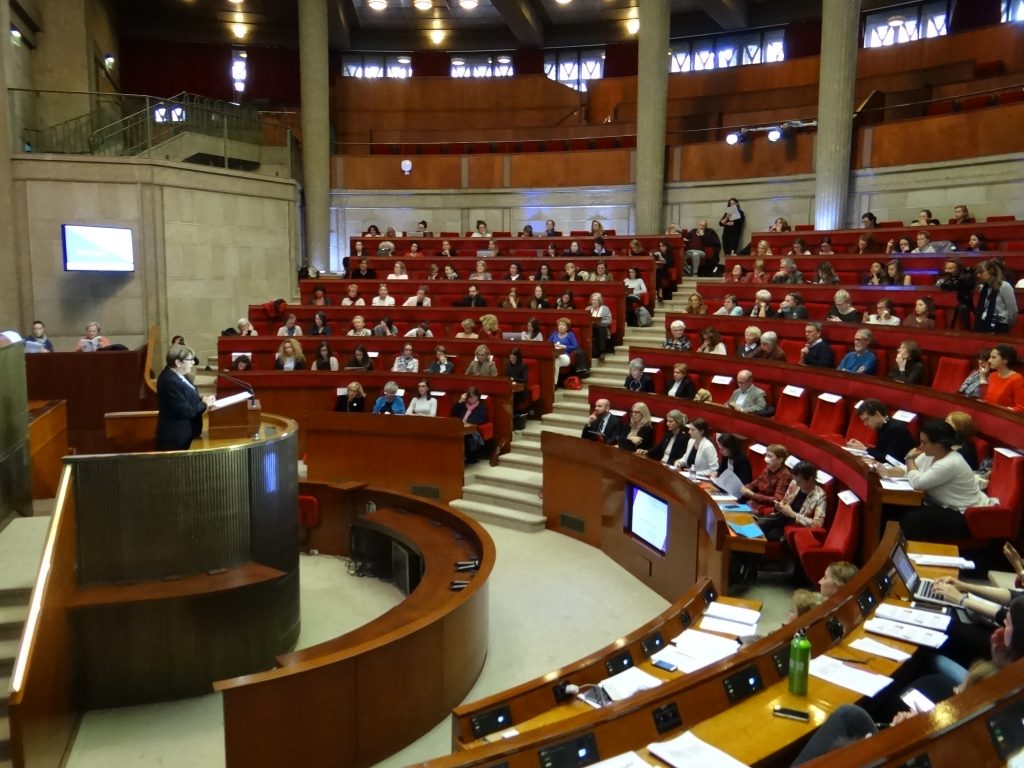
World Contraception Day, September 26, is an opportunity to look back on the symposium co-organized by Equipop and six partners last Wednesday at the CESE: "Where is the money for sexual and reproductive rights? Guaranteeing women's right to control their own bodies: France must keep its commitments." The presentations all converged on the idea that France must do more and better in this area. A call to action was launched: you can support the initiative here.
International Contraception Day and International Abortion Day (today and Thursday, respectively) may seem like routine or symbolic events in France: contraceptive methods are varied and accessible, and, with the exception of condoms, 65% reimbursed by social security. Abortion is fully covered. But, apart from the fact that in practice these rights are not fully enforced, the issue of mobilization extends far beyond France's borders. And in recent years, the international political context has made this mobilization truly essential. Why? Because extremist religious and conservative movements are gaining strength, and rights that we thought were protected are once again under threat. Because, as Danielle Bousquet, president of the HCE, pointed out at the opening of the conference: "The first rights to be challenged are always sexual and reproductive health and rights (SRHR), because attacking these rights is attacking the primary and prerequisite condition for women's autonomy."
Political setbacks and declining funding
The first round table of the symposium focused on analyzing the rise of conservative movements and the decline in funding for sexual and reproductive rights. Multilateral organizations, first and foremost, are suffering from considerable funding cuts, as Julie Morizet and Petra ten Hoope-Bender, representatives of the United Nations Population Fund (UNFPA), made very clear on Wednesday. Firstly, the United States has simply stopped funding the UN agency this year. But also because some progressive countries, such as France, which is only the 19th largest donor, are not funding it to the extent that they could. However, budget cuts are not only affecting international organizations. In France, for example, the budgetary context has very concrete consequences. Véronique Séhier, co-president of Planning Familial, highlighted the geographical disparities that exist between regions in France, with family planning centers forced to close due to a lack of subsidies, and laws that are sometimes impossible to enforce due to insufficient budgets. In West Africa, where access to modern contraception and safe abortion remains very limited, the funding needs are still huge. Adam Dicko, representative of the IPPF Youth Action Movement for Africa and Equipop partner in Mali, summed it up this way: "A woman who becomes pregnant feels more fear than joy. Giving birth should no longer be a matter of fate, it should be a choice, a joy. This fight requires a common will and a general commitment." It is clear that responses are slow in coming. Neil Datta, Secretary General of the European Parliamentary Forum on Population and Development, alerted the audience: conservative movements, sponsored by the Holy See in Europe, brought out of marginality by George W. Bush, and strengthened since the election of Donald Trump, are uniting and forming alliances. On the other hand, pro-choice movements have not yet truly realized the need to develop a structured response.
Financial contributions: France's necessary commitment
In the second round table discussion, Ann Firth Murray, founder of the Global Fund for Women, spoke about the role of private foundations in defending sexual rights, while Rebekka van Roemburg, co-director of She Decides, discussed the importance of public funding. Both speakers made the same observation: funding depends more on the personal will and conviction of a minister, when it should be based on institutional reflexes. Indeed, SRHR are universal, inalienable rights. They are the foundation of gender equality and a lever for development. This brings us to the heart of the question posed by the conference: how much funding does France devote to promoting SRHR, and above all, how much additional funding will be provided in the future? Elisabeth Claverie de Saint Martin, Director of Sustainable Development at the Ministry for Europe and Foreign Affairs, emphasized France's political commitment. She cited Emmanuel Macron's speech the previous day in New York before the United Nations General Assembly to demonstrate that women's rights were a strategic concern, but no budget figures were mentioned. Marie-Pierre Rixain, Chair of the Women's Rights Delegation in the National Assembly and member of the majority, referred to the target set by the President to increase official development assistance to 0.55% of gross national income. While we wait for the Delegation to really get started, especially on the budget review by lawmakers, and for the promises to increase aid to become a reality, there's one telling figure that Danielle Bousquet pointed out: in 2016, the budget allocated to gender equality was equivalent to 0.0066% of France's overall budget. Scheduled to conclude the event, the Secretary of State for Gender Equality canceled at the last minute. The director of the French Development Agency also canceled his speech a few days before the conference. Neither of them sent a representative. Was this an unfortunate setback or a significant absence? Despite France's commitments to women's rights, loudly proclaimed by the President of the Republic, serious doubts remain about the French authorities' real willingness to do more for SRHR. Adam Dicko had already emphasized this an hour earlier: "I am not here to beg France, but to remind it that resources must follow commitments. I am not saying that France is doing nothing; France is doing a lot, but there are more fine words than actions."
The campaign launched by Equipop and its partners therefore remains essential. It continues through an appeal made at the conclusion of the conference by Aurélie Gal-Régniez, director of Equipop, who believes thateveryone, including the government, must "systematically oppose any attempt to hinder women's right to freely dispose of their bodies.""By investing in women's rights, our development practices will change, and beyond that, our entire societies." On this point, we can only agree with the President of the Republic: this is indeed a "civilizational" challenge. And to meet it, we need resources.
Access the full video of the symposium by clicking here.