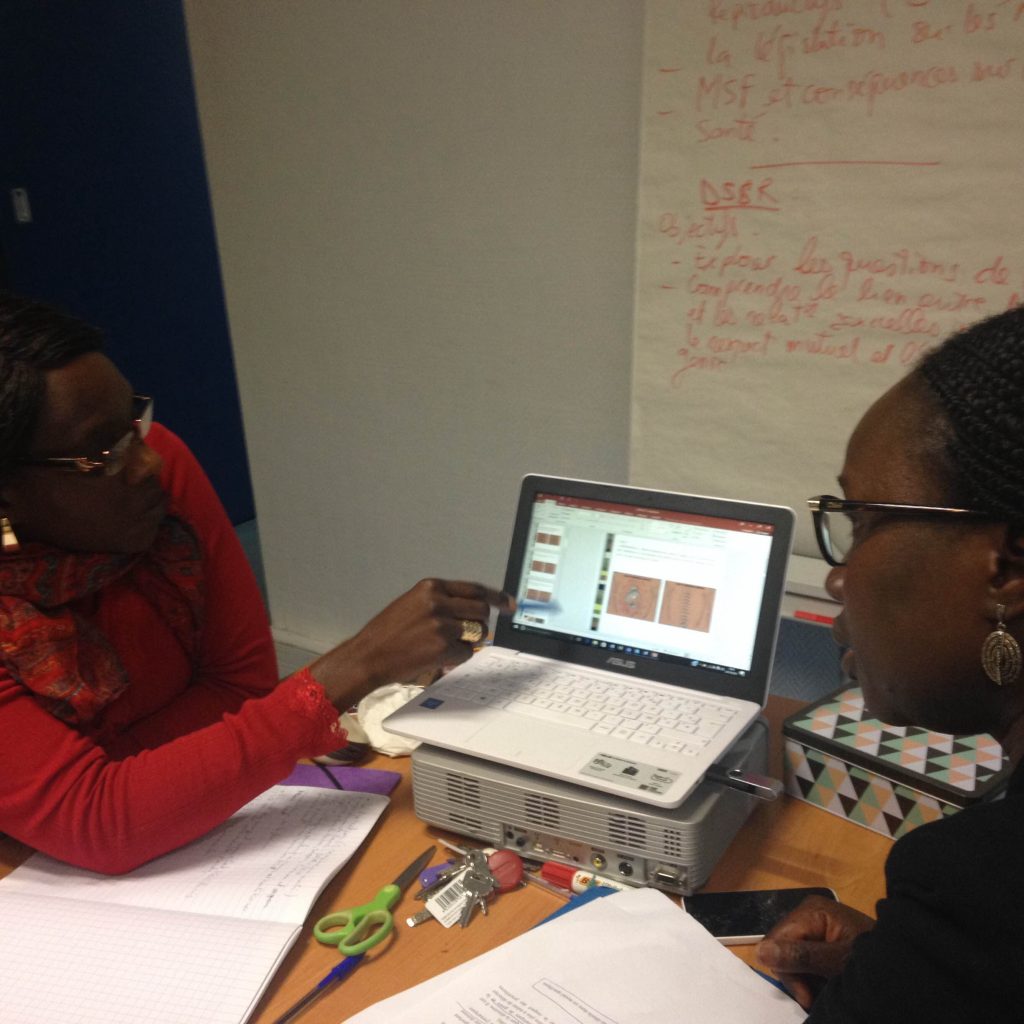
As part of the European Change Plus project, funded by the European Commission, Equipop's Change Mediators were able to attend thethird andfourth days of training. The training phase aims to provide mediators with the knowledge and skills they need to be well prepared for the awareness-raising phase: female genital mutilation (FGM), gender, legislation, sexual and reproductive health and rights (SRHR), communication, andreligious andcultural dimensions.
Consolidate knowledge of legislation and SRHR
The human rights approach to violence against women, including sexual and reproductive health and rights, is an important part of mediator training.
In order to provide them with a broad range of knowledge, legislation on Female Genital Mutilation (FGM) was discussed, both in Europe and France and in the mediators' countries of origin. French legislation is an example in Europe and worldwide for its firm stance against perpetrators of FGM in France and abroad. Female genital mutilation is a grounds for asylum in Europe, but applicants face significant difficulties in having their cases successful.
To find out about the progress of legislation in Mali in the area of female genital mutilation, we contacted Plan Mali, the African partner of the Change Plus project, via Skype. Fatoumata Samake and Aguibou Coulibaly explained the reasons for the delay in passing a law banning FGM, despite its importance in certain regions of Mali, such as Kayes, where nearly 98% of the female population is affected by female genital mutilation. According to Mr. Coulibaly, "Religious civil society organizations are campaigning against it. There is a lack of courage at the political level. The strategy should be coordinated at the level of West African states."
The power of communication
The ultimate mission of the Change Mediators is to raise awareness about ending female genital mutilation in African communities in the diaspora. When communicating about a taboo subject and challenging deeply rooted cultural practices, resistance is inevitable.
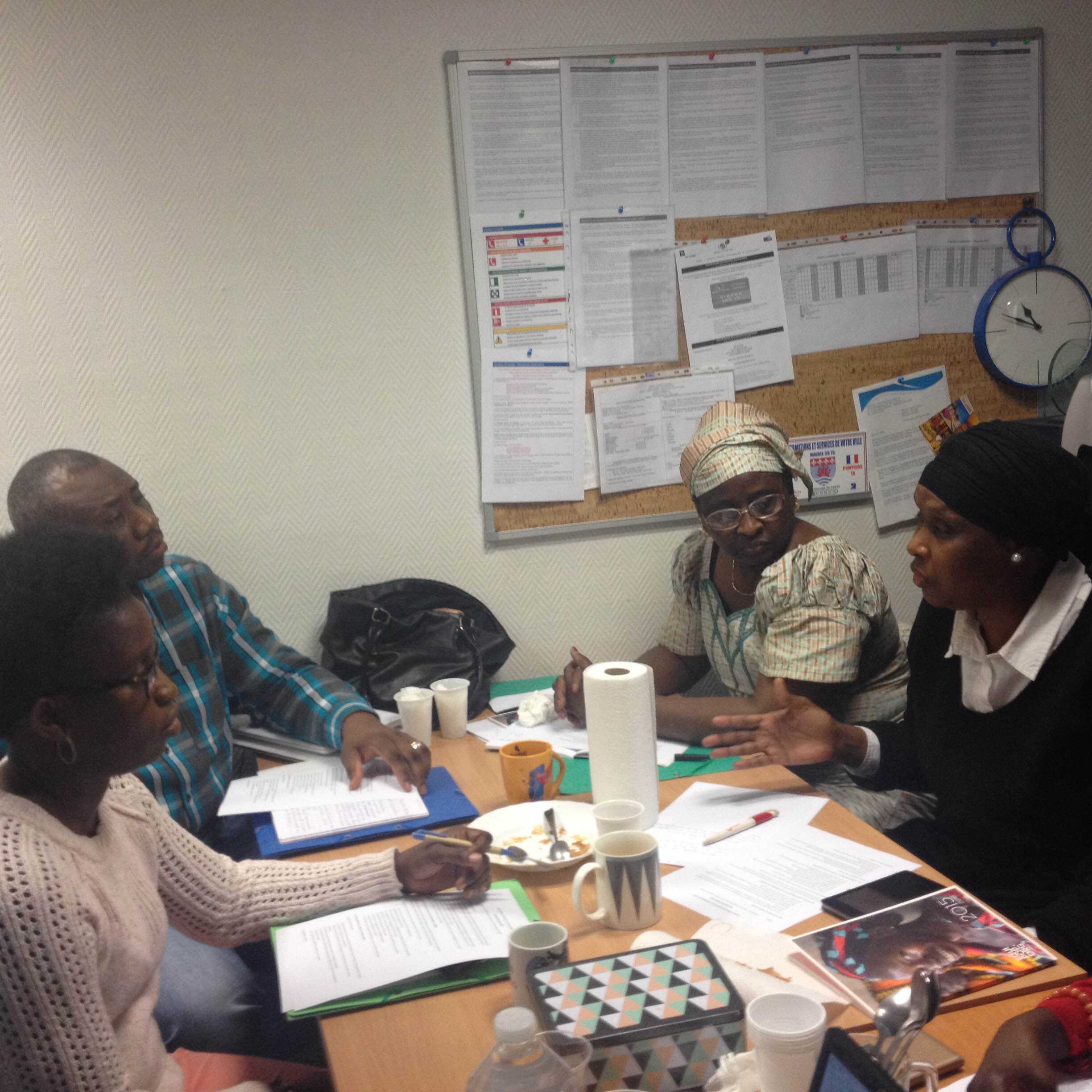
To ensure they were as well prepared as possible, Equipop called on an external consultant, a communication trainer and actor trained in forum theater techniques. The mediators thus benefited from theoretical training and advice on how to gain confidence in front of a group, deliver a message effectively, and listen to others.
After the theory, we moved on to practical exercises involving role-playing with an antagonist played by the speaker. We took away the following from the facilitator: "Aggression is caused by filters. When there is aggression, there is still a connection. When there is violence, the connection is broken." Fatima Dia added: "You shouldn't try to convince people at all costs. Either way, the seed has been sown."
Team cohesion is always present within the Mediators group. We learn as much from the content of the training courses as we do from our fellow mediators, who share their experiences, knowledge, and cultural insights on the topics covered throughout the sessions.