
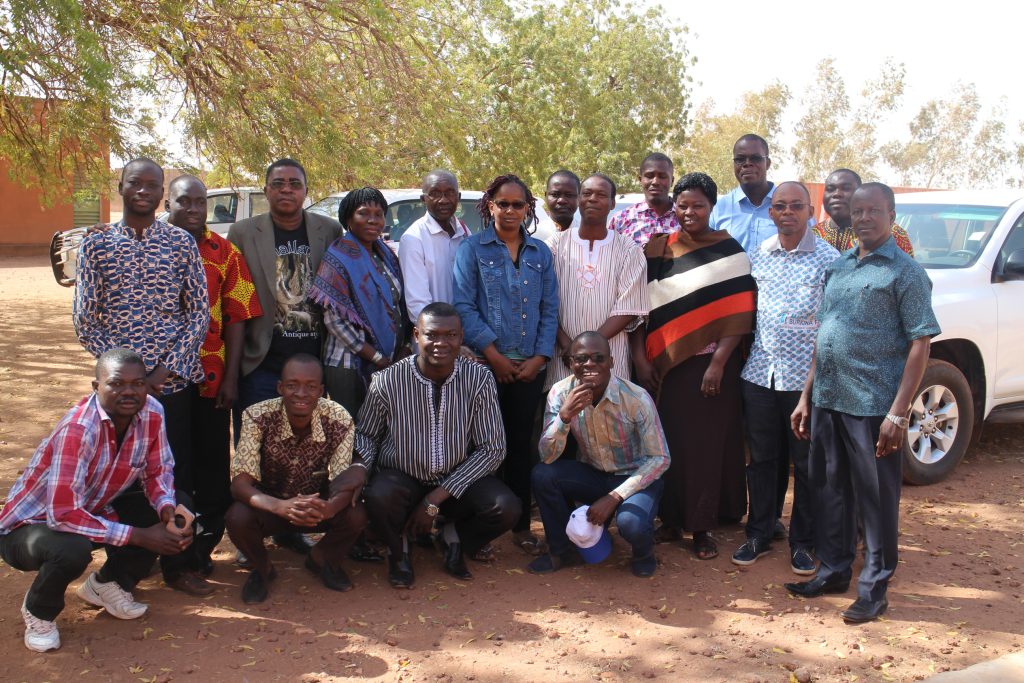
Launched in October 2016 by the Minister of Health, the task shifting pilot project aims to make family planning services accessible by strengthening the capacity of frontline health workers to provide long-acting contraceptive methods and community-based health workers to provide injectables and pills. Asthe teamresponsible for advocacy and capitalization aspects,we participated in the second joint monitoring visit for this pilot project.
This feeling of satisfaction is shared by the members of the consortium—Equipop, MSI, ABBEF, and the DSF—at the end of this second joint follow-up visit for the pilot project on DT. The provision of long-acting methods by frontline agents (APL) and pills and injectables by community-based health agents (ASBC) is now a reality.
During the first follow-up visit in July 2017, members noted difficulties with regard to the availability of contraceptive products, biomedical waste management, data collection, and stakeholder motivation.
Several solutions have therefore been put in place to address this issue: "A clearsupplychainfor ASBCs for contraceptive products has been established, as well as a mechanism for managing biomedical waste. Data validation meetings have also been initiated, resulting in better quality data. Most of the delegated service providers are now sufficiently motivated, have all provided services, and no incidents have been reportedto date," says Boudo Seydou, Project Manager – Task Delegation at the Department of Health and Family Affairs.
Task delegation has helped remove several barriers to accessing modern contraceptive methods. According to Alimata Zapéré, ASBC in the Tougan health district, "task delegation helps reduce the geographical distance between beneficiaries and service providers. During the rainy season,we no longer encounter problems accessing certain villages." For Boudo Seydou, "Task delegation in the field of FP is a major innovation that improves people's access to FP services."
However, there are still some major challenges to overcome,including those related to "the motivation of stakeholders, especially at the community level, managing the effects of the mobility of trained LPAs, and above all, the commitment of everyone to mobilize the resources necessary to scale up the strategy,"he notes.
To address these challenges, steps will include initiating advocacy meetings with administrative and community leaders and local associations on FP, and improving the quality of data collection forms. These actions will enhance the positive effects of DT on contraceptive prevalence in the project pilot area.