In 2018, Equipop expanded its efforts to promote civic participation among women and young people through the Bruits de Tambours (Drumbeats) project.
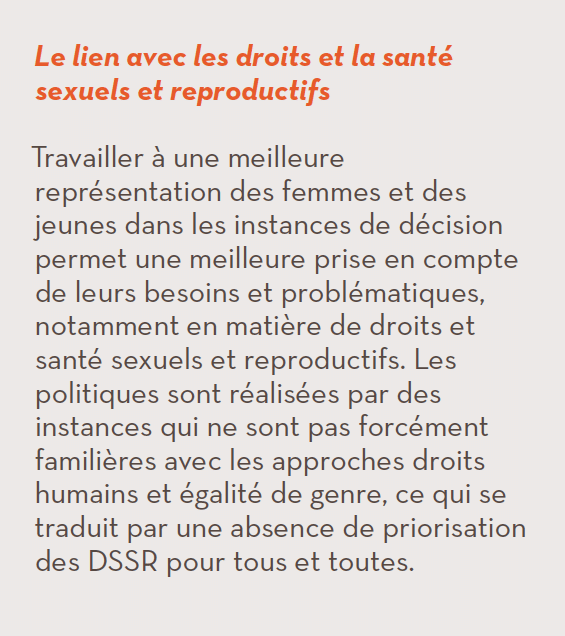
In West Africa, 45% of the population is under the age of 15 (1). Women represent 51 to 52% of the population. This demographic weight of women and young people is not reflected, or only to a limited extent, in institutional or community decision-making bodies. Public life takes place without them, resulting in a lack of consideration for their specific issues and realities. Despite progress, this situation can be explained, among other things, by unequal and difficult access to resources, which prevents women and young people from making their voices heard, even though their role in family, social, and economic life is essential.
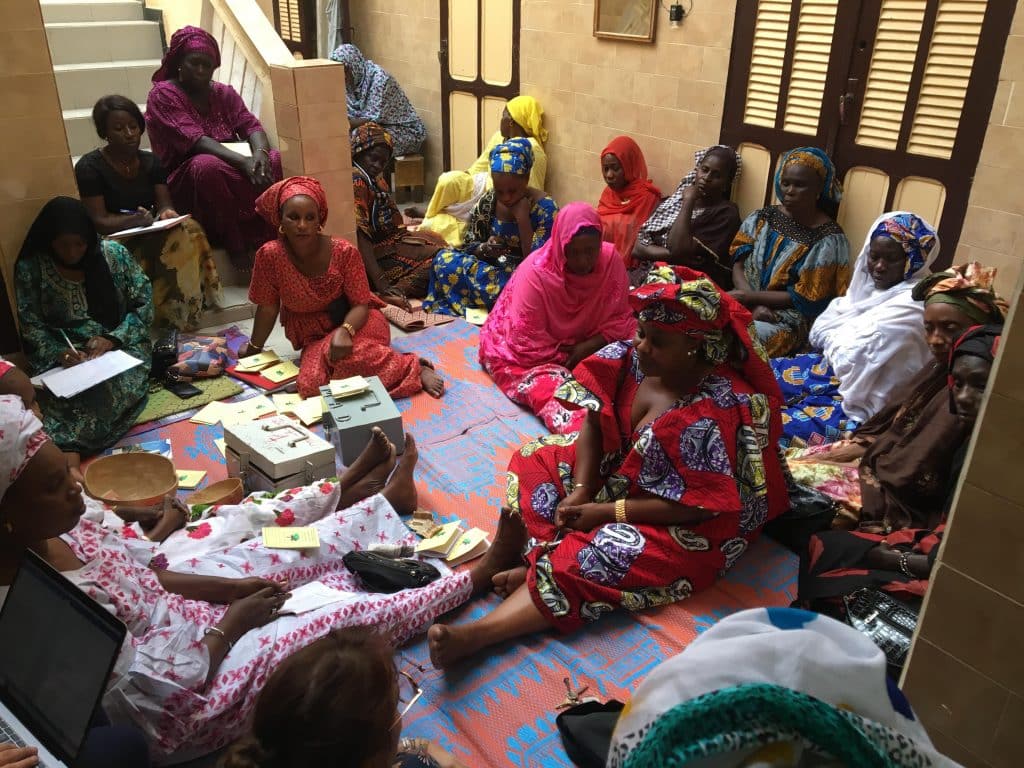
“Decision-makers do not take our needs as women into account!”
Young woman during a discussion with a women's group, Saint Louis
Many countries are implementing quota systems to improve the representation of women in decision-making bodies, such as Senegal, where a law on gender parity was introduced in 2010.

However, the physical representation of women in decision-making bodies does not always translate into active and effective participation. Women remain subject to cultural constraints and continue to bear the burden of maintaining family and home life, to the detriment of their professional and political engagement. Patriarchal norms and discrimination against women in the public sphere, particularly violence, continue to deprive women of free and safe access to public spaces and restrict their political participation. Sometimes men even co-opt women they choose knowingly so as not to be inconvenienced. This undermines women's credibility and allows critics of gender parity to fuel arguments that women lack the competence to sit on decision-making bodies.
Today, it is necessary for all societies to recognize the place that women can and should occupy in decision-making bodies and for women to empower themselves. Only then will parity and quotas enable women to truly count in governance bodies; young women to envisage the possibility of careers in politics and leadership; and young people to legitimize the fact that women's place is also outside the home.
If young people leave politics to older people, then older people will make decisions for them and to their own advantage!
Young Saint Louisian
There is no law encouraging youth participation. Political parties and community organizations have always had youth wings, but this separation often results in them being excluded from decision-making bodies.
In Senegal, young people are relegated to youth issues and face mistrust from older generations.
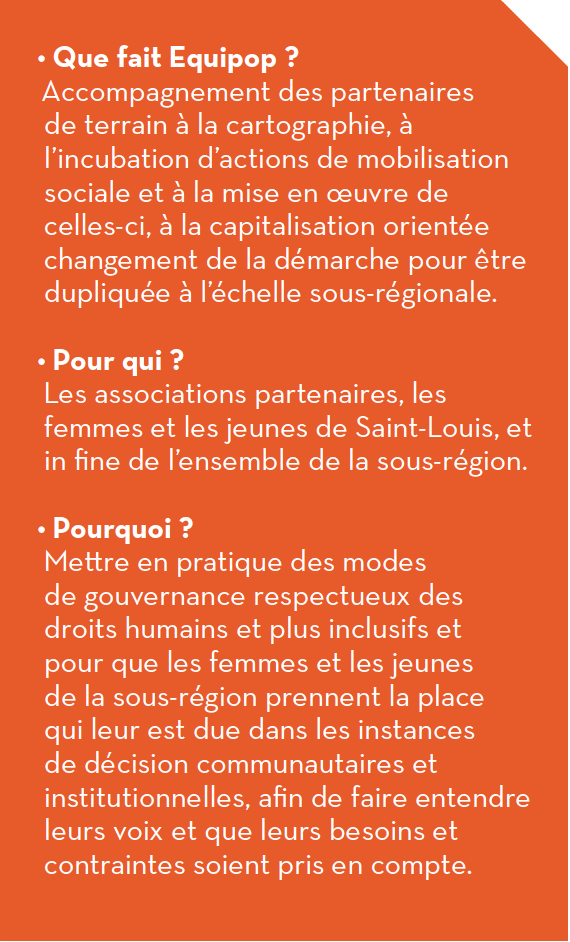
There is often a double standard: young people are said to be uninterested in political processes and governing bodies, but young people themselves feel that their voices are not being heard and prefer to engage with their communities on economic and social issues and achieve success outside of formal governing bodies.
Young people often create their own ways of communicating and engaging with institutions, particularly through art, culture, and social media. These are sometimes avoidance strategies that do not promote a climate of mutual respect between young people and the authorities. Young people show a genuine willingness to get involved, but are constantly reminded of their lack of experience.
Just as with women, young people need to become aware of their weight and strength and equip themselves to exercise their right to speak out. Towards effective gender and generational parity? This is what Equipop hopes to contribute to through Bruits de Tambours!
Drumbeats
The project, led by NGO RAES in partnership with Equipop, NGO 3D, and the Siggil Jigéen Network, and funded by the French Development Agency, is a social and community communication campaign to encourage the emergence of more democratic governance in Senegal and West Africa. It promotes participatory and inclusive democracy in favor of women and young people. It is structured around four components: a TV series and a radio soap opera, related social mobilization content, community actions to put into practice more inclusive modes of governance for women and young people, and a program for monitoring, evaluation, and sharing lessons learned.
(1) World Population Dashboard, UNFPA: www.unfpa.org/data/world-population-dashboard