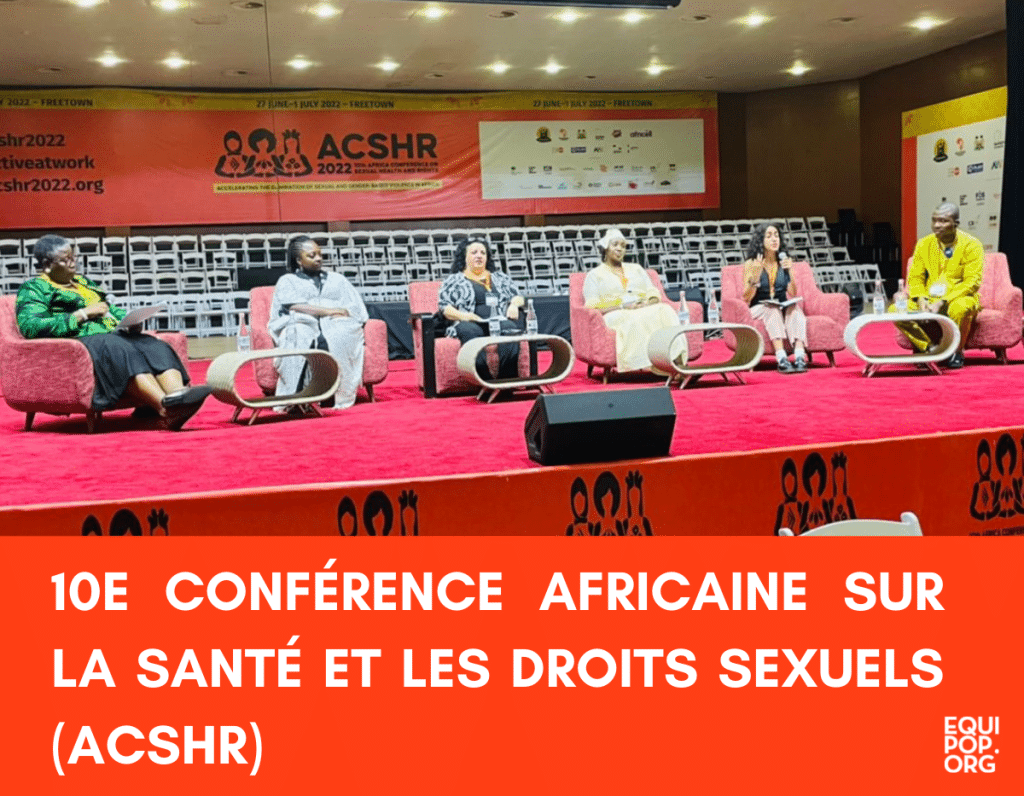
Several hundred representatives of feminist civil society and decision-makers from across the continent gathered to discuss health priorities and sexual rights in Africa at the 10th African Conference on Sexual Health and Rights (ACSHR). Strong commitments were made by the government, led by the First Lady and His Excellency Juulius Maada Bio, in favor of "safe motherhood" and the decriminalization of abortion. This was a historic decision for the Sierra Leonean government and sent a strong message to the invited countries.
[blockquote text="My government has unanimously approved a bill on safe motherhood that will include a series of essential provisions to guarantee the health and dignity of all girls and women of childbearing age in this country," Julius Maada Bio during his closing speech at the 10th African Conference on Sexual Health and Rights in Freetown. "]
Strengthen ties between feminists in different countries and bring their voices to the international stage.
More than 700 feminist participants from 41 countries gathered to discuss the theme "Accelerating the elimination of sexual and gender-based violence in Africa." Equipop was there with members of the West African Young Feminists Network, the Rights and Health Alliance Network, and other partners from the FGE's SRHR Coalition, among others. This convention allowed us to bring together several Sierra Leonean feminist organizations for a discussion on priorities for improving women's rights in their country. The opportunity was seized to initiate a dialogue between them and representatives of the West African Young Feminists Network.
Activists committed to driving change towards more egalitarian societies, mobilized to ensure that their bodies are no longer the target of patriarchal, sexual, and sexist violence and harmful traditional practices, and active on the ground at the lowest community and family levels, this conference was an exceptional opportunity for African feminist activists to learn more about the regional context, key actors, and initiatives in the field of sexual health and rights. It was also, and above all, an opportunity for them to meet their peers from across the continent, share their experiences, best practices, and challenges, and, most importantly, raise their voices to a high level of advocacy, both in terms of resource mobilization and the adoption and implementation of commitments by decision-makers, particularly to achieve SDGs 3, 4, and 5. We can highlight the strong leadership and encouraging speeches in favor of the fight against gender-based and sexual violence, as well as the presence of many high-level decision-makers, starting with the President of the Republic of Sierra Leone, H.E. Mr. Julius Maada Bio, and the First Lady, H.E. Mrs. Fatima Maada Bio. More broadly, for Equipop and its French-speaking feminist partners, this conference provided an opportunity to further question the inclusion, particularly in terms of "language justice," of women's rights actors in international conventions, but not only. At the heart of the discussions was access to funding sources by grassroots organizations and, more specifically, the need to avoid the NGO-ization of young feminist movements and young women.
Mixed feelings about inclusivity among French-speaking feminists
While all participants seemed to agree on their enthusiasm for the performance of one of the most popular African singers of the moment, Yémi Aladé, who is also committed to fighting violence against women and girls, we cannot say with the same certainty whether the conference achieved its goal of establishing a regional and multi-stakeholder consensus to end violence against African women and girls.
Indeed, despite a session on monitoring the FGE in Africa, co-organized by CIFF and Equipop, a member of the DSSR coalition, the question of the implementation of commitments by West African states remains unresolved. The high-level participation of other states would probably have made it possible to directly challenge national decision-makers in order to obtain clarification on the roadmaps planned at the national level. Furthermore, while the conference was admirably inclusive of feminists living with disabilities, the active and meaningful participation of French-speaking feminists was mixed. Feminists from French-speaking West African countries were very poorly represented, including as speakers, and those who were present faced translation difficulties, particularly during non-plenary sessions. Finally, the presence of notoriously anti-LGBTQ+ figures at this type of inclusive feminist gathering may raise questions.
Nevertheless, overall, we can assure you that all participants left the conference feeling more connected to one another and enriched by the many experiences shared by this multitude of actors working to improve the rights and situation of African girls and women. Even though the bar has been set very high, we are looking forward to an even more resounding, inclusive, and multi-partner edition next time. Among other things, as part of the "Amplifying Change for Equality" project for young feminists in French-speaking West Africa, forums for exchange and capacity-building sessions are planned to continue the dialogue between feminists from Sierra Leone and the eight countries involved in the project.