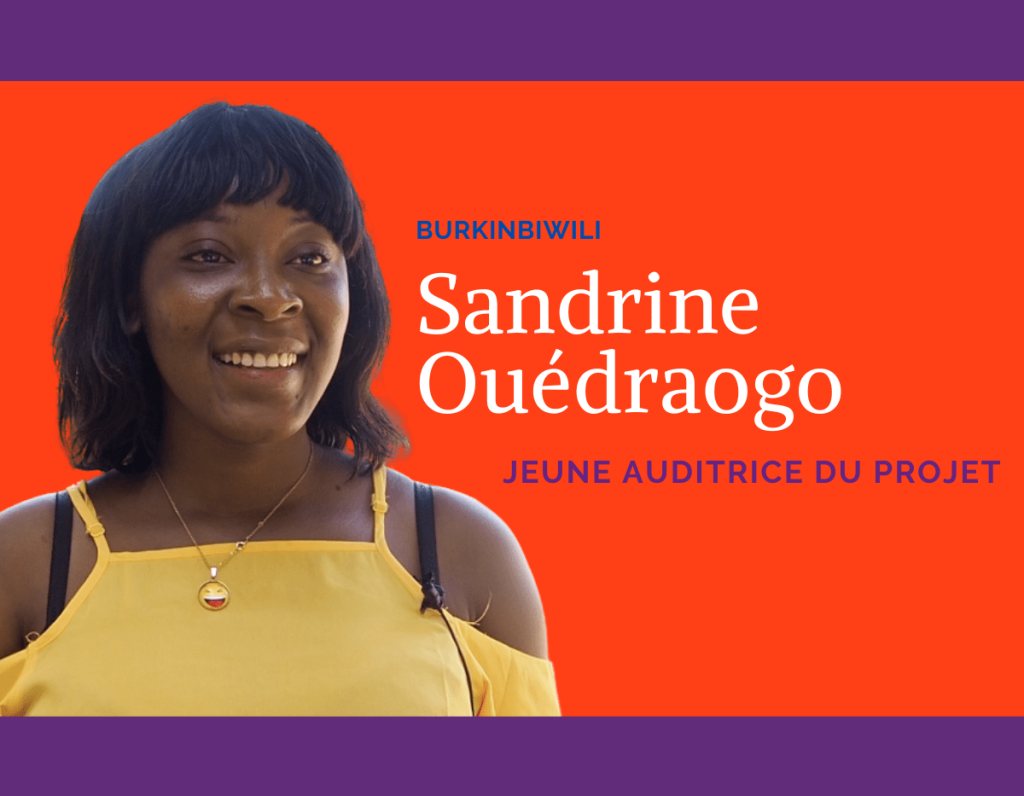
In this article, Sandrine Ouédraogo, a young auditor from Burkinbiwili, reflects on her experience with the Burkinbiwili project and her participation in the CIPF.
What does the role of auditor involve in the Burkinbiwili project? As an auditor, my role was to visit health centers and collect data from users and healthcare providers on the quality of care and accessibility of the centers. I was also involved in the entire process, including data analysis, presentation of results and recommendations, and advocacy with local leaders.
What has being an auditor brought you? First, being an auditor allowed me to develop my skills, particularly with the data collection tool we had to test using tablets: Kobo Collect. It was my first time using it. We participated in the data analysis process, which allowed me to develop my knowledge of young people's access to health services and the care provided. I had never done that before. This allowed me to highlight my experience, gain more confidence in myself, and realize that my voice does matter and that I can make personal and collective decisions. It allowed me to develop influence in society, to be a point of reference, to be an example in my community, among my peers. They always come to me for referrals and advice. Working on this project as an auditor also allowed me to get involved at the international level through my participation in the CIPF. I saw myself grow in spirit and in my abilities. This experience has strengthened my convictions about SRHR, my self-esteem, and my ability to speak in front of an august assembly, using the right words, without fear of saying what I think and with all due respect. It has given me the opportunity to make myself heard and to understand the issues behind this project and, more broadly, the theme of SRHR and FP. Through these different experiences, I have been able to develop a network with which I can continue my activism, to make my voice heard at the national and international levels.
How does it feel to have represented your country at the ICPF? Representing my country in Thailand was a source of pride for me, because I was the one who was chosen from among all those young people. Wearing your country's colors is always a source of great pride. It allows you to promote your country, raise awareness of the activities that are carried out there, and highlight the concrete actions being taken on the ground to improve the rights and health of young people. It really boosted my self-confidence, as I said earlier. It allowed me to recognize that I have potential. Before, when I knew I had to share my experiences, when I had to speak in public in front of people older than me, who hold important positions, I was very stressed. I tried to convince myself by saying, "I can do this." It was difficult to express my heartfelt feelings. As young people, we don't really have the opportunity to express ourselves, especially in large forums. I was very proud, as a young person and as a Burkinabe, to be able to express myself and say that we have experiences to share with other countries.
A message to your peers? I would like to repeat the quote from Stéphanie Thiombiano at the opening of the CIPF: "There is no limit to what we can achieve as young people." We really need to educate ourselves and get involved. We must fight to awaken what is inside us. Every young person has skills and qualities. All we have to do is seek out training and participate in activities to promote ourselves and make ourselves heard. We can do it; we have a say. It is important that we really fight for what we believe in. And it is through a synergy of actions among young people that we will make ourselves heard and listened to more. So we need to work together, we need young people to wake up and get trained. It's important. We need to fight. I call on all my peers to take advantage of the growing space given to young people's voices today.
Safiatou Djamila Sandrine Ouédraogo, first-year master's student in Development Economics and auditor in the Burkinbiwili project.