Throughout the 16 Days of Activism Against Gender-Based Violence, Equipop interviews its partners about their actions to combat gender-based violence.
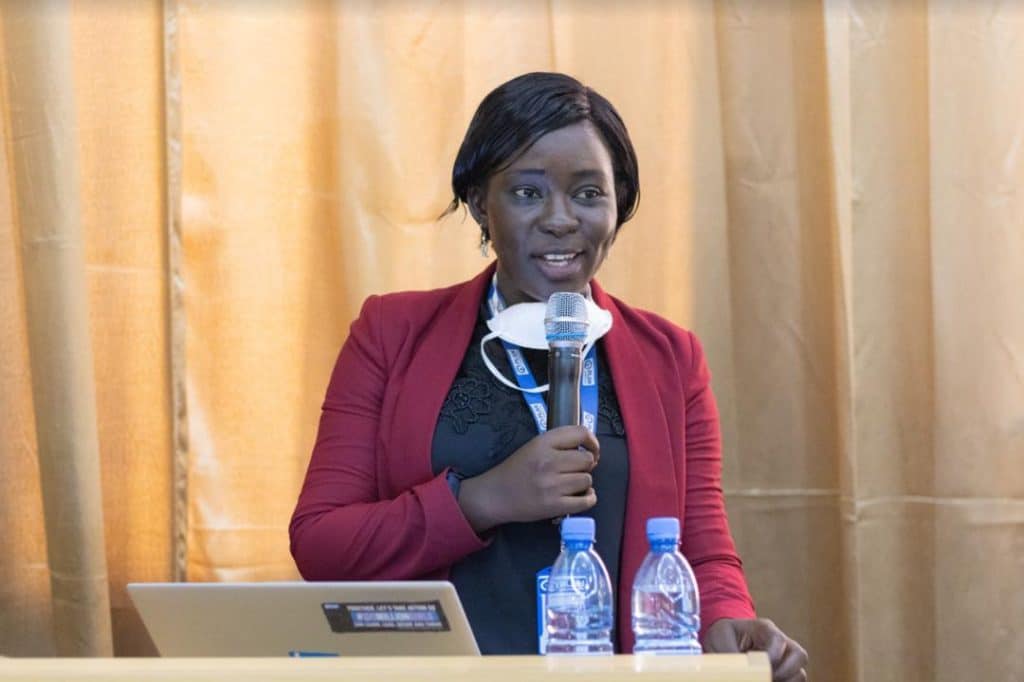
Oumou Salif Touré is a 23-year-old Malian feminist activist. She works for Plan International Mali as coordinator of a project to combat female genital mutilation. She is also country coordinator for Global Media Campaign Mali, a member of AfriYan, a young SR/PF ambassador for Mali, and a member of the West African Young Feminist Network.
Could you explain the current issues related to GBV (gender-based violence) in Mali?
The statistics in Mali are telling and distressing: gender-based violence is widespread. It is systemic and culturally ingrained. According to Mali's 2019 demographic mapping, 49% of women have experienced emotional, psychological, physical, or sexual violence in their lifetime. Among women who have experienced physical or sexual violence, 68% have never sought help and have never spoken to anyone about it. Between women who are beaten and girls who have undergone female genital mutilation for cultural or religious reasons, violence against women is found in every region, society, and culture, within families and social groups. Violence is also committed in the armed conflict in northern Mali. As in 2012, rape can become a weapon of war. It is important to understand the context in Mali: we are raising our voices, but there is still much to be done.
Can you give an example of an action you took in 2020 to address this?
In 2020, my greatest struggle was the arrest of singer Sidiki Diabaté, accused of violence by a young woman, Mamacita, and in particular of forcing her to have an abortion. With the help of our sisters in Burkina Faso, Abidjan, and many other feminists in West Africa, we organized a major campaign to boycott the artist, particularly on social media. We were successful! He lost contracts, many people unsubscribed from his pages, and he was finally arrested. We also provided legal assistance to the victim and fought for her to receive psychological support. We organized a march to say no to gender-based violence in Mali. We have all been victims of gender-based violence, sexual harassment, online harassment, sexual assault, rape—but we had never had the opportunity to speak out. Malian society can be very stifling. If you speak out, as in the case of Sidiki Diabaté, you will end up taking all the blame. But I feel proud every time a survivor speaks out, because it can lead to freedom and justice.
Do you have any advice for feminists who want to become active against GBV?
The key is sisterhood. In West Africa, we came together, something we don't do often enough. I realized how strong we can be together. I am very proud to belong to this generation, which no longer takes abuse lying down, which knows that a woman's life is not just about being beaten, harassed, and raped. We have a say in the future of our country, and we are participating in it. The big online campaign would not have been possible without this sisterhood. Being a shoulder for your sisters to cry on. Being a sister to a woman in need. I try to explain that I wasn't born a feminist, society made me this way, because I'm angry. I don't want my daughters to live in a patriarchal society like the one we have now in Mali.
You have to be strong, ready to take the blows, ready to endure harassment from all sides and continue to speak out, ready to put up with unfriendly looks and snide comments. You have to be ready to accept the label of bitter woman that people will stick on you, and above all, you have to be ready to forge ahead and never give up, until the day when this world is paved with a little justice.