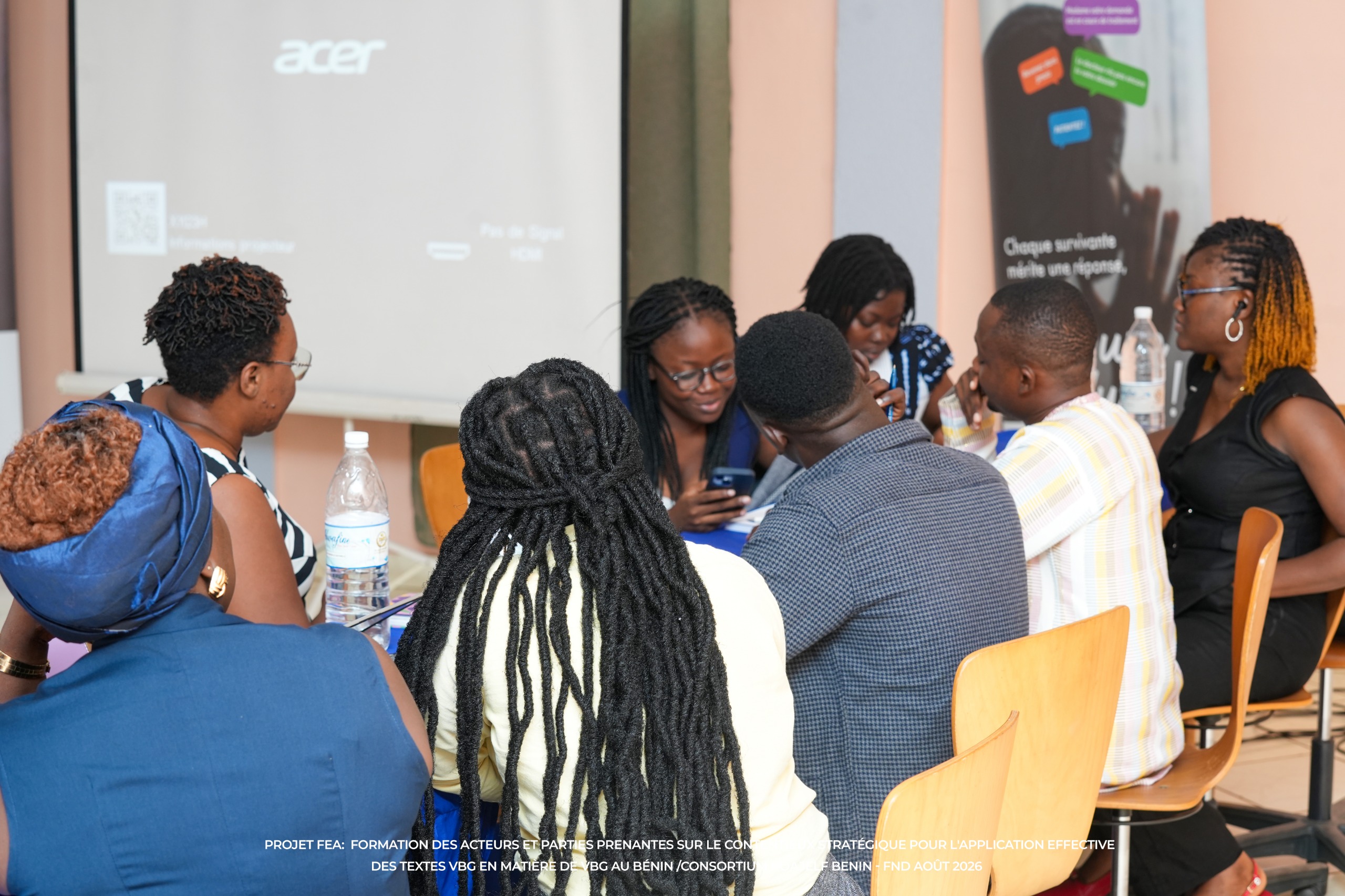
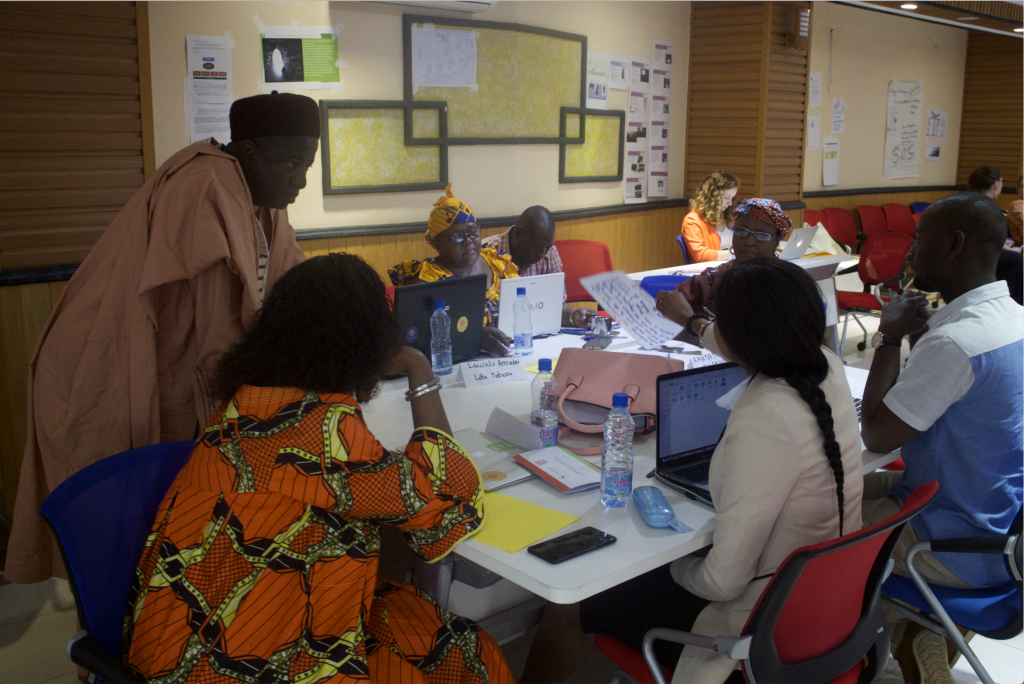
The annual subregional workshop of the Alliance Droits et Santé network was held from March 6 to 9, 2019, in Cotonou, with the participation of the network's 22 member associations.
Participatory democracy, shared decision-making processes, exchanges of experiences and best practices, sharing of new knowledge... network governance is taking off in a new direction, to the overall satisfaction of all members.

2018 was a successful year for Alliance member organizations, thanks to the support within the network and the guidance provided by Equipop:
- Strengthening the partnership between members;
- Capacity building (in advocacy, communication);
- Improvement of administrative and financial management;
- Development of new projects (Educasso, Bruits de Tambours)
- Distinction awarded to certain members (Scouting certification and special mention for human rights on behalf of CeRADIS).
For its 2019 edition, the workshop, which brings together all members of the Alliance, stands out by establishing participatory governance as a key principle of the network's work. This principle has resulted in particular in the establishment and constitution of several committees to rule on and decide the beneficiaries of the various Change Lab project funds (Innovation Fund, Organizational Development Fund), as well as key figures in advocacy and communication for the Change Lab project's e-campaign.
During the workshop, there was also discussion of moving toward the establishment of an ethics, mediation, and monitoring committee, for which a new working group is currently proposing and submitting the terms of reference for the establishment of this committee to the network members for approval.

How can we energize the network and innovate by working together?
Three thematic panels on joint projects (Amplify, Change Lab, Educasso, PPG, Fondemsan, C’est La vie Lab, and Jeunes féministes) allowed members to discuss issues related to network dynamics, innovation, and the thematic focus of these projects. Network members highlighted best practices and lessons learned from joint projects and membership in the Alliance, with a view to capitalizing on them to strengthen networking reflexes in each country, document the themes addressed, and potentially replicate or scale up innovative projects.
Membership in the network and the joint projects implemented have made it possible to identify a few examples of best practices and lessons learned:
- Enables the sharing of experiences and the pooling of skills/knowledge/resources among members, not only at the country level but also at the subregional level;
- Gives associations the opportunity to strengthen the weight and impact of their actions, particularly at the municipal level (commitment of several town halls to SRHR: creation or reinforcement of budget lines for FP in municipal budgets thanks to advocacy activities carried out by network members at the national level);
- Strengthens and increases visibility by pooling project management efforts among member associations such as PPG and Educasso;
- Promotes exchanges and, above all, the sharing of experiences with trade associations (best practices);
- Provides an opportunity to meet, discuss, and share ideas at the annual workshop;
- Establish good governance within organizations with DO support, thereby strengthening trust among partners, which is essential for mobilizing resources.
Innovation can be both simple and complex depending on the path taken. For example, simply working together differently can be considered innovation. As a result, concerted advocacy actions are an interesting avenue to explore.
Strengthen coordinated advocacy actions carried out as a regional network
Since the creation of the Alliance Droits et Santé network, its members have organized several political mobilization actions targeting decision-makers on the monitoring of national commitments on gender and reproductive health. In their national actions, members have chosen to focus on two themes in particular:
1/ Funding for policies and programs related to the sexual and reproductive health and rights of adolescents and young people (with an emphasis on community advocacy on FP);
2/ Access to comprehensive sexuality education.
In 2019, the network wishes to strengthen its collective voice on these two issues and focus on developing regional positions and actions. In this context, the Alliance has identified two opportunities for concerted advocacy, namely:
- monitoring negotiations and discussions on the national implementation of the Global Financing Facility (GFF) in the countries concerned;
- the creation of an environment conducive to strengthening access to comprehensive sexuality education (CSE) and sexual and reproductive health (SRH) services tailored to adolescents and young people, with a view to adopting a regional commitment on the issue.
These two opportunities were discussed during the annual meeting, at which Alliance members agreed to prioritize work on the GFF mechanism by strengthening information exchange between Alliance members and developing a common position based on the experiences of members already involved in Senegal and Burkina Faso. The second priority for action that will occupy Alliance members over the coming months isECS/SSRAJ services, in order to join the regional movement to improve access to ECS and SRH services for adolescents and young people through the rollout of an advocacy and communication campaign on the subject.