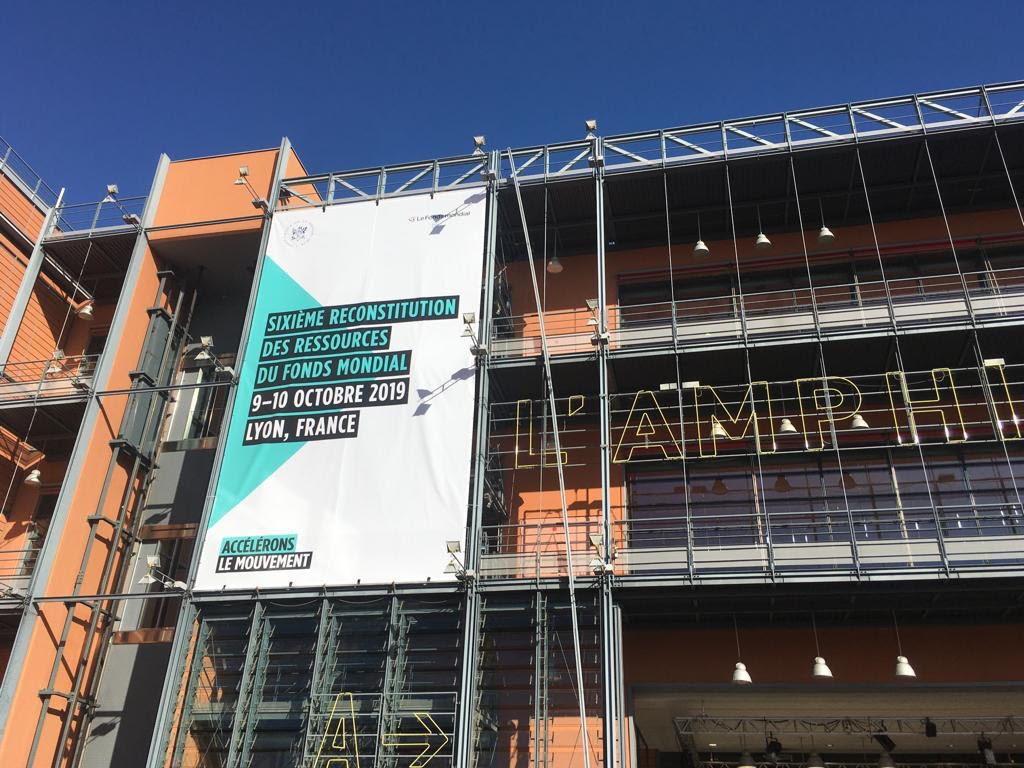
On October 9 and 10, France hosted the sixth replenishment of the Global Fund to Fight AIDS, Tuberculosis, and Malaria. In his speech, President Emmanuel Macron reiterated that "we will only defeat AIDS once and for all if we also take action to promote gender equality." As a longstanding donor to the Global Fund and in the run-up to the Generation Equality Forum, France must take joint action on both fronts.
The conference, led by France and thanks to the work of civil society around the world, achieved the financial target set by the Global Fund a year earlier, raising $14 billion for the next three years. This amount, which many NGOs considered to be the minimum threshold for success, will enable the Global Fund's programs to continue, including in West Africa.
Financial mobilization is crucial to prevent a resurgence of global pandemics. This was a first step, the challenge was met, and the result deserves to be applauded, because without resources, there can be no policies or programs, no prevention or care. And there are still many people waiting to have access to prevention tools and care that already exist.
In Lyon, there were also the powerful words of Amanda Dushimé, a young Ugandan woman and member of the Grandir Ensemble network: "We must be an integral part of the Global Fund's response as leaders and equal partners." And so we are faced with a new challenge. It is one thing—and a very good thing—for a young girl to open a meeting like this, finally recognizing that the voices of women and girls matter, but it is quite another to remove the barriers at all levels to enable their full participation in the development and implementation of actions. Institutions and policies do not arise spontaneously. They have their origins in the power relations that permeate our societies, relations that are highly unequal for women and girls.
Move quickly to an operational phase
The Global Fund is no exception. It is high time to face this reality and, even though strategic frameworks and relevant tools exist to address these inequalities, their operational implementation is far from convincing. On the one hand, women and adolescent girls experience specific realities that are still not sufficiently taken into account in policies and programs. On the other hand, their role in developing responses is not recognized. Sometimes portrayed as the culprits responsible for the problem, sometimes as victims deserving of compassion, and sometimes as heroines who perform miracles with very little, they are neither victims, culprits, nor heroines. They have rights that must be respected. The fight against AIDS, tuberculosis, and malaria is also theirs, and for that they need support and resources.
With three weeks to go before the next Global Fund Board meeting, it is already necessary to look ahead to the operational phase that these $14 billion will finance. Sweden, through its Minister for Development and International Cooperation, has already set the tone: by increasing its financial contribution to the Global Fund, it expects the latter to further integrate gender issues and sexual and reproductive health and rights (SRHR) into its programs. France, which has been advocating feminist diplomacy for over a year now, could play a similar role. Beyond the President's introductory remarks, it must help accelerate the momentum and integrate this agenda for the fight against AIDS into the work leading up to the Generation Equality Forum to be held in Paris in July to celebrate the 25th anniversary of the World Conference on Women in Beijing.