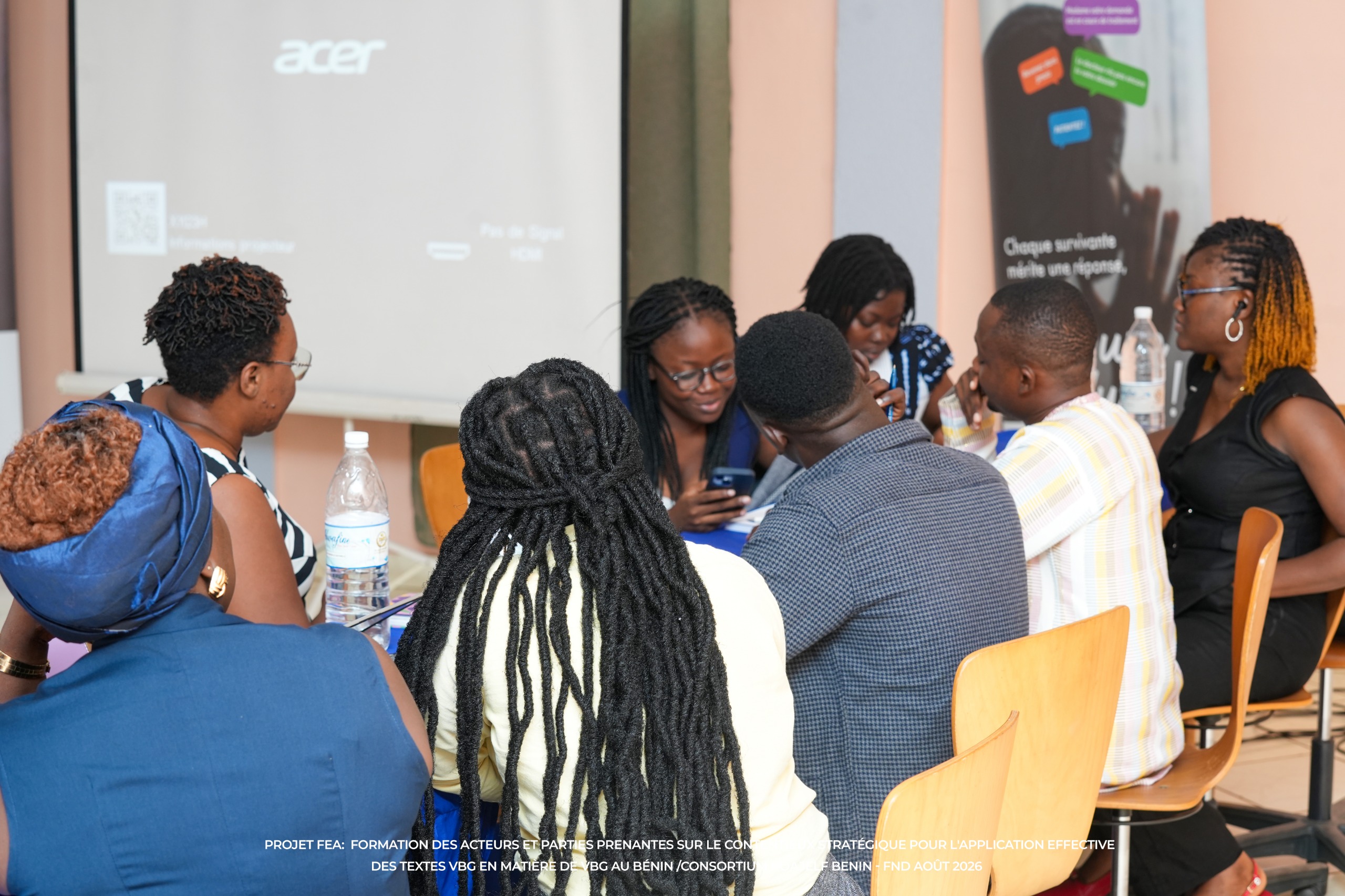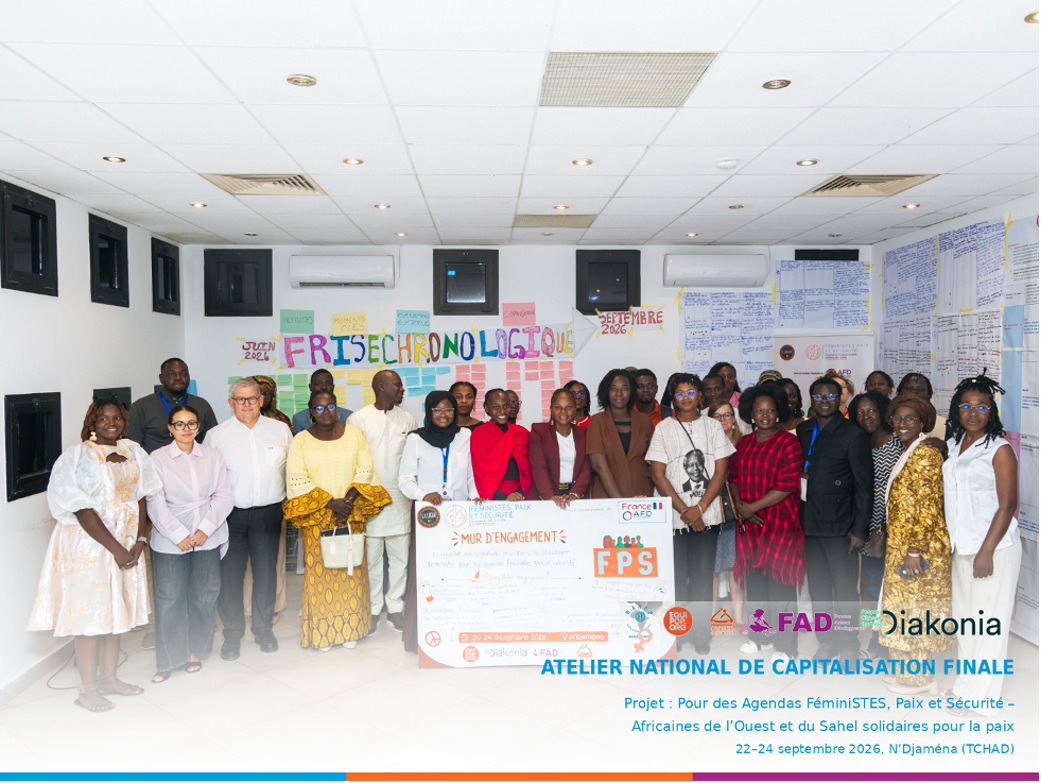

From February 18 to 20, 2025, Ouagadougou hosted a workshop on administration, finance, and organizational development at the Diakonia premises as part of the project "For Feminist Agendas, Peace, and Security—West African Women United for Peace." Led by a consortium of organizations including Diakonia, Equipop, FAD, and the Gorée Institute, this workshop aimed to strengthen cohesion and effectiveness among the actors involved in implementing the project.
A space for learning and sharing experiences
The workshop on administration, finance, and organizational development as part of the project "For Feminist Agendas, Peace, and Security – West African Women United for Peace" brought together not only consortium members, but also strategic partners such as Wanep Togo, the Association of Women Lawyers of Côte d'Ivoire (AFJCI), and Filles en Action of Benin. The main objective was to share and harmonize the practices of the consortium's administration-finance and organizational development (OD) experts and to define, by consensus, a support mechanism/methodologies/tools adapted to the FSOP FPS AO-Sahel project.
"As implementation partners, it was essential to harmonize our practices and adopt a common vision on project management, guidelines, and processes. This workshop allowed us to discuss our respective approaches, identify similarities, and lay the foundations for better coordination," said Barro Hermann, DO & Administrative and Financial Monitoring Officer at Equipop and main facilitator of the workshop.
Towards harmonization of tools and methodologies
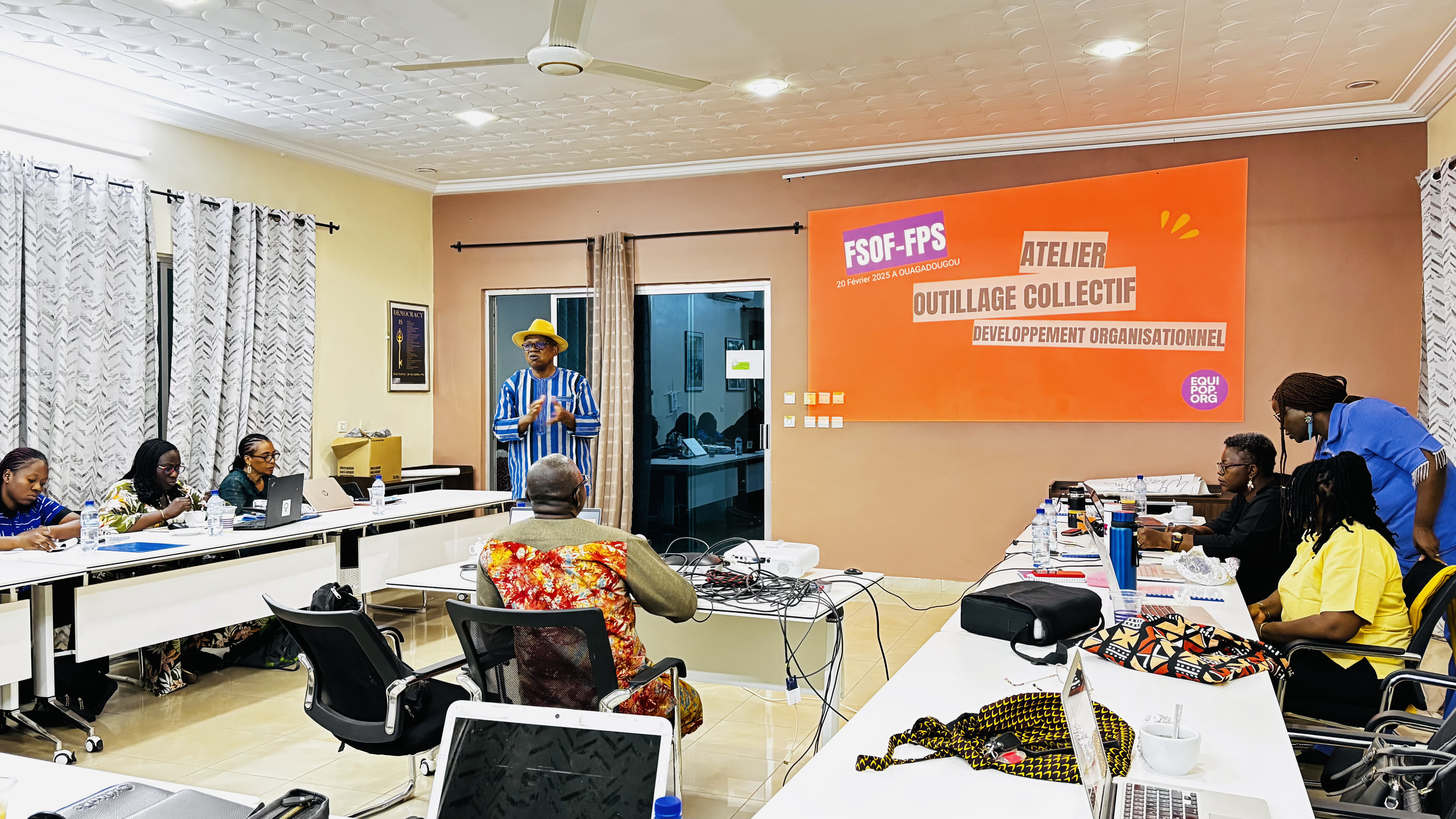

 Discussions focused on the mutual presentation of methodological approaches and support tools in administration, finance, and organizational development. The workshop provided an opportunity to compare these tools, identify inspiring practices, and define a common approach to providing technical support to project partners.
Rather than a traditional training course, this workshop was designed to be a framework for mutual learning and experience sharing, promoting diverse knowledge. The exchanges enriched the participants' knowledge and strengthened the capacities of the organizations involved in the project.
With this momentum toward harmonization and enhanced collaboration, the partners hope to improve the implementation of the project and optimize its impact on the ground. According to Dr. Rukia Bakari-Mbacké, program manager at the Gorée Institute, this workshop was useful on three levels.
She explains:
“It was very useful because, first of all, it allowed us to listen to the experiences of other consortium members and understand how they used organizational diagnostic tools to launch a project. Secondly, it was an opportunity for us to share our experiences, as this is the first time we have worked with organizations in the field. We had no experience at the outset, but after listening to the consortium members and analyzing the different methodologies they use, we were able to adopt or draw inspiration from some of their ideas to create our own way of working with these organizations. The third point was very beneficial for all of us, as program managers and admin-fin, because it allowed us to understand the importance of working together to ensure the success of the project.