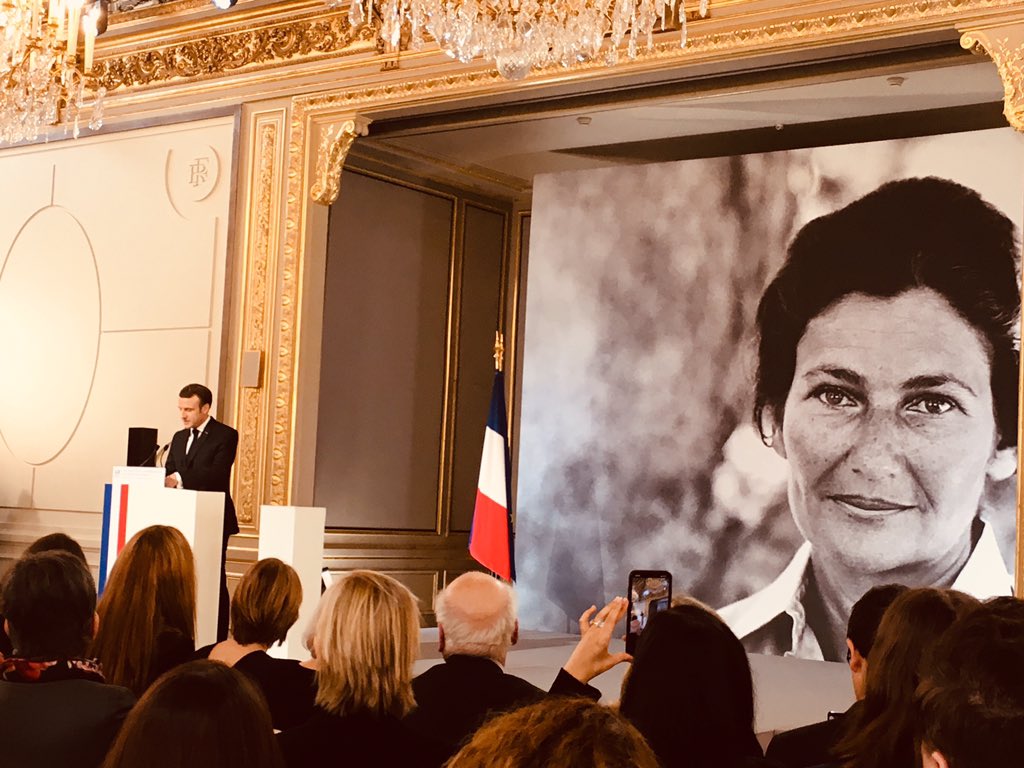
On March 8, 2019, Emmanuel Macron announced, as part of France's presidency of the G7, the creation of a "fund of €120 million to support movements promoting women's rights and conditions." One year later, and four months before the Generation Equality Forum to be hosted by France, the government is backtracking on this commitment. However, significantly and sustainably increasing the resources allocated to feminist movements and associations around the world is a prerequisite for achieving gender equality.
The future will be feminist
From the global #MeToo movement to the #NousToutes marches against violence against women in France, the protests against femicide in Mexico, and the Tunisian demonstrations for equality in inheritance, feminist movements are profoundly transforming the power relations between women and men. The scale of the task is immense. But the financial resources allocated to it are minimal. As our societies begin to take stock of gender inequalities, feminist associations can no longer make do with "whatever means are available." Moreover, the proliferation of calls for short-term projects, with limited budgets, creates a competitive system that exacerbates their precariousness.
By making gender equality a key priority for its five-year term, announcing the implementation of feminist diplomacy, and launching the Grenelle Forum on Domestic Violence, the French government is demonstrating its desire to move forward. However, the issue of funding remains a sticking point.
Will France provide the necessary resources?
Since the Cabinet meeting on March 6, 2019, which approved the "creation of a €120 million annual fund to support movements promoting gender equality and feminist movements, particularly in the Global South," several ministers have made contradictory statements on the subject. To date, the fact remains that this fund still does not exist.
Will the announced amounts actually be allocated to feminist associations? Will they be renewed on an annual basis? Will the terms and conditions for granting these funds be developed in collaboration with feminist associations and adapted to the reality of the sector? Answers are expected from France, whose financial investment in women's rights is not on par with that of other so-called feminist democracies, such as Sweden or Canada.
With gender equality being the major cause of the five-year term at the national level, consistency also requires budgetary decisions in favor of gender equality policies and feminist movements in France. The government must now release substantial funding and make it permanent in budgets, both nationally and internationally, through, for example, the future law on development and international solidarity.
As France actively prepares for the Generation Equality Forum in Paris in July 2020, its credibility and legitimacy are at stake.
23 signatory organizations: Ernestine Ngo Melha, President, Association for the Education of Disabled Children (AAEEH); Reine Kouete, President, Act-Dtour; Yveline Nicolas, Coordinator, Adéquations; Catherine-Sophie Dimitroulias, President, Association of Women of Southern Europe (AFEM); Anita Traoré, President, Association Chance et Protection pour Toutes; Fatimatou Ndiaye, President, Biodiversity for Peace; Philippe Lévêque, Director General, CARE France; Philippe Jahshan, President, Coordination Sud; Louise Delavier, Program Manager, En Avant Tou(te)s; Aurélie Gal-Régniez, Executive Director, Equipop; Fawzia Baba-Aissa, Development Officer, Mediterranean Women's Fund; Rana Hamra, Co-founder and Executive Director, Humanity Diaspo; Adam-Sira Le Blay, Lawyer/Partnership Officer, Olympe; Maé Kurkjian, Advocacy Manager, ONE; Céline Piques, Spokesperson, Osez le Féminisme ! ; Cécile Duflot, Executive Director, Oxfam France; Sarah Durocher, Co-President, Planning Familial; Michèle Vianès, President, Regards de Femmes; Marc Mercier, President of REF (Réseau Euromed France); Danielle Merian, President, SOS Africaines en Danger; Philippe de Botton, President, Médecins du Monde; Pramila Venkateswaran and Brigitte Marti, Co-founders, Women Included; Frédérique Martz, Co-founder and Executive Director, Women Safe.