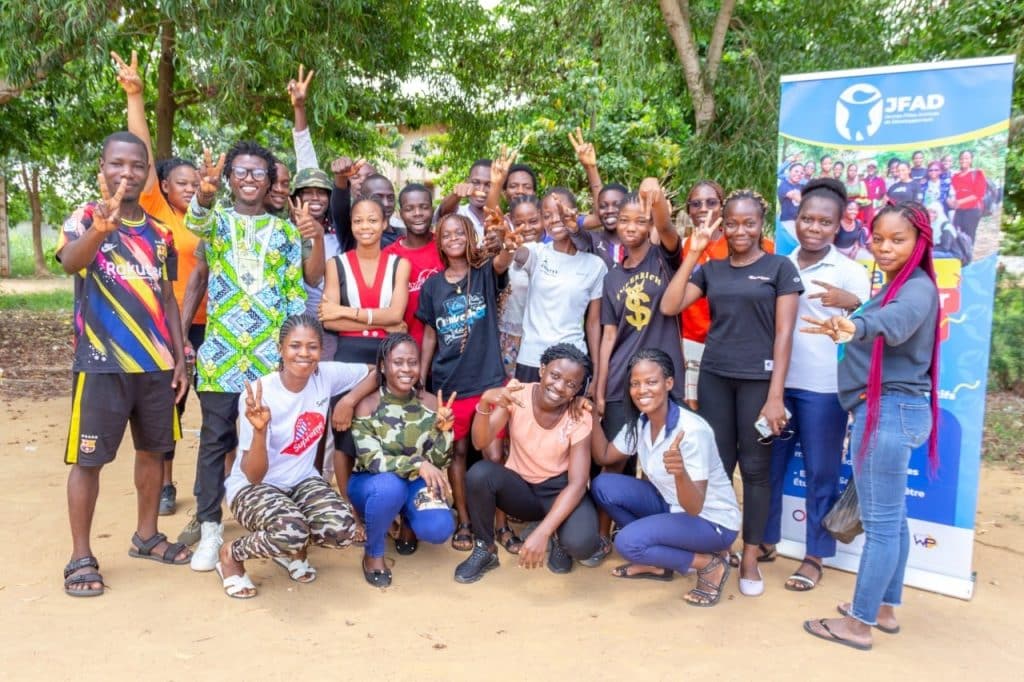
In Abomey-Calavi, the Young Women Actors for Development (JFAD) are rolling out the "We go for change" project to tackle the rise in cases of gender-based violence (GBV). This project is funded by Feminists in Action, aims to address the problems faced by women in the town of Abomey-Calavi in Benin, including the trivialization of violence, the lack of protection for survivors, the normalization of out-of-court settlements in cases of violence, and the culture of silence.
As part of the implementation of this project, training, awareness-raising, community mobilization, and advocacy activities have been planned for judicial police officers, students, the people of Abomey-Calavi, and the authorities at the University of Abomey-Calavi (UAC).
The learning path to deconstruct sexist norms and combat GBV
To achieve the project's objective, JFAD initiated the learning program. The program was set up to train twenty police officers, twenty students, and web activists on the root causes of gender-based violence, the deconstruction of sexism, the importance of a culture of zero tolerance for GBV, and the protection of survivors. For the OPJs, this learning program provided a framework for questioning sexist norms and understanding the root causes of GBV, particularly sexist and sexual violence, through four sessions of free discussion, reflection, and co-creation. It culminated in the development of a code of conduct. Throughout the learning process, students were encouraged to understand social and gender inequalities in order to recognize and analyze them, enabling them to identify violence and talk about it. As for web activists, they have been trained in producing content to combat gender-based and sexual violence. The aim is to provide them with resources, content writing skills, and social media expertise that contribute to dismantling sexism in order to protect the interests of survivors.
Breaking the silence within communities
During the learning journeys, Zoundja was identified as the most vulnerable locality in terms of GBV. Fifty-seven young girls and women and 36 men were sensitized by students and judicial police officers. The aim of the awareness-raising activities was to inform the population about the consequences of GBV, the importance of reporting it, the dangers of amicable settlements, and the urgent need to promote a culture of zero tolerance towards gender-based violence, which constitutes a serious violation of women's rights.