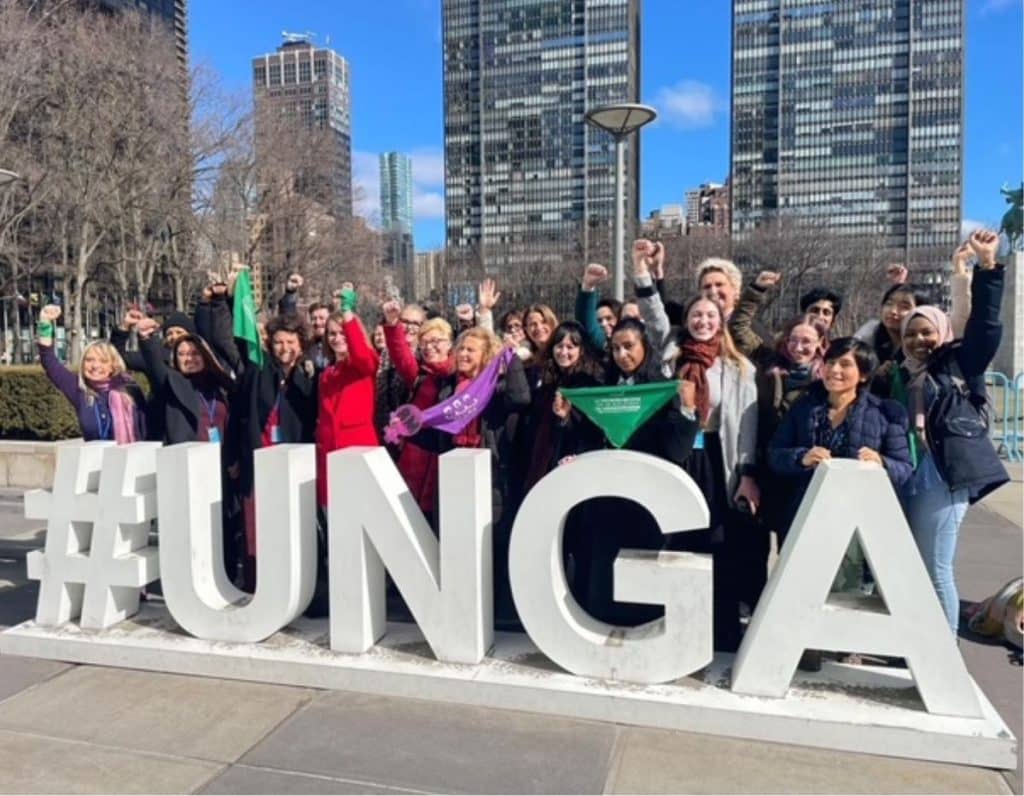
Equipop participated in the 67th session of the UN Commission on the Status of Women, which concluded with the adoption of a text on a new topic: women's rights and digital technology. However, the negotiations resulted in concessions to anti-rights movements, which were particularly active this year.
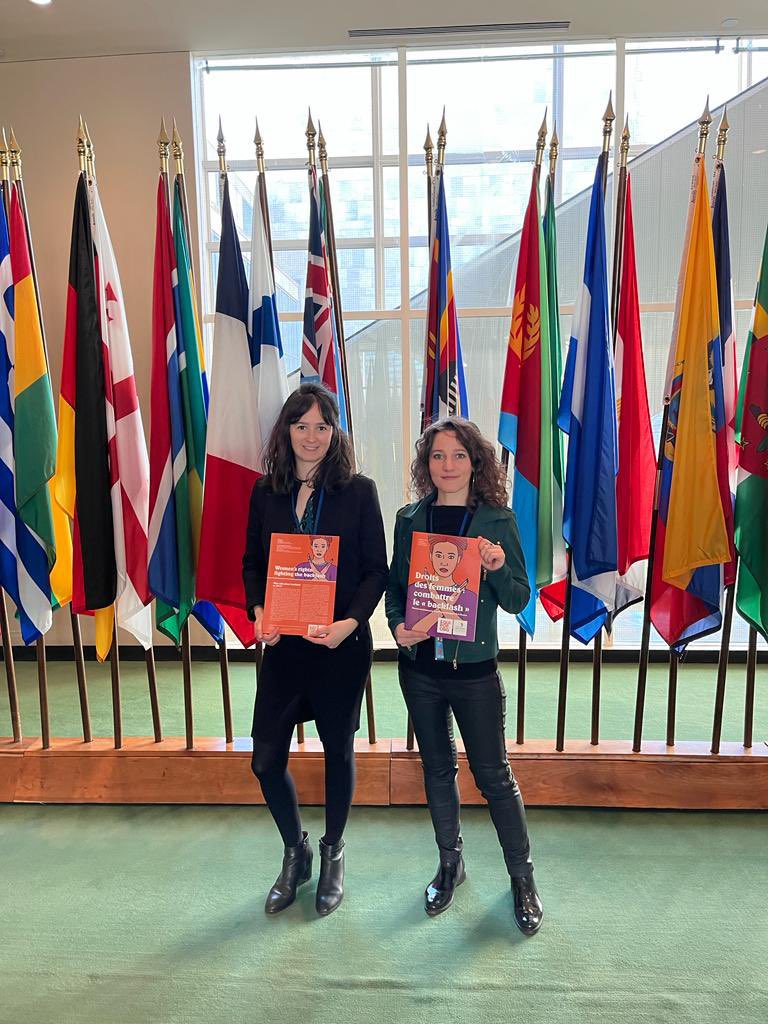 “Patriarchy is fighting back, but we are fighting back too.” With these words, Antonio Guterres, Secretary-General of the United Nations, opened the 67th edition of the “Commission on the Status of Women (CSW), the main intergovernmental body responsible for assessing and accelerating progress on gender equality. This strong statement set the tone for the intergovernmental negotiations, which took place from March 6 to 17. The negotiations concluded with the adoption of a text on a topic that had never been addressed before: digital technology and gender equality (full title of the session: "Innovation and technological change, and education in the digital age for the achievement of gender equality and the empowerment of all women and girls"). However, the fact that the negotiations resulted in a text was far from a foregone conclusion. This shows that it is not impossible to mobilize the international community around gender equality issues. This is a positive point, considering that we are in a context where feminist movements and their allies must put all their efforts into a single goal: not to back down.
Digital technology, a new theme at the CSW
The theme of this 67th edition was all the more important given that digital technology is not immune to patriarchal codes and logic—quite the contrary. Digital spaces perpetuate a continuum of gender-based and sexual violence and oppressive relationships, which discourages women from getting involved. The various inequalities in access to technology are also accentuated by sexist biases reproduced by artificial intelligence (AI). The novelty of this theme presented a challenge for the negotiating teams, particularly with regard to the introduction of new terminology. At the end of two weeks of negotiations, the UN member states adopted "agreed conclusions," which include important points such as the common desire to promote women's rights in technology, the importance of digital technology in improving access to sexual and reproductive health services, and the need to adopt public policies aimed at eliminating violence in these spaces.
Women's and LGBTI+ rights: geopolitical issues
Strengthening transnational feminist solidarity
In the face of attacks on the rights of women and LGBTI+ people, it is more essential than ever to take action, strengthen transnational feminist solidarity, and fight together. It is the pooling of actions at the local, national, and international levels, and the feminist solidarity that is woven across these different levels, that make it possible to advance women's rights. The CSW provided Equipop with an opportunity to meet partners and forge new links with activists from around the world. Through various events organized by the permanent missions to the UN of the Netherlands and Germany, Equipop was able to discuss issues related to the construction of a feminist digital space. Equipop exchanged views with international feminist networks such as AWID and feminist funds working in emergency contexts such as the Urgent Action Fund. Several partners of Women7, of which Equipop is a member as part of its mobilization around the G7, were met. Equipop participated in the launch of the "Feminist Foreign Policy Collaborative," of which we are members. This unique platform will enable the creation of progressive alliances in favor of gender equality. France, which is a member, will have to invest heavily in it. Because all feminist movements are linked and because it is a fundamental right, Equipop has also defended the inclusion of the right to abortion in the French Constitution, alongside its partners.
Developing feminist foreign policies in Europe and around the world