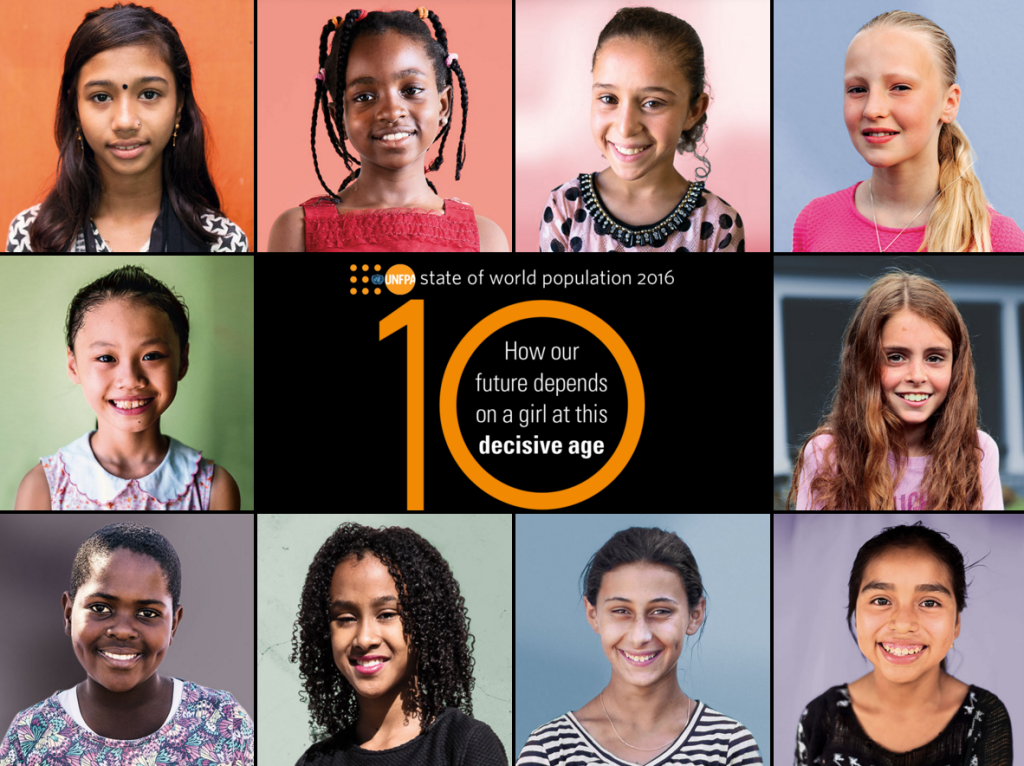
On October 20, 2016, UNFPA published its annual report on the state of the world's population. The document highlights the fact that policies and programs, in order to truly advance girls' rights, must take action before adolescence, starting at age 10. This report is worth reading and sharing widely!
On Thursday, October 20, the United Nations Population Fund (UNFPA) launched its annual report on the state of the world's population in 2016, entitled "10 Years: How This Critical Age for Girls Shapes Our Future." This year, the report combines a global analysis with an innovative approach, as UNFPA plans to follow the lives of 10 girls who are currently 10 years old and live in different parts of the world over the next 15 years. They will be 25 in 2030, the deadline for the Sustainable Development Goals. Their personal situations at that time will be highly relevant indicators for assessing the effectiveness of the sustainable development agenda.
“When a girl reaches the age of ten, her world changes.”
There are currently 60 million girls aged ten worldwide. Stepping up efforts to support this "wave of ten-year-olds" represents a real opportunity for change. Indeed, during adolescence, certain obstacles become insurmountable (forced marriages, early pregnancies, etc.); but at age 10, there are often two or three crucial years during which the trend can be reversed. To set this positive dynamic in motion and significantly reduce gender inequalities, UNFPA recommends focusing programs on specific issues: strengthening the fight against early marriage, improving access to quality education and information on sexuality, and intensifying the prevention of gender-based violence, among others. According to Benoit Kalasa, Director of the Technical Division at UNFPA, many pilot programs and community initiatives already exist, and now it is time to scale them up. Drawing on twenty years of experience, Equilibres & Populations emphasizes how relevant these guidelines are for West Africa. Dominique Pobel, program manager at Equipop, took this opportunity to reiterate the importance of a rights-based approach to the situation of these girls. Only if development stakeholders take these issues seriously will the 10 girls identified by UNFPA celebrate their 25th birthdays in a more equal and prosperous world. UNFPA concludes: "Over the next 15 years alone, developing countries as a whole could gain or lose $21 billion depending on whether or not they decide to invest in the well-being, education, and empowerment of their 10-year-old girls."