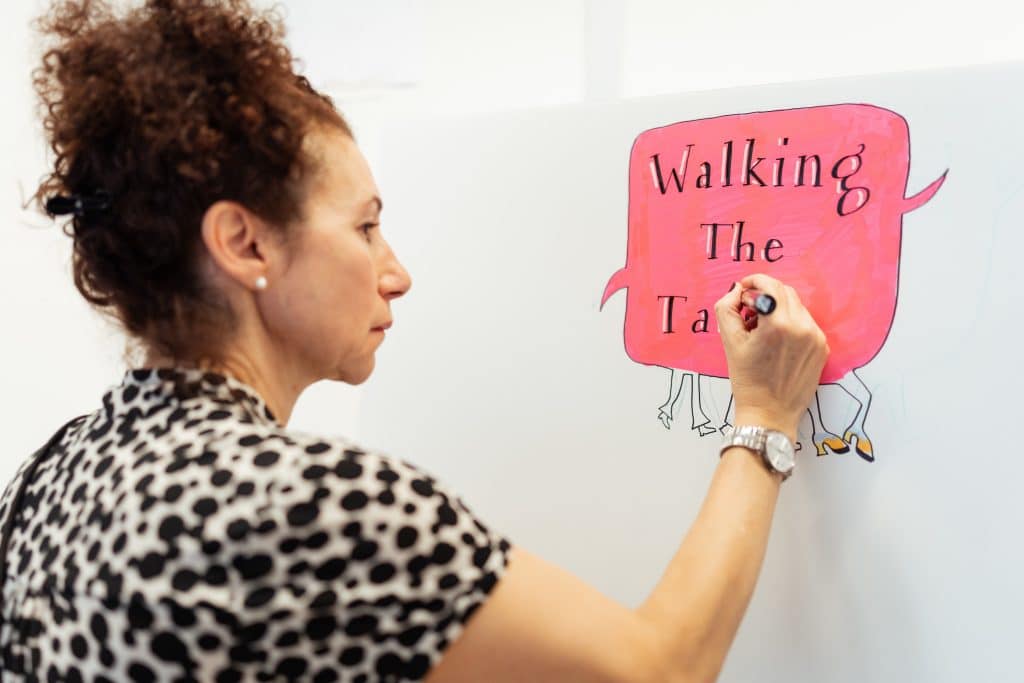
Walking the Talk is a consortium program that aims to promote the adoption and implementation of feminist foreign policies and gender equality policies in Germany, France, the United Kingdom, the Netherlands, and the European Union. These inclusive foreign policies defend gender equality and reflect the voices of women and LGBTIQ+ people in the Global South. To achieve this, the program advocates for an increase in official development assistance (ODA) dedicated to gender equality and women's rights, particularly funding for progressive and intersectional feminist organizations in the Global South.
I would like to subscribe to the Walking the Talk newsletter!
Why we need a feminist foreign policy
The United Nations' goal of achieving gender equality by 2030 is off to a poor start. A real backlash against sexual and reproductive health and rights (SRHR) has continued to grow, alongside an increase in sexual and gender-based violence and the criminalization of LGBTIQ+ rights. Furthermore, the global women's rights emergency is compounded by a global climate emergency that exposes women and girls to life-threatening dangers and the risk of losing their livelihoods. We want a world where women and LGBTIQ+ people play a full role in political decision-making. A world where governments take concrete steps to address inequalities. Yet for too long, women and LGBTIQ+ people have been sidelined in foreign policy, resulting in decisions on security, peace, international alliances, climate change, or trade, for example, that do not reflect their interests. In the current context, where conservative movements are undermining progress on women's and LGBTIQ+ rights, it is essential to hold governments accountable for implementing their feminist policies and to ensure that they "walk the talk" (walk the talk, in English). For the international movement for gender equality to be dynamic, inclusive, and resilient, progressive organizations in the Global South (countries with the largest share of the world's population) led by women and LGBTIQ+ people need sufficient and reliable funding. Whether through ODA or other channels.
Our objectives
By 2026:- The foreign policies and ODA of the UK, Germany, France, the Netherlands, and the EU reflect the priorities and ideas of feminists in the Global South and North.
- Funding available for gender equality, through ODA or other channels, is greater and of higher quality in these four countries and at the EU level.
- Funding from the United Kingdom, Germany, France, the Netherlands, and the EU is more accessible to feminist organizations in the Global South.
Our approach
This program is run by a consortium of organizations based in four European countries: Equipop in France, Restless Development in the United Kingdom, the Center for Feminist Foreign Policy in Germany and Hivos in the Netherlands (consortium leader). In addition, we plan to have a small team in Brussels to work with Brussels-based NGOs and EU decision-makers. To effectively advocate for foreign policies and ODA that leave no one behind, we need to mobilize our (inter)national networks. Working together for more feminist, inclusive, and equitable foreign policies will also contribute to the progress of Sustainable Development Goal 5 (SDG 5). We actively challenge binary notions of gender. We recognize and support sexual and gender diversity, and adopt an anti-racist and intersectional approach. Although we are a consortium of organizations based in the Global South and focus our engagement work on decision-makers (and the general public) in Europe, our work will be led by rights holders in the Global North. This means that South-North co-creation is at the heart of our consortium's strategy, research, communication, and advocacy efforts. We will also create inclusive spaces such as annual feminist advocacy conferences and more intimate advocacy labs, where feminists from the majority and minority worlds can strategize together on how best to convince Northern decision-makers of their ideas.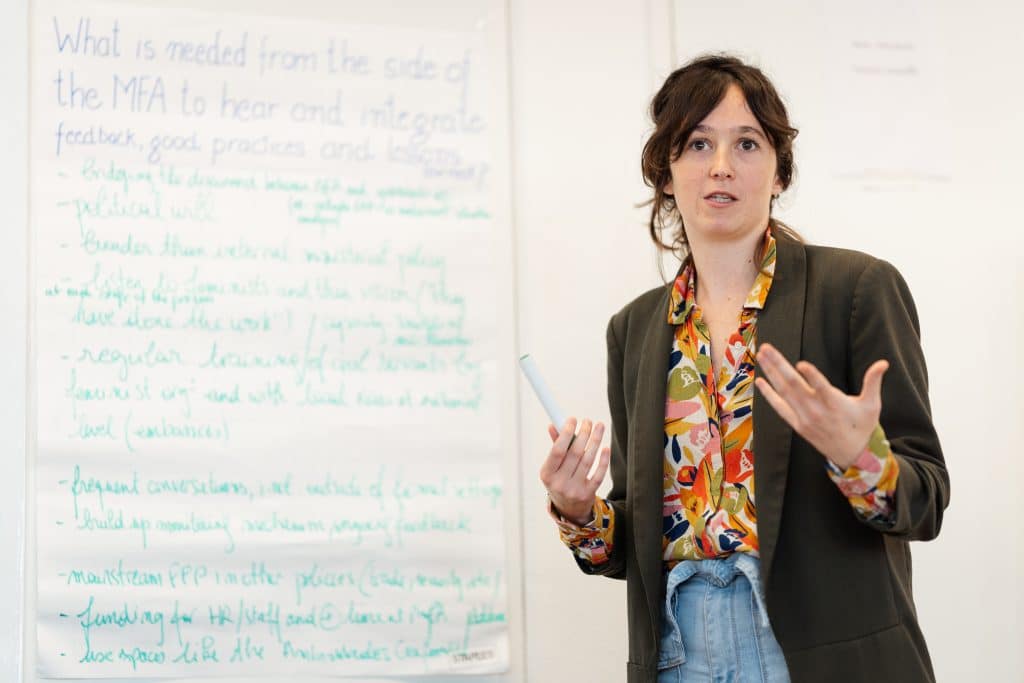
Where
Our four countries face different political contexts and stages in terms of adopting or implementing feminist foreign policies, and therefore have different objectives. For France, Germany, and the Netherlands, which have adopted PFPs, the focus is on translating these commitments into concrete policies, ensuring that funding reaches progressive feminist organizations in the Global South, and holding these governments accountable for their policies. Although the Netherlands announced the introduction of a FSP in 2022 and held a major conference in early November 2023, nothing is certain. Following the victory of Geert Wilders' far-right Party for Freedom in the November 2023 elections, we will need to step up our efforts to ensure that the announced feminist foreign policy actually goes ahead. In the UK and the EU, we will contribute to much of the groundwork needed to ensure more progressive policies and practices on gender equality and ODA funding.
Timeframe and budget
August 2023 – July 2026, USD 7 million.
Donor
The Bill & Melinda Gates Foundation provides financial support Hivos (consortium leader).
Consortium partners
Center for Feminist Foreign Policy (CFFP) The Center for Feminist Foreign Policy (CFFP) is a strategic resource center and a strong advocate for the development, adaptation, and implementation of PEFs. It has succeeded in creating political momentum and convincing governments to adopt feminist foreign policies. The CFFP has a strong European and international network that emphasizes intersectional feminism, particularly by building bridges between feminist, anti-racist, decolonial, and LGBTQIA networks and organizations. The CFFP's mission is to eradicate global inequalities by applying a feminist approach to all foreign, security, and international assistance policies around the world. The CFFP's work focuses on six programmatic areas: Feminist Foreign Policy, Feminist Peace and Security, Anti-Racism, Climate Justice, Human Rights, and Feminist International Cooperation. Equipop Equipop is an international feminist organization that works to improve the rights and health of women and girls around the world, with a particular focus on their sexual and reproductive rights and health. Equipop defends feminist values and places a gender-based approach at the heart of its work. Equipop is a rapidly growing organization that employs around 40 people in its offices in Dakar, Ouagadougou, and Paris. Equipop supports and works with more than 100 partner organizations and feminist activists in 12 countries. Hivos Hivos is an international development organization guided by humanist values. In collaboration with citizens and their organizations, it contributes to the emergence of just, inclusive, and life-affirming societies where people have equal access to opportunities, rights, and resources. Hivos works in partnership with other organizations in the Middle East, Africa, Asia, and Latin America in three areas of impact: civil rights in the digital age; gender equality, diversity, and inclusion; and climate justice. Hivos' approach is solution-oriented and creates broader movements for change by amplifying and connecting voices. Restless Development Restless Development is a global, women-led, feminist youth agency. Restless has 35 years of experience in supporting the collective power of young leaders to create a better world, from the grassroots to the highest political levels. Restless Development brings expertise to making youth power a reality, drawing on youth-led research, advocacy, and inclusive co-creation, as well as a vast network of over 2,000 women- and girls-focused youth civil society organizations through the Youth Collective.I would like to subscribe to the Walking the Talk newsletter!