4th Annual Meeting of the Ouagadougou Partnership
Many challenges to overcome with the contribution of Alliance Droits et Santé
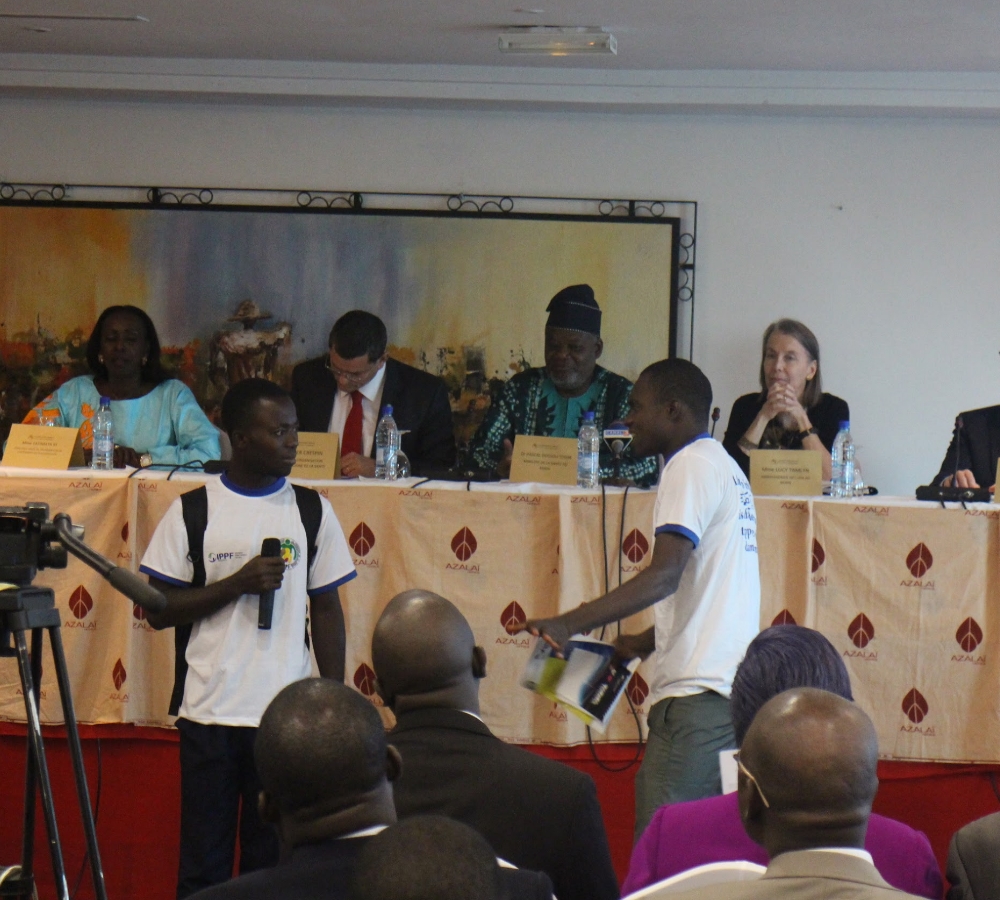
Over the past few days, Equipop was in Cotonou, Benin, representing the Alliance Droits et Santé network alongside the NGO CeRADIS at the annual meeting of the Ouagadougou Partnership, a movement promoting family planning (FP) in nine French-speaking West African countries.
Four years after its launch, this movement now finds itself at a turning point, a time for taking stock but also for consolidation. With this in mind, the annual meeting in December 2015 aimed to review progress, identify remaining challenges, and develop a collective and shared agenda for the future.
Advances
The Partnership has helped to generate collective momentum on FP issues in the subregion. The goal of reaching 1 million new FP users in the subregion has been more than achieved. Budgeted national action plans have been developed in each country and are being implemented, with real results on the ground.
Senegal in particular has performed particularly well, with the prevalence rate of contraceptive use (modern methods) among married women rising from 12.1% to 20.3% between 2011 and 2014. Finally, innovations aimed at strengthening both the supply and demand for FP have been implemented in all nine countries: ● In Benin, religious leaders were mobilized to spread awareness messages in favor of FP. ● In Niger, the School for Husbands helped raise awareness among men about issues related to reproduction and family planning. ● In Burkina Faso, the "Djandioba Days," or family planning festivals, helped to raise community awareness, provide FP services, and mobilize populations through theater.
The agenda for the future
But many challenges remain. The new target of reaching 2.2 million additional users in the nine Partnership countries by 2020 will require us to consolidate our efforts and also to look toward new horizons for action.
To achieve this, it will be necessary to: ● Strengthen coordination between stakeholders and consultation and monitoring frameworks; ● Prioritize the mobilization of financial resources in support of national action plans; ● Improve the monitoring and evaluation of progress; ● Promote a multisectoral approach rather than a silo approach; ● Consolidate the participation of adolescents and young people and ensure they are taken into account in the implementation of action plans.
In this program, civil society will have to play its role fully as a partner and watchdog in the implementation of the Partnership.
Alliance for Rights and Health and the Ouagadougou Partnership
Alliance Droits et Santé returns from Cotonou with a wealth of ideas to help accelerate the implementation of the Partnership in the sub-region. Encouraging the involvement of local authorities and promoting the inclusion of young people's needs in FP programs are among the specific areas of work to which the Alliance can make a significant contribution. Members are more committed than ever to improving the status of women and girls, ensuring that the needs of adolescent girls are better taken into account, and building a strong civil society that is involved in the Ouagadougou Partnership.