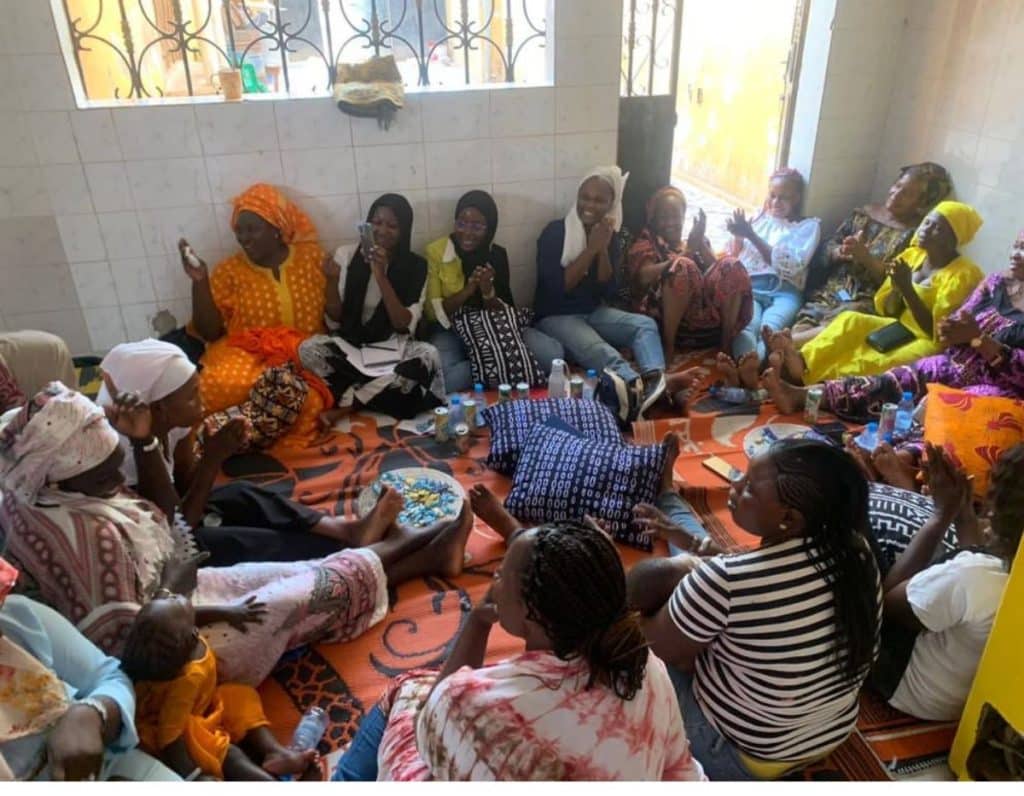
Our bodies, our health: women exercising their rights over their own bodies

Our bodies, our health is a project to combat gynecological and obstetric violence (GOV) in Senegal. It highlights an epidemic problem, the treatment of which is emerging but which struggles to be considered a real public health issue contributing to preventable maternal and infant deaths: gynecological and obstetric violence.   Despite the efforts made, Senegal still records 236 maternal deaths per 100,000 live births (Ministry of Health and Social Action), with a promise to reduce this figure to 70 deaths per 100,000 births by 2030. The fight against VGO allows us to further explore the rights-based approach to women's and young people's health issues and to question their rights to control their own bodies.   LThe main objective of this project and its consortium members is to combat gynecological and obstetric violence (GOV) by strengthening the conditions that enable women, particularly adolescents and young women, to exercise their sexual and reproductive health (SRH) rights. It also aims to empower women to recognize, report, and combat VGO themselves by advocating for more respectful and humane care. Finally, this project to combat VGO seeks to strengthen the capacity to act and mobilize around the issue for strong and sustainable advocacy.  

A multi-stakeholder initiative to combat gynecological and obstetric violence

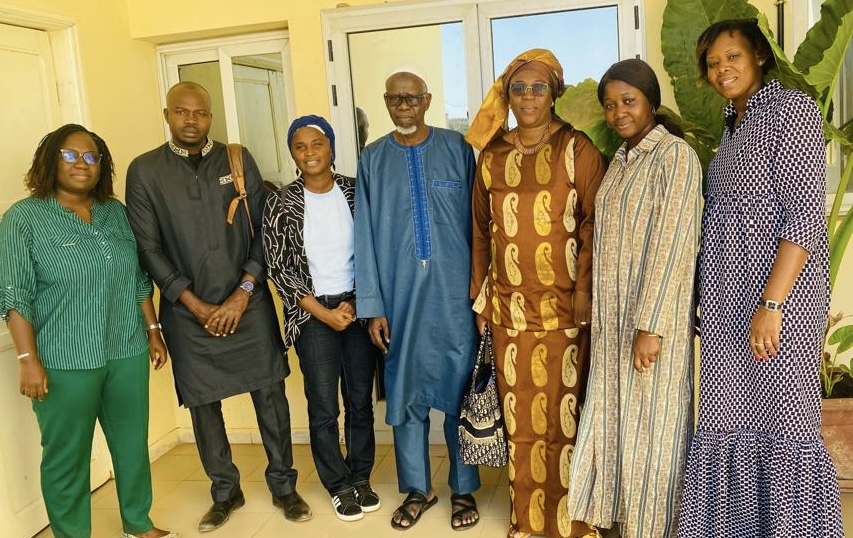
  This project was developed by a consortium ofactors key players in civil society, young people, research, and health, aims to raise awareness and mobilize Senegalese communities to combat GBV. Drawing on the expertise and diversity of its members, during the pilot phase the consortium defined priority groups and strategic areas of intervention to promote the recognition of VGOs in Senegal. United under the banner of Equipop (consortium leader), the project's implementing partners include:
  • The National Youth Alliance for Reproductive Health and Family Planning (ANJ)
  • The Senegalese branch of the West African Network of Young Women Leaders (ROALJEF)
  • Enda Health (community health, public health)
  • The Study and Research Group on Societies and Gender, GESTES (gender research laboratory)
  • The collective “Never again!” (support for victims of domestic violence) 
Towards sexual and reproductive health without VGO: A fundamental right for all women

It is common to see women suffering due to a variety of factors that often combine: lack of access to care, poor reception and lack of information, non-consensual, unnecessary or harmful clinical procedures, discrimination (based on age, gender, socioeconomic status, etc.), mistreatment, and poor patient-provider relationships. Healthcare workers also suffer from not often being able to provide quality care: lack of human resources, difficult working conditions, etc. Added to this is the structural issue of women's right to control their own bodies and make free and informed decisions about their sexual and reproductive health, which is often little discussed. The aim of the project to combat VGO is to recognize VGO as violence that is part of the continuum of gender-based violence and to link it to the root and structural causes of violence against women, in this case violence perpetrated in the medical environment against women's bodies. Strengthening the conditions that enable women, particularly adolescents and young women, to exercise their sexual and reproductive rights and health also reduces maternal mortality rates and helps achieve the Sustainable Development Goals.

Making VGO visible to empower women, youth, and adolescents

Diamniadio, the project's pilot site, stands out for its diversity (population, economic activities, urbanization, road junction) and its respectful maternity care, making it an ideal place to drive profound change. In collaboration with the district chief medical officer and community leaders in Diamniadio, initiatives will be carried out with women and girls to gather their experiences as patients and promote open dialogue through single-sex discussion groups. This collaboration will also enable work with men and young boys on socialization processes, the construction of masculinities, and roles in sexual and reproductive health services through focus groups.   These actions will lead to the creation of an open community of practice where beneficiaries can work together to find sustainable solutions to obstetric and gynecological violence and improve care. Action research will also be conducted throughout the activities in order to analyze practices and document the process to provide evidence on VGOs.      Project funded by the French Development Agency as part of FISONG 2021, implemented in Senegal. 

Further information

April 2, 2026

Open Letter to Public Authorities, Academic Institutions, and Stakeholders Committed to the “One Health” Approach, Ahead of the One Health Summit in Lyon

March 31, 2026

Equipop has been involved in the development and monitoring of French feminist diplomacy for several years. In particular, in October 2025, we published a report on

March 31, 2026

Since September 2023, Equipop and RESACOOP have been working together to build a long-term training partnership aimed at professionals in the fields of international solidarity, youth, and

Looking for something?