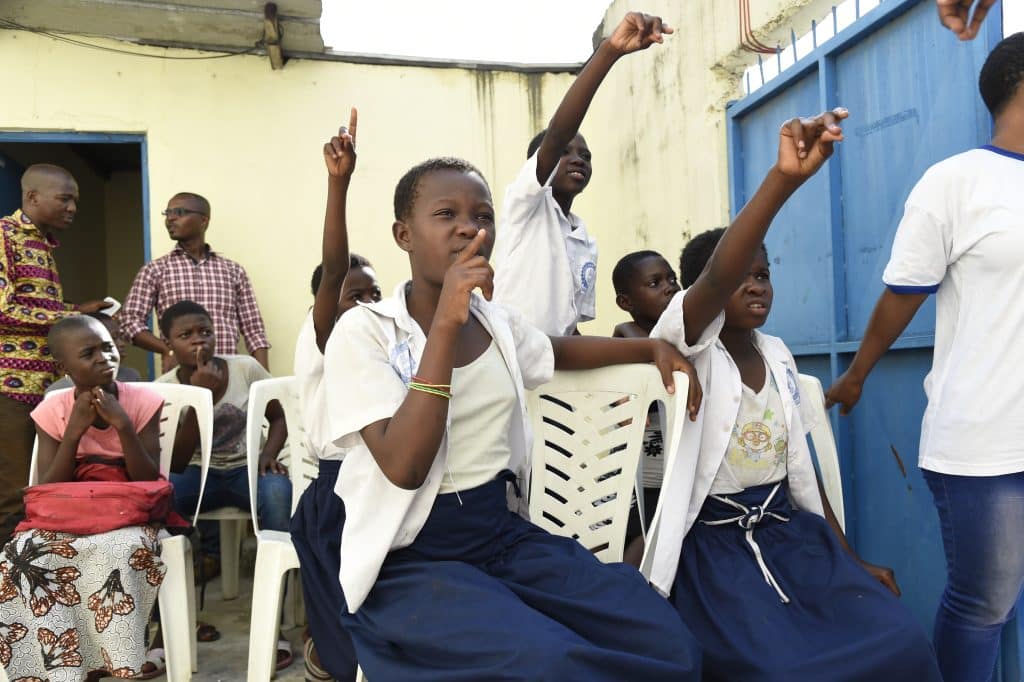
ECS is an age-appropriate, culturally relevant approach to teaching about sexuality and interpersonal relationships, based on scientifically accurate information and free from value judgments. The promotion of ECS is at the heart of several of Equipop's initiatives. In West and Central Africa, it is working with its partners to create the conditions for its acceptance and implementation.
Access to sexual and reproductive health and rights (SRHR) is important everywhere in the world.
In some parts of the world, two out of three girls report having no idea what was happening to them when they had their first period. Complications related to pregnancy and childbirth are the second leading cause of death among girls aged 15 to 19 (the leading cause in West and Central Africa), and only 34% of young people have accurate knowledge about HIV and its transmission. In France, in 2018, 20% of young people aged 15 to 24 felt they were poorly informed about HIV and AIDS. This figure has risen by 24% since 2007. Too many young people receive confusing and contradictory information about relationships and sexuality as they transition from childhood to adulthood. These young people are increasingly in need of reliable information. Comprehensive sexuality education (CSE) meets this need. It enables them to make informed decisions about their relationships, emotional lives, and sexuality, and helps them navigate a world where gender-based violence (including sexual violence), gender inequality, early and unwanted pregnancies, HIV, and other sexually transmitted infections (STIs) pose serious risks to their health and well-being.
Comprehensive sexuality education, a high-impact practice
Sexuality education is an age-appropriate, culturally relevant approach to teaching about sexuality and interpersonal relationships (both in and out of school) that is based on scientifically accurate information and refrains from making value judgments. There is significant factual evidence showing the positive impact of sexuality education. It highlights the fact that it contributes to:
• Limit misinformation and increase knowledge about sexual and reproductive health
• Promote responsible sexuality (reducing the frequency of unprotected sex, delaying the onset of sexual activity)
• Increase the use of contraception and prevention methods against HIV and STIs
• Reinforce positive values and attitudes related to sexual and reproductive health
• Develop young people's ability to make informed decisions and comply with them
• Promote communication between adults and young people on sexual and reproductive health
Comprehensive sexuality education, its promotion and implementation, a duty everywhere in the world
More and more organizations and individuals are convinced of the importance of providing children and young people with accurate, high-quality knowledge and skills in SRHR that go beyond biomedical aspects, enabling them to make informed choices that respect others. The promotion of CSE also contributes to the achievement of the Sustainable Development Goals (SDGs), in particular Goal 3 for health and well-being, Goal 4 for quality education, and Goal 5 for gender equality. However, the implementation of CSE faces considerable resistance due to the taboo nature of sexuality, misunderstandings, and certainly also because of its transformative potential towards more egalitarian, inclusive societies that are less discriminatory towards women, girls, and LGBTQIA+ people (1). The promotion of CSE is at the heart of several of Equipop's actions. In West and Central Africa (WCA), it is working with its partners to create the conditions for its acceptance and implementation. In these regions, 64% of the population is under 24 years of age, 43% of girls are married before the age of 18, and contraceptive prevalence among adolescents and young women aged 15 to 24 is less than 15%.
The work is carried out on three levels:

1. Regional mobilization Equipop and its partners are mobilized for a regional campaign aimed at securing a ministerial commitment to ECS and SRH services tailored to adolescents and young people. This mobilization involves, on the one hand, our participation in the steering committee of the multi-stakeholder campaign led by UNESCO and UNFPA (2) and, on the other hand, the organization of an advocacy and communication campaign as part of the Change Lab (2018–2021) project with the Alliance Droits et Santé network and the West African Network of Young Feminists.
2. Support for local advocacy actions by civil society organizations In Guinea and Côte d'Ivoire, Equipop is a partner in the EDUCASSO project (2018–2020), which aims to improve the inclusion of ECS in school curricula by using social communication tools for political mobilization.
3. Institutional support As part of its partnership with UNFPA, Equipop provides technical support to UN agencies benefiting from the Muskoka Initiative and their partners in order to, in Guinea for example, mobilize resources to finance the country's ECS roadmap.
Audrey Azoulay Director-General of UNESCO
“We are convinced that if we do not respond to young people’s demand for comprehensive, high-quality sexuality education, we will not achieve the Sustainable Development Goals (SDGs) we have set for 2030, nor the promise to leave no one behind.”

(1) Lesbian, gay, bisexual, transgender, queer, intersex, asexual, and more.
(2) United Nations Population Fund