
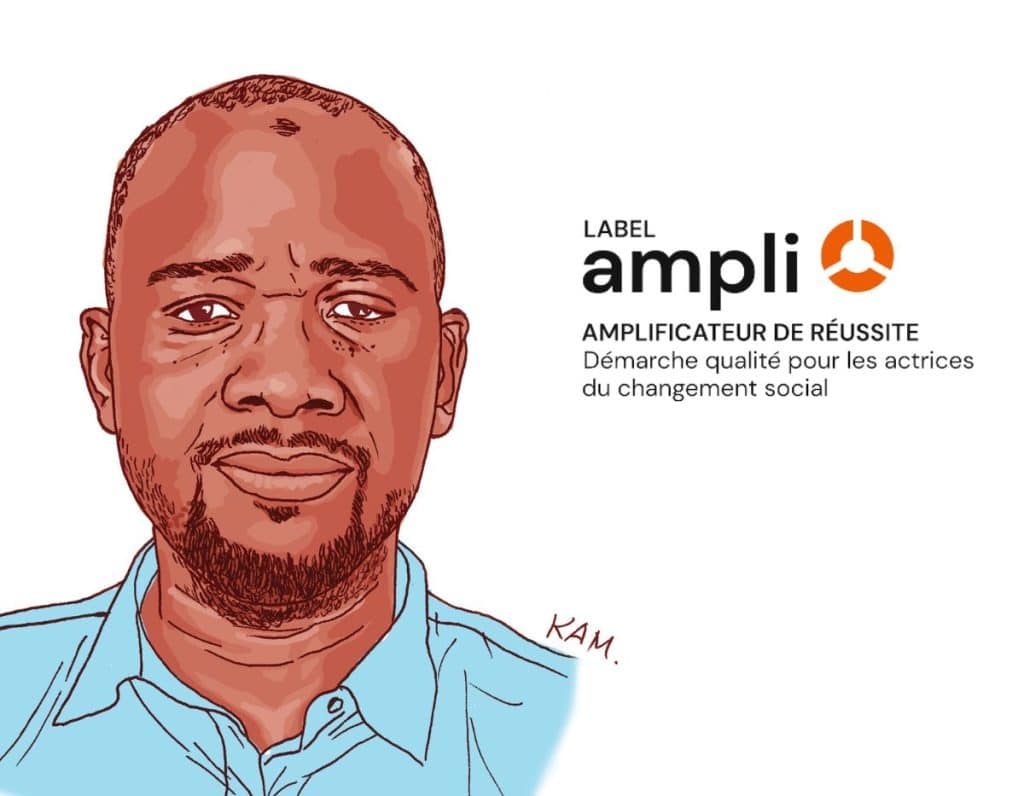
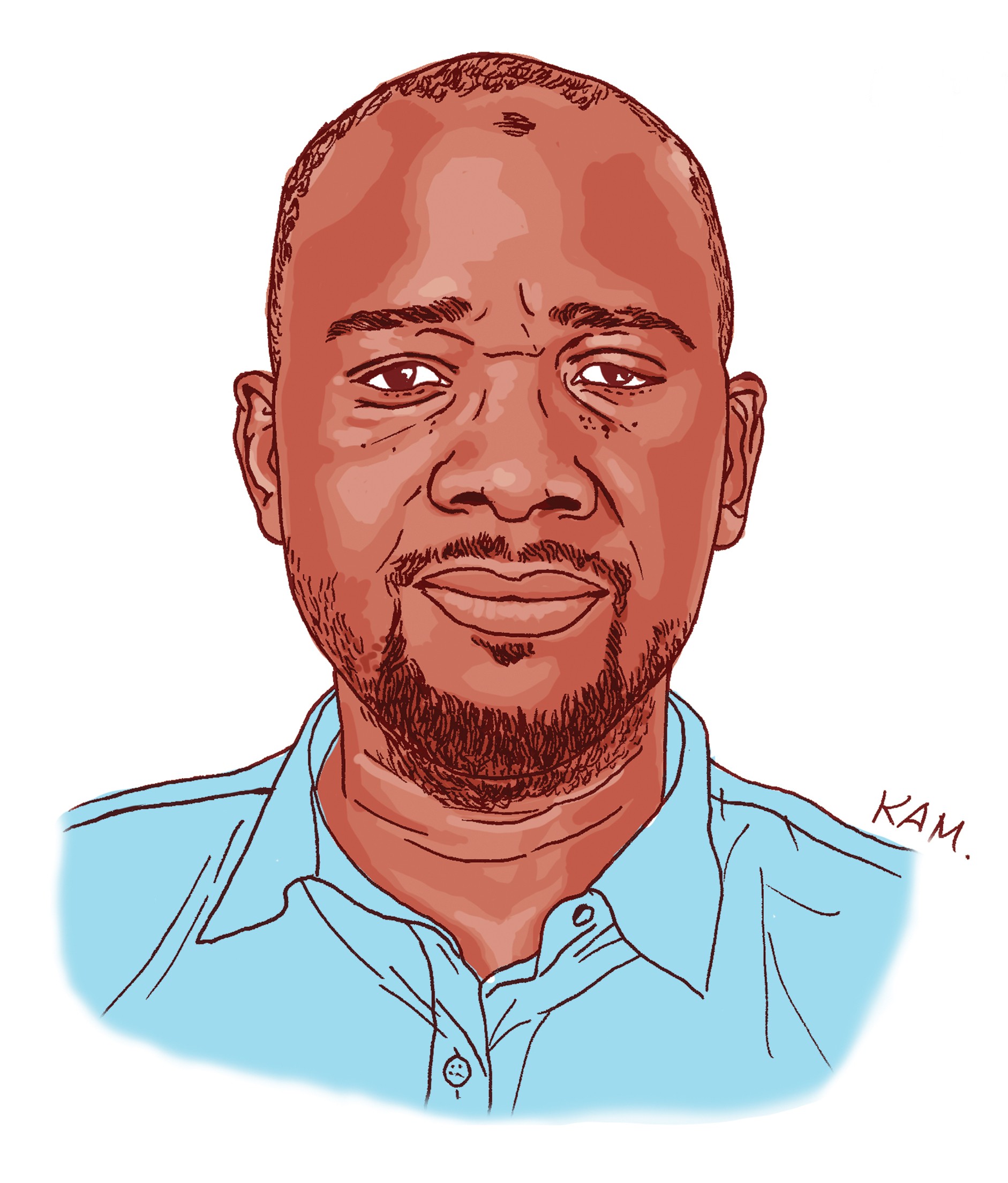
Bréhima Ballo is a program manager atAMSOPT-Mali (Malian Association for Monitoring and Guidance of Traditional Practices). He led his organization's certification process, enabling it to achieve Level 2 certification.
Remind us what AMSOPT is?
 AMSOPT is a Malian civil society organization created in 1991. It brings together women and men committed to children's rights, SRHR, and the fight against gender-based violence. We have headquarters in Bamako and four branches in Mali. We work on communication for behavioral change, advocacy, and care for survivors of gender-based violence. We have 28 employees and work with specialized organizations on certain issues, such as lawyers when a girl wants to file a complaint.
AMSOPT has achieved Level 2 of the Ampli Label. Why not apply directly for Level 3?
Taking into account our strengths and weaknesses, and considering that we did many things more informally than formally, our Board of Directors unanimously decided to apply for Level 2. For this level, 90% of our practices were already compliant. I then followed the advice given by Pascal Ilboudo, Equipop's organizational development manager, to improve our processes: redefine the strategic plan, review our administrative, financial, and accounting procedures manual, our communication plan, etc. This preparatory work enabled us to achieve Level 2 under favorable conditions. But it wasn't easy. You have to be willing to question yourself and commit to a quality approach. The first step is to realize that you have to be a leading NGO, with standards and requirements. We did not attempt level 3 because we decided that we needed to consolidate our foundations with level 2. But in 2023, we will go for level 3. We will prepare ourselves accordingly. We already know the process, the conditions, and the evidence to be provided. But level 3 is not an end in itself. Even if there were a level 4, we would attempt it. The important thing for us is to become a benchmark in terms of governance.
Does this amplifier label change a lot of things for you?
It's very important to be more credible, first internally and then externally. Whenever we approach donors or partners, all our documents are now ready to be provided. That's a real advantage. I myself have gained confidence and feel comfortable working with partners, even large international organizations. I am no longer afraid of audits. All our documents are ready, administrative, supporting, everything is in order. We are gaining momentum.
Could this label have a real impact on the CSO ecosystem in Mali?
It is clear that organizations with good governance and a certain level of quality are the ones that will last a long time and receive more funding and support from partners with a long-term vision. Thanks to this exercise undertaken by AMSOPT, we are undergoing organizational audits by major donors such as UNFPA, AFD, and Amplify Change. And in our last audit, we scored 20 out of 21! Our partners were very pleased. The international auditor first congratulated us. Then he asked the question: how did you manage to improve so much? I explained the Label Ampli process. He understood and gave us further advice on how we could be even better. It's simple: the better the audit results, the more partners we have. In Mali, we currently have three certified organizations—AJCAD-Mali, AMSOPT, and RENAJEM—and we are already working together. There is no formal network, but we strengthen each other. When RENAJEM failed to achieve Level 1 last year, we encouraged them not to give up. And seeing AJCAD-Mali's efforts to reach Level 3, I said to myself, "Now we too are going to work hard to reach that level."
Have any organizations approached you to find out how to apply for the Ampli Label?
Several organizations have already approached me. When the certificates were awarded, younger organizations were a little jealous in a positive sense: they said to themselves, "We have to do the same." A local organization also read my tweets and asked me to help them with the certification process. I first asked them about their internal willingness to commit to a quality initiative. Then I put them in touch with Equipop to see to what extent these organizations could be certified.
Watch the video of Brehima Ballo presenting certificates to AJACD-Mali and RENAJEM.