
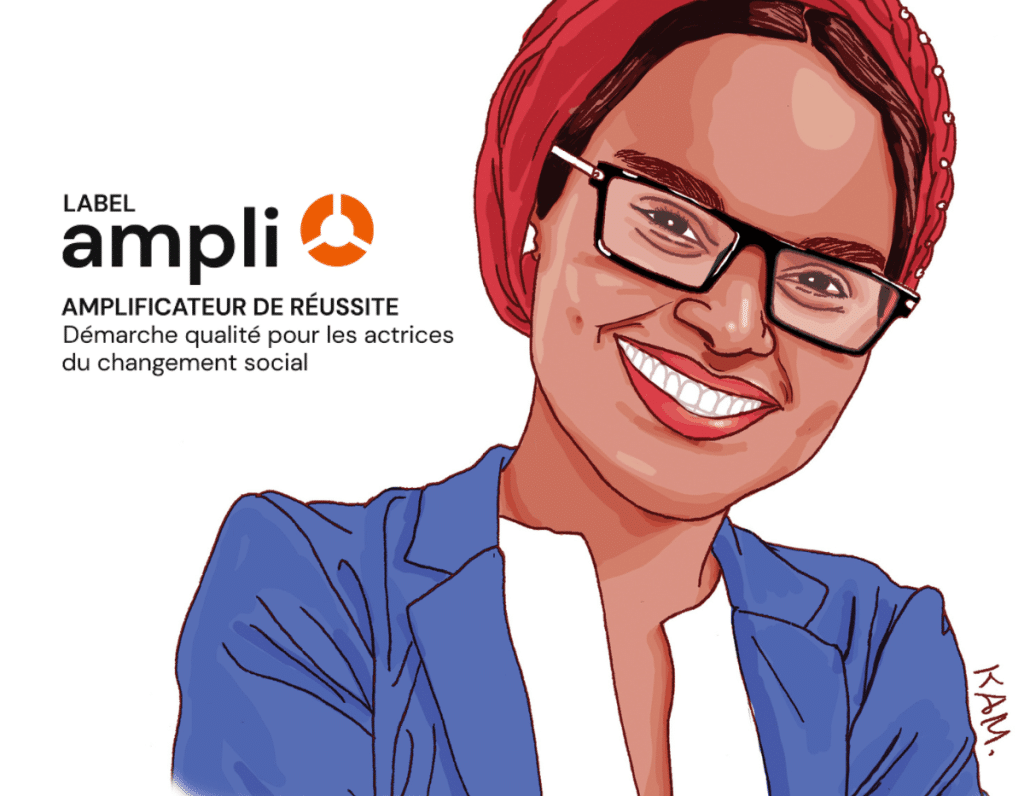
Adam Dicko is the executive directorof AJCAD (Association des Jeunes pour la Citoyenneté Active et la Démocratie, or Association of Young People for Active Citizenship and Democracy)in Mali. Since 2014, she has been bringing together activists involved in various fields: sexual and reproductive health (SRH), democracy and governance, advocacy, and human rights.
Why did you want to submit AJCAD-Mali for certification?
[vc_column width= »1/2″]We see certification as an audit. A youth organization such as AJCAD does not conduct organizational audits outside of those assigned to programs. For us, this certification was a way to expand our audits, which had previously been focused on projects. This process covered all areas: financial management, program management, governance, archiving, working environment, workers' rights, etc. For us, certification is more of an opportunity than an exercise or an exam. It has proved to be a tool for measuring our strengths and weaknesses and the opportunities available to us.
[vc_column width= »1/2″]
What changes has this quality approach brought about in your organization?
Our first certification process made us realize that we had many challenges to overcome, including governance issues such as irregular meetings of the board of directors and the internal audit committee. We also noted that many policies had not been formalized, even though they were being implemented informally in practice. For example, we did not have a policy on preventing harassment in the workplace, or on child protection and gender specifically. The quality process made us aware of these shortcomings. And the corrections enabled AJCAD to adapt and improve its internal texts.
What has certification brought to your organization?
First, it gave us a certain assurance that our organization meets good governance standards. The process showed us that our strategic partnership with Equipop has grown stronger and become a partnership based on trust. The process raised AJCAD's profile and increased its credibility with other partners, especially when we shared our certificate with them. It helped them understand the seriousness of our organization, which meets the standards of good organizational management. The process also enabled AJCAD to apply for major funding from the European Union and USAID, which are demanding in terms of practices and procedures.
Would you recommend the quality approach?
The certification process must continue. But we have recommendations to correct the flaws and shortcomings of the process. For example, it could provide small funds to help organizations correct their weaknesses so that they can qualify for another level. It could also create more contact and connection between organizations around solidarity between partners so that all organizations can be certified at high levels. However, this beneficial initiative strengthens CSOs and their capacity for action. It allows us to be more demanding of ourselves.