Since the 2000s, Equipop has been supporting associations and projects that seek to improve the health of young people, particularly their sexual and reproductive rights and health, with a special focus on young women and adolescents. This objective remains central to Equipop's partnerships and actions. It raises collective questions that need to be explored in greater depth: what role should young people play in projects and policies? How can we build genuine partnerships with young people in all their diversity? What can feminist approaches bring to youth participation?
One of the guiding principles of Equipop's projects on sexual and reproductive health and rights for young people and adolescents is to draw on principles similar to those advocated by popular education. The central principle of this model is to work with young people, not for them. It is based on the belief that all human beings can develop an informed understanding of the issues that affect them and the world in general, provided they have access to available information and develop critical thinking skills in relation to their peers. This approach has proven particularly effective in the field of comprehensive sexuality education.
[vc_column css= ».vc_custom_1640617099297{background-color: #bfbfbf !important;} »]
Support for youth organizations committed to social causes
Equipop has been partnering with AJCAD Mali, the Association of Young People for Active Citizenship and Democracy, since 2013. AJCAD members are young activists committed to making young people's voices heard in decision-making bodies in Mali. The organization aims to accelerate civic engagement among young people through citizen and media mobilization. AJCAD also participates in high-level regional and international decision-making forums, as it did recently during the Africa-France summit.
Drawing inspiration from popular education leads us to recognize that another type of knowledge, that which comes from young people's experiences, is just as valid as technical and scientific knowledge. Popular education in youth health could then be seen as fostering dialogue between the knowledge of young people, that drawn from the experiences of movements and collectives that defend health rights, and that of doctors, technicians, and researchers. It enables the collective creation of knowledge by questioning the hegemonic modes of knowledge transmission and involves the use of alternative teaching tools such as theater, games, and art.
[vc_column css= ».vc_custom_1640621086919{background-color: #c4c4c4 !important;} »][vc_column_text css= ».vc_custom_1640621057247{background-color: #c4c4c4 !important;} »]Strategic partnership with JED: popular education association The Senegalese NGO Jeunesse et Développement (JED) and Equipop have been engaged in a strategic partnership for several years, focusing on the issue of youth participation in building societies and, more specifically, on promoting the rights and health of women and girls. JED, which operates throughout Senegal, considers young people to be the best vehicle for social transformation. Its activities in education, training, integration, promotion of sexual and reproductive health and rights (SRHR), and environmental protection benefit more than 10,000 adolescents and young people.[/vc_column_text][vc_column css= ».vc_custom_1640621099913{background-color: #c4c4c4 !important;} »]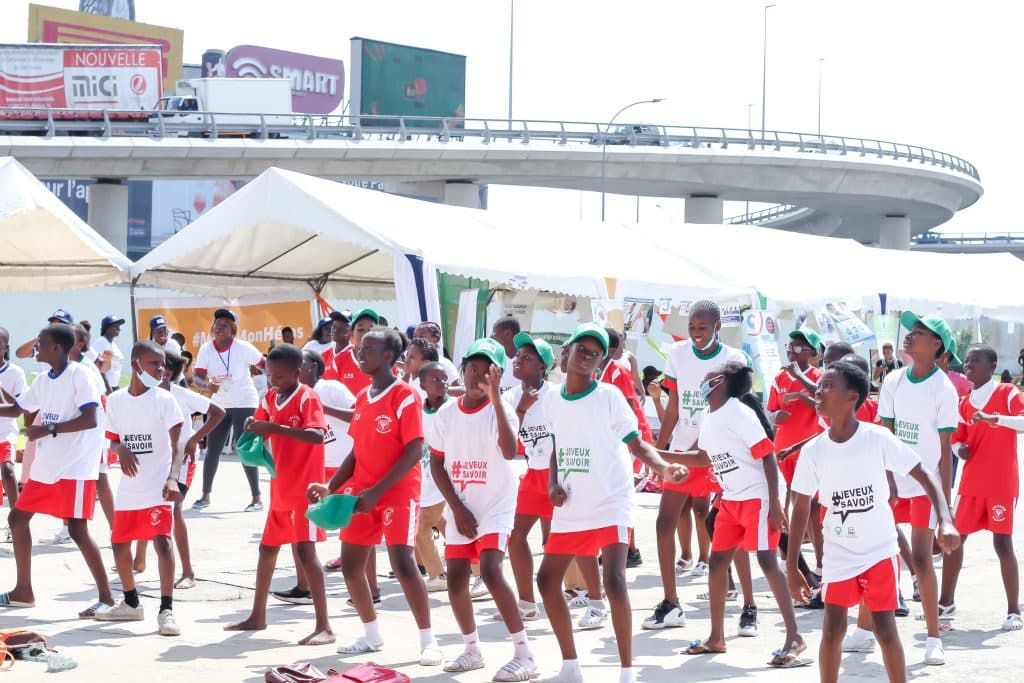
#JeVeuxSavoir: young people at the heart of advocacy for ECS The #IWantToKnow citizen and political mobilization campaign, developed and promoted by member organizations of the Alliance Droits et Santé network, aims to accelerate West African states' commitments to providing high-quality comprehensive sexuality education. Several pillars of this campaign have ensured the full participation of young people: working with artists, collecting and promoting testimonials from young people whose lives have been transformed by access, or lack of access, to CSE information, and direct appeals to public authorities by trained and equipped youth groups.
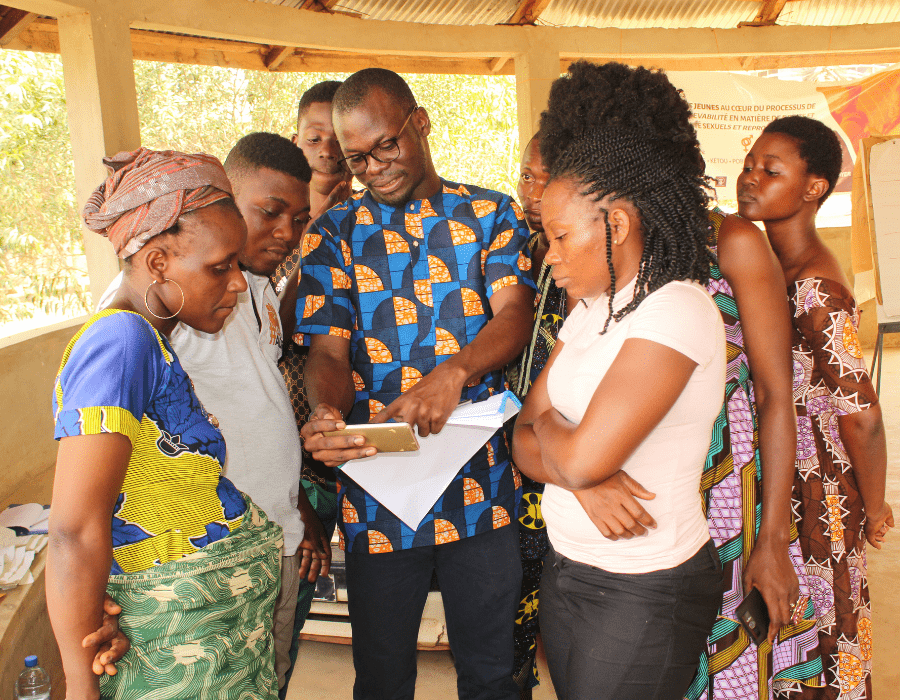
[vc_column css= ».vc_custom_1640621114429{background-color: #c4c4c4 !important;} »]#OnDoitAgir – photos and drawings in the service of health democracy #WeMustAct is a youth empowerment project led by four Beninese associations (Scouting, ROAJELF, JVS, and OCJ). This project enables young people to collectively become aware of their SRHR rights and to demand them from local and national authorities. Through photography and drawing, young people have shown their realities and made their voices heard. Collectively, they have advocated to denounce the obstacles that prevent them from enjoying their SRHR and to demand commitments from local and national leaders.
From participation to partnership in the fight against health inequalities
Challenging inequality in society, particularly violations of young people's sexual and reproductive health rights, remains the central concern of the associations supported by Equipop. This involves working to empower young people. It involves building partnerships with young people to enable them to get involved, work with professionals, gain "power" in the development and implementation of projects, and also have a say in the design of programs and policies that affect them. Individual empowerment is then reinvested in collective mobilization aimed at advancing the rights of a marginalized social group. This is what several partners are doing through social audits, for example. At Equipop, building a real partnership means using our privileges and our power of influence to systematically impose the participation of young people, and specifically young women, in the spaces where health programs and policies are developed. This is what we systematically strive to do. It also means providing long-term support to youth associations that fight for their rights!
[vc_column css= ».vc_custom_1640621129403{background-color: #c4c4c4 !important;} »]Social auditing: a tool for youth participation in civic debate on the quality of SRHR services The state has a responsibility to its citizens, particularly the youngest, to ensure that their rights are respected and that they have non-discriminatory access to quality public services. Through social auditing, a group of citizens takes action to assess the quality and performance of public services, often at the local level, and hold the authorities accountable. In Burkina Faso and Côte d'Ivoire, Equipop supports social audit initiatives led by young people. These audits are based on flexible and adaptive tools inspired by scorecards and use a system of criteria created with young people. This method of evaluation makes it possible to rate a service, identify challenges related to quality and access, and find solutions or make recommendations to public services. This document presents the main recommendations drawn from the scorecard evaluation carried out by the young evaluators. If implemented, they can help to facilitate and improve access, reception, and the quality of SRH services for young people.
[vc_column css= ».vc_custom_1640621142918{background-color: #c4c4c4 !important;} »]ZOOM ROAJELF Benin ROAJELF (West African Network of Young Women Leaders-Benin), a partner of Equipop since 2018, brings together young Beninese women who are working to promote their rights and female leadership. Their actions aim to increase the participation of women and girls in decision-making processes and development in the West African sub-region. ROAJELF-Benin has received financial and organizational support, strengthening its management and action capacities and enabling it to gain greater visibility among donors and actors in the sub-region. ROAJELF-Benin, in turn, provides support to emerging feminist structures in Benin, as it did in 2021 when it organized Camp Obirin, which brought together some 50 young Beninese girls to train them in collective empowerment.
Towards a feminist approach to youth participation
"What is done without us is done against us," young people insist today, echoing Nelson Mandela's famous quote. To go beyond slogans and promote genuine participation, it is essential to continue asking fundamental questions. Among these, the issue of representation remains crucial. How can we ensure that young people in all their diversity participate? It is often the most socially integrated and intellectually educated young people who are able to invest their energy in projects and consultations. In particular, how can we ensure that young women are equally represented and that the dynamics set in motion effectively contribute to the fight against gender inequality? Good intentions alone will not be enough to make youth participation a real vehicle for empowerment and equality. Feminist approaches can help collectively.