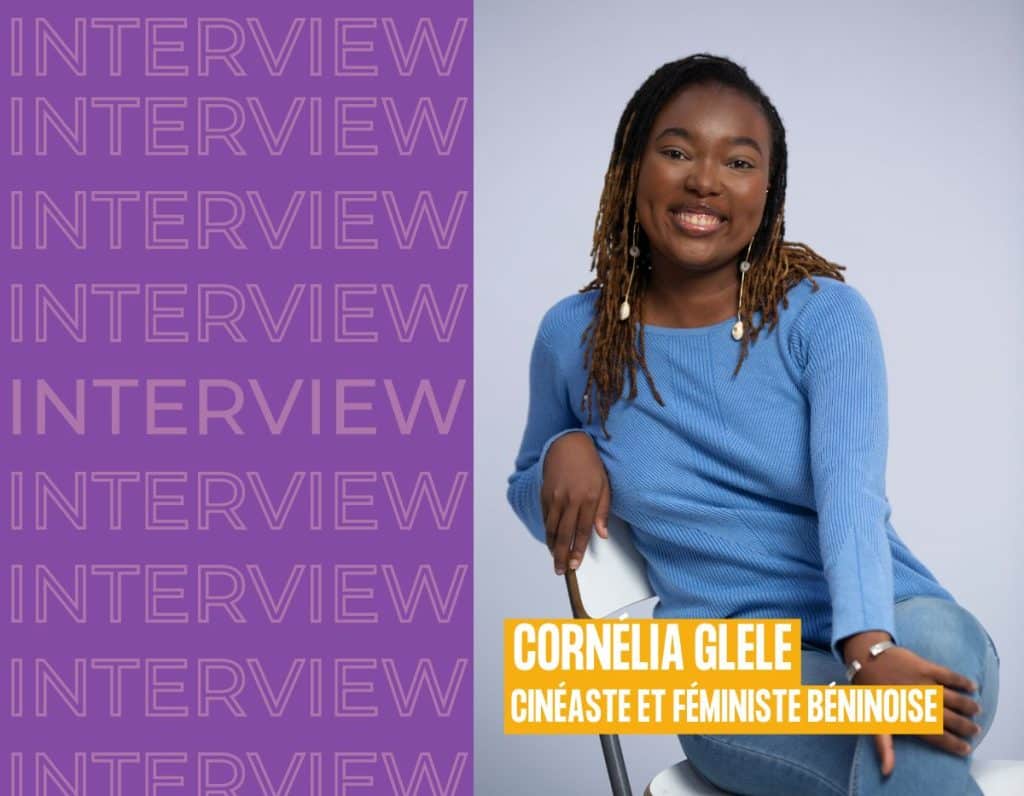
Activist and defender of women's rights in Benin, Cornélia GLELE is the founder of the Cotonou International Women's Film Festival (FIFF). Launched in 2019, the event highlights and celebrates the work of African female filmmakers. The third edition took place from February 20 to 24, 2024. Cornélia GLELE embraced activism from a young age. At just 13 years old, she joined an association as a volunteer. Her journey then led her to university, where she became involved with the West African Network of Young Women Leaders in Benin, which fights against gender-based and sexual violence. There, she discovered feminism and her passion for defending women's rights, a conviction that has always driven her actions.
“Today, in Benin, being called a feminist is considered an insult. For me, it’s quite the opposite. I wear this label with pride, to the point of stating it when I introduce myself: I say, I am Cornélia Glele, filmmaker and feminist.”
Can you tell us about your background and your commitment to women's rights? After earning a bachelor's degree in journalism and a master's degree in film, I worked as a journalist. I wasn't very fulfilled because journalism dealt with topics very briefly, whereas I wanted to spend more time on them. So I switched to film. I started out making documentary films and gradually moved on to fiction.
Can you tell us a little more about FIFF and how you decided to create it? The festival is a fusion between my blog, which is my desire to talk about African cinema, and my desire to introduce and pass on my love of cinema to other girls/women. In 2017, I launched an acting course exclusively for girls, and the idea of creating a festival came to me one sleepless night. I talked about it to a friend, who told me straight up that I was crazy to want to embark on such a big project that would require a lot of funding. He was a little skeptical, but despite his reservations, he went along with my crazy idea {Laughs}, and we went to meet an influential figure in the film world who guided us. She advised us to choose a specific theme for the festival to set it apart from other festivals, such as FESPACO, that already exist. It was from these discussions that the idea came to focus the theme of my festival on films made by women, with the first edition taking place in 2019.
What was your main goal in launching it? My main goal in creating the International Women's Film Festival (FIFF) was to showcase films conceived and directed by African women, to really highlight the work of women in African cinema, because they do exist. My other goal was to encourage women to get involved in technical filmmaking professions, screenwriting, etc. Basically, to break away from the cliché of certain professions (actresses, makeup artists, etc.) which, in the minds of many people, are the only jobs women can do in the world of cinema. And the last goal was to bring people to Benin, because I love my country and I think everyone should visit it {Laughs}.
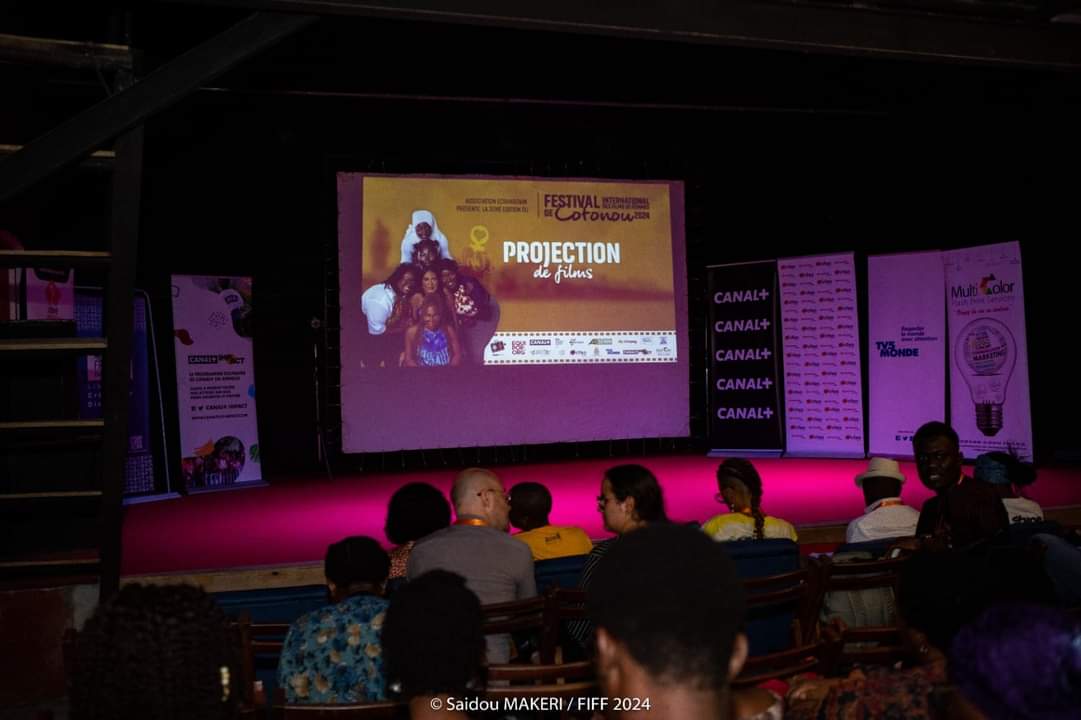
What role does the festival play in promoting women's rights and their representation in the Beninese and African film industry in general? People used to call FIFF Cotonou "the baby festival," but today it has become a major event and is one of the most important festivals in Africa. We have found the right way to get people interested in the feminist movement and issues affecting women, as well as raising awareness about the various forms of violence against women. Each edition is organized around a theme. For the first edition, the theme was violence against women. For this third edition, we have chosen "women's cinema for greater sisterhood" as our theme. Beyond the films that are screened, we also facilitate discussions with the audience, and through this, we try to encourage everyone to reflect on their behavior/attitude and question their language when interacting with girls/women on the street, in professional or intimate contexts, etc. The role of the festival is exactly the same as any activity that aims to bring about behavioral change, and I say this in my speeches:
“The festival is an excuse to stop you from being sexist, to put an end to patriarchy.”
How does all this contribute to the visibility of female screenwriters, directors, and film producers? First of all, since we only select films made by women, this gives them visibility; because in fact, films produced and/or directed by women are not often shown at "generic" festivals. And this is true all over the world, especially at major festivals such as Cannes.
Can you share with us some memorable moments or successes that the festival has had since its inception? Are there any female directors or films that you are particularly proud to have presented? One of the successes that is particularly close to my heart is the Kino Wendia training courses we organized to teach girls about filmmaking, while also addressing issues such as feminism and patriarchy. These were girls who, at the start of the training, did not consider themselves feminists, but who then came to understand the issues at stake in the feminist movement and the struggles it faces. Finally, there are two things about the festival that I am particularly proud of: the fact that it has enabled many girls to have their first experience of filmmaking. That is a real victory. Secondly, I am happy to see that the festival is growing and gaining recognition in the African film world and beyond the continent.
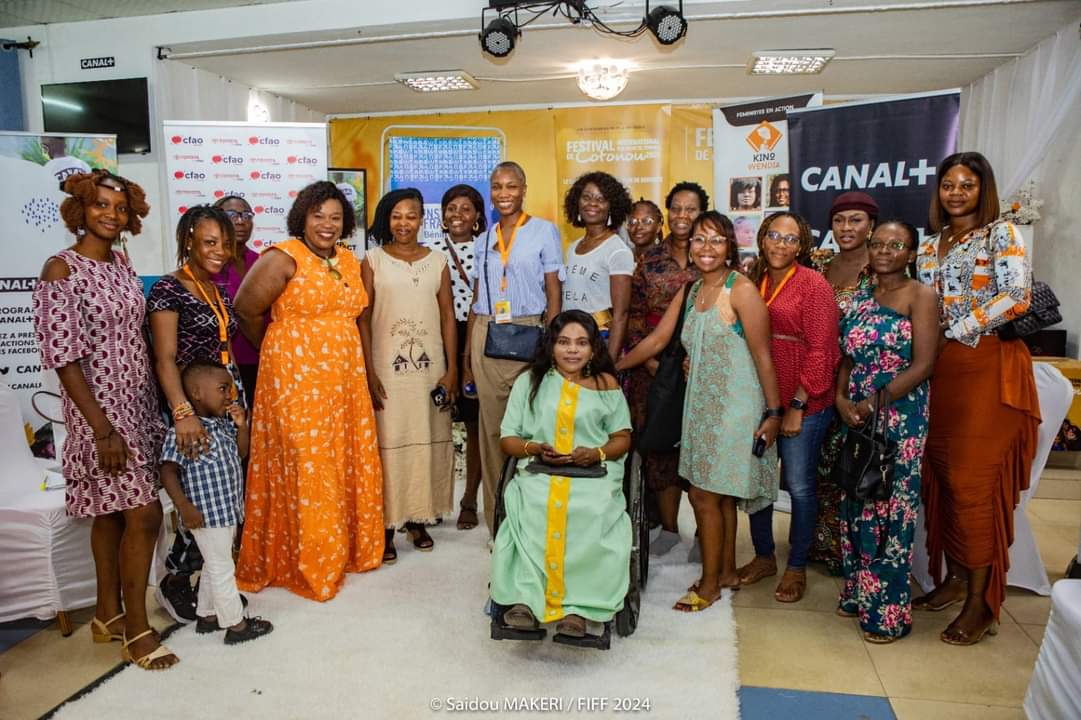
You mentioned Kino Wendia as one of the successes that is close to your heart. Can you tell us more about this project? What was the main goal? When we launched Kino, lots of people contacted us and wrote to us on social media to find out how to pursue a career in cinema. When Féministes en Action put out a call for proposals, I wrote a project proposal and submitted it, and with this funding I was able to train 10 young women for two months. The training included an introduction to feminism as well as instruction in screenwriting and editing. At the end of the training, they co-wrote a screenplay inspired by their personal experiences, highlighting the forms of violence they had suffered. The screenplay was shot in three days and their film MALAIKA was screened at the opening ceremony of the third edition of FIFF Cotonou.
Beyond technical learning, what do you think is the added value for these young women in having had this training? Kino represents a real opportunity for empowerment for these young women; by offering them their first experience in the field of cinema, it allows them to enter the industry with the necessary tools. It is also a way of raising awareness of the feminist movement among these young women. Today, they no longer hesitate to assert their commitment to gender equality.