On September 10, 2019, the High Council for Gender Equality officially began its third term. Equipop will contribute to the HCE's work until 2021. Here is a look back at the issues raised during the inaugural meeting.
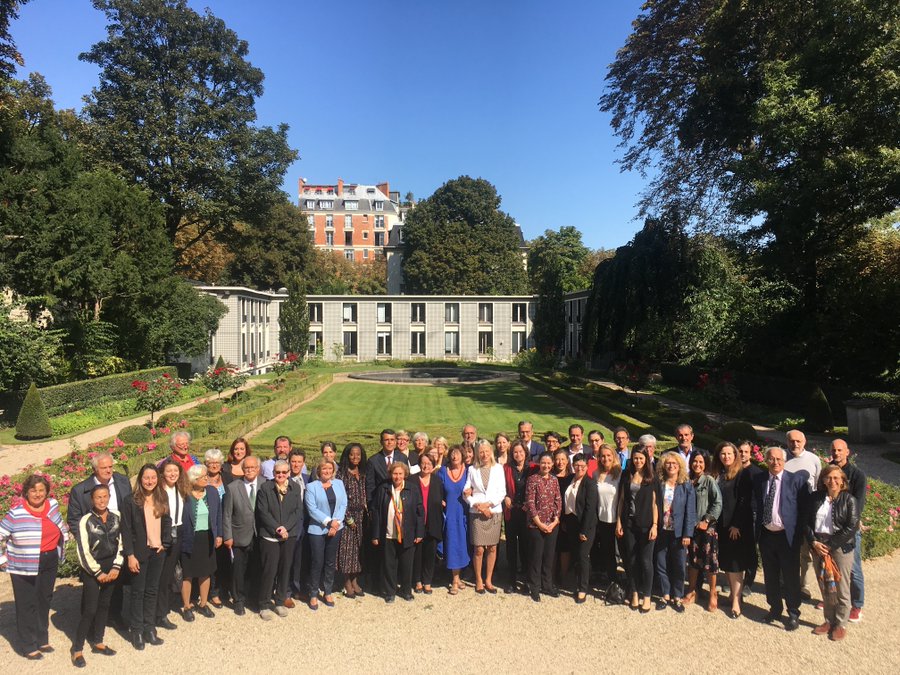
At the end of June 2019, Equipop was appointed to the High Council for Gender Equality (HCE) as a member of the associations college. On September 10, the HCE was officially installed in the presence of around fifty members and invited guests.
The Secretary of State for Gender Equality and the Fight Against Discrimination began by outlining one of the HCE's objectives: to facilitate dialogue "between the government and organized civil society." Marlène Schiappa emphasized that if this dialogue is constructive, it will translate into public policy.
Marlène Schiappa reiterated the principle of independence that must guide the work of the HCE, as well as its ability to take up cases on its own initiative and to hear, receive, or question members of the government. Among the priority issues, she mentioned the need to document the concept of quotas, as well as the Generation Equality Forum (Beijing+25) to be held in Paris in July 2020.
Expertise to be put at the service of as many people as possible
After praising the work of Danielle Bousquet and her team during the two previous terms of office, the president, Brigitte Grésy, presented the HCE as an "independent, pluralistic, and bold" institution whose three missions will be to evaluate public policies, guide and accelerate change by taking courageous positions, and bring new issues to the fore. The diversity of backgrounds and solid expertise of the members should result in the production of reports and opinions that are both detailed and accessible to the general public.
The chairs of the five committees then listed the topics that will structure their work, and several members raised other issues to be added to the agenda. These included, in no particular order: gender-responsive budgeting, regional inequalities, comprehensive sexuality education, etc.
Feminist diplomacy in a tense international context
Equipop will sit on the "women's rights, international and European issues" committee, which has ten members. The chair, Martine Storti, highlighted the paradoxical nature of the current international context: on the one hand, a return to conservatism, and on the other, a resurgence of feminist movements.
Equipop has been involved in a process of co-constructing policies with the French government for a dozen years, from the Ministry of Foreign Affairs' first "gender and development" strategy to France's "International Strategy for Gender Equality (2018-2022) ," and involvement in the work of the G7 in 2019 through the Women 7. Participating in the work of this HCE commission, in particular by contributing to the reflection on what constitutes truly feminist diplomacy, is the logical continuation of Equipop's commitment in this area.