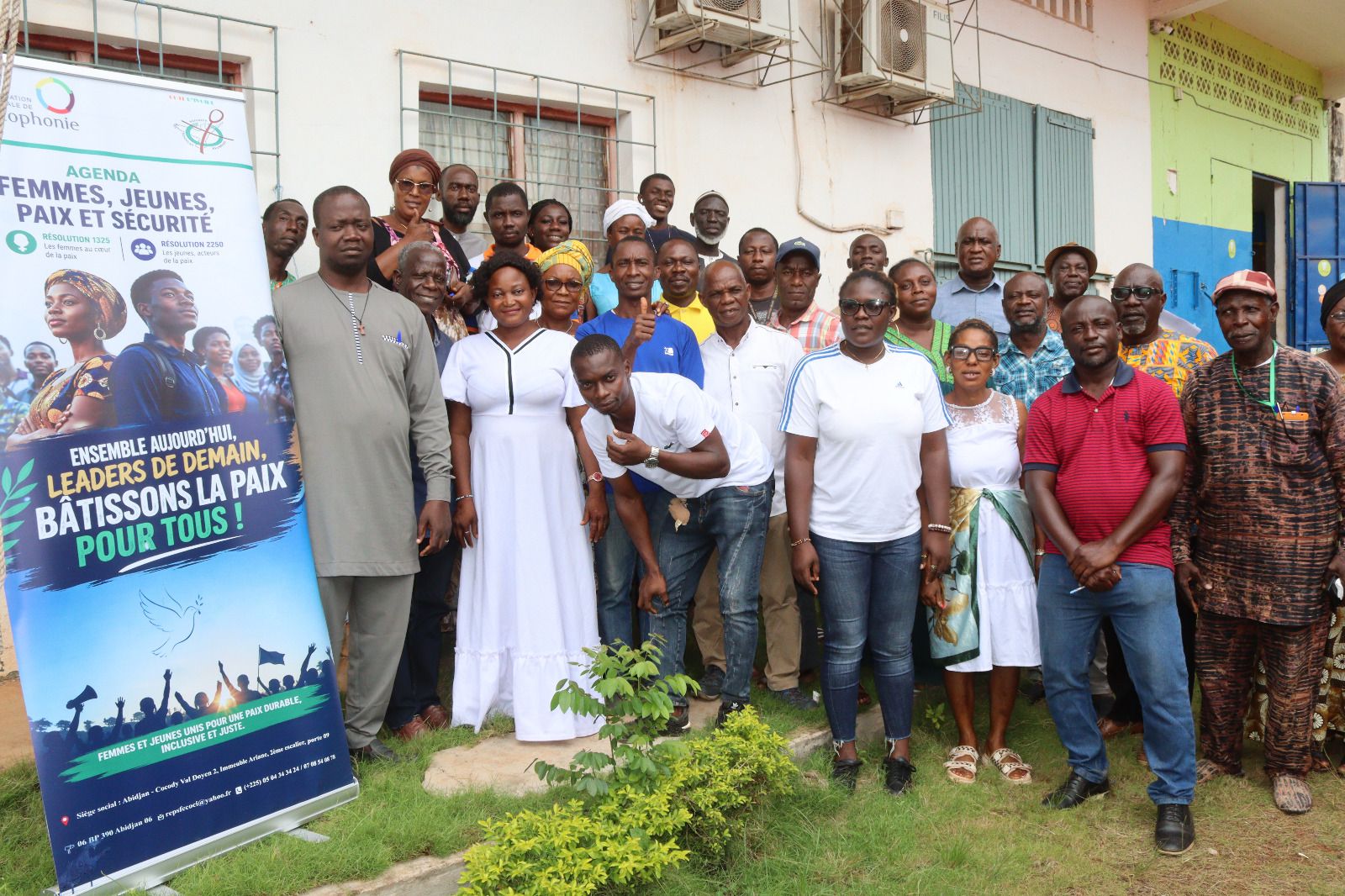
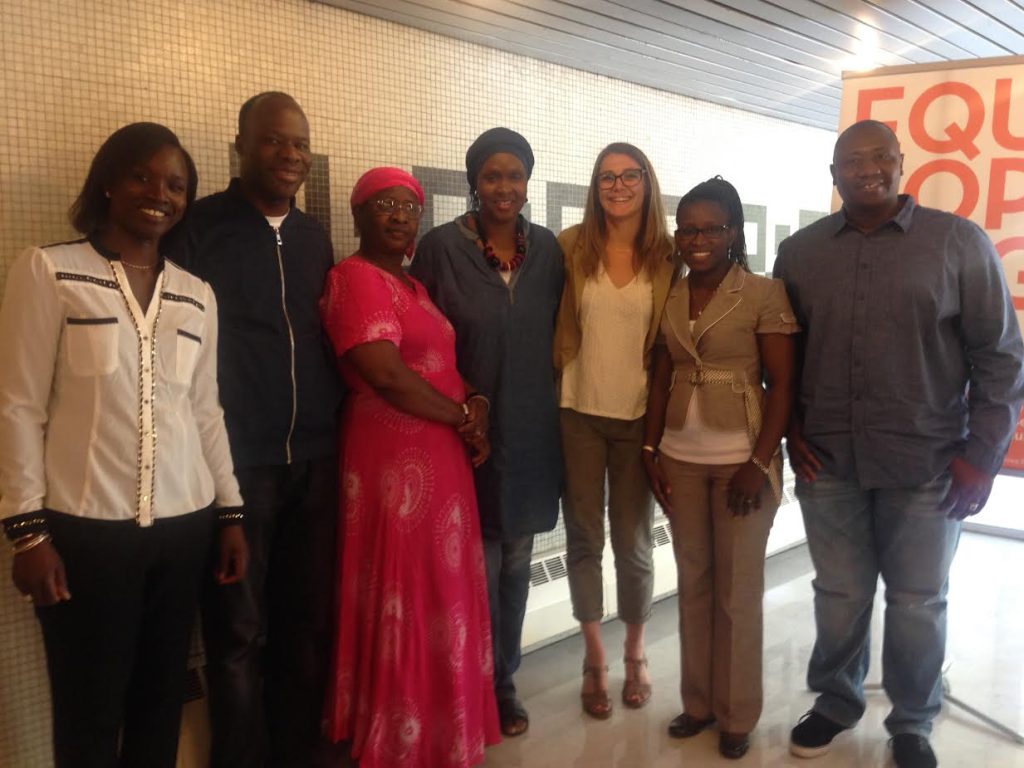
On September 10, Equipop launched training for change agents as part of the European Change Plus project funded by the European Commission. The aim is to give them the tools they need to promote the abandonment of female genital mutilation (FGM) within their communities. To date, our six change agents have taken part in two training sessions to get them started.
Being an agent of change: what does that mean?
Composed of four women and two men from Senegal, Guinea, Mauritania, and Mali, our group began its first day of training by defining their roles and added value within the project, which can be summarized as: mobilizing, raising awareness, and disseminating information. In order to best prepare our agents of change, Sokhna Fall Ba, Equipop project manager and trainer for the project, reminded everyone what FGM is, its consequences on the physical and mental health of girls and women, and the fact that it is a violation of human rights. Enabling them to counteract the beliefs and arguments justifying FGM in their respective communities is also one of the objectives of these training sessions. To achieve this, key information and arguments are provided to our team. "Having the necessary knowledge and tools to raise awareness and convince others is key to fulfilling our mission,"said Dieyneba, a fervent advocate for the abandonment of FGM. These exchanges are conducive to sharing the experiences of our change agents and how FGM is practiced in their countries of origin. "In my country, Mauritania, girls are circumcised at birth," Fatimata told us. This has created a climate of trust, an environment conducive to open dialogue among participants.
[vc_gallery interval= »5″ images= »25655,25656,25657,25659,25660″]
Gender and power relations
On the second day of training, our change agents were able to focus more specifically on the link between FGM and broader issues of gender, women's rights, and gender-based violence. The program included reflection on the difference between the concept of "sex," which refers to the biological differences between men and women, and that of "gender," which is a social construct. The roles assigned to women and men differ from one society to another, which is why change agents are particularly effective in promoting the abandonment of FGM; they are familiar with the power relations that prevail in their respective communities. After these first two training sessions, a "good group cohesion" was formed, as one of the participants testified. The quality of the exchanges confirms the strength of our change agents' commitment to ending FGM! To be continued in the next episode.