Fondemsan Niger: Lawali Amadou reflects on the innovative nature of Round 1

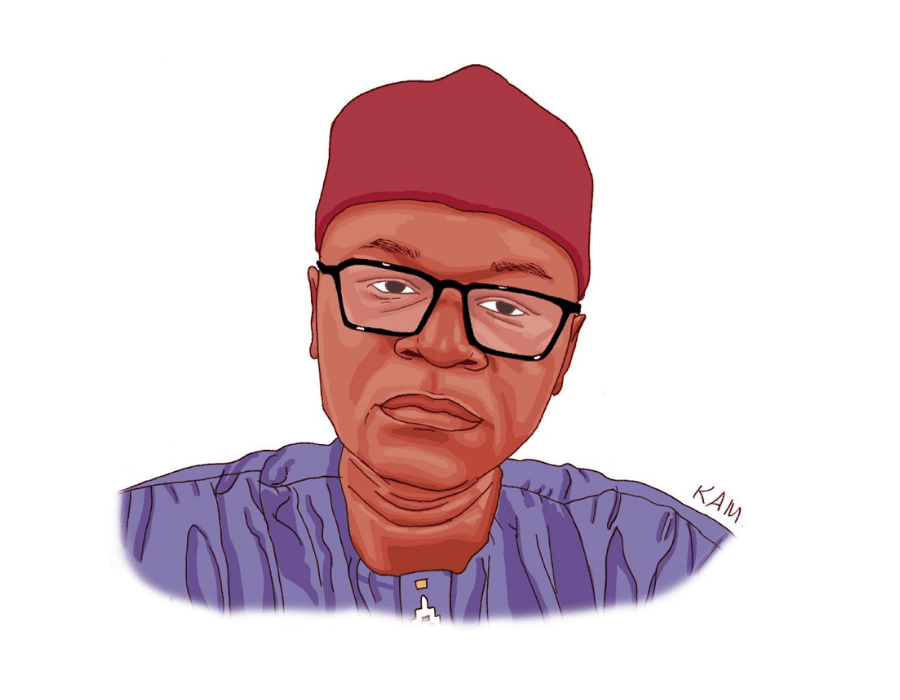
Interview with Lawali Amadou, project manager, Jama’a Jar (Round 1) in Niger, who kindly agreed to answer a few questions we asked him. In this exchange, he discusses the innovative nature of the project, the changes it has brought about, and the challenges it faces.  

Could you describe what makes the project you are implementing with FONDEMSAN funding innovative?

  In implementing this project, the first element that makes it innovative is the construction of the argument. The idea behind the project was to construct an argument to deconstruct a number of myths about birth rates, family size, the role of girls in the family, and conjugality.  It was therefore important to have an argument based on a gender approach and a rights-based approach.   The second element was the establishment of a joint committee involving all project stakeholders, including influencers, FP champions, beneficiaries, the project team, and all other actors involved in the project, unlike what was usually done: working only with the steering committee and a few allies. For us, this committee is a space for debate on issues related to birth rates, family size, the role of girls in the family, and conjugality.  The third element was the participatory method used at the very beginning of the project's incubation. This approach greatly facilitated the co-creation of the project with stakeholders. Usually, projects are developed by small committees. But in this case, we had a participatory workshop that took everyone into account. Even after the incubation workshop, all stakeholders took part in every stage of the project's implementation.  The fourth element is the mobilization of influencers and PF champions by drawing on the life stories of committed artists who produce works of art. We use these works to raise awareness at mobilizing events.  The fifth element is the fact that the project relies on FP champions to change mindsets and perceptions within communities regarding birth rates, family size, the role of girls in the family, and marital relations. Since 2016, Alliance Droits et Santé has been working in the localities where we have worked with local decision-makers (mayors, prefects) who have become local champions committed to the issue with a view to changing attitudes in these communities.     

What changes has the project brought about to date? 

  The project has led to many changes, particularly in the discourse of stakeholders and religious leaders. These religious leaders are now able to talk openly about the sexual and reproductive health of women, adolescents, and girls through debates they organize on the radio, sermons in mosques, and even in traditional Koranic schools. This is already a change, because initially, religious leaders did not engage in this discourse. They were very reluctant to discuss SRHR.  Subsequently, as a change, we can mention the traditional leaders who also participate in spreading the message through interviews they give to the media when they are in contact with their constituents. Often, when they come into contact with their constituents, they spread the messages and arguments. It should be noted that initially, traditional leaders did not share the same perception or vision. But now we have seen a change, and these people are effectively participating in spreading the messages.  There was also the fact that women and girls felt more comfortable talking about their SRHR. After the project intervention, it became clear that young girls and women were developing a more critical discourse on these negative social norms.  Finally, at the municipal level, after implementation, changes in discourse were noted among mayors. They even made commitments.      

 What challenges did you encounter and what advice would you give to CSOs who would like to develop the same type of project?

  First, I would say involve the various stakeholders from the design stage through to implementation in order to facilitate ownership and achieve the desired change. When the various stakeholders are involved from the design stage through to implementation, this reduces contradictions in the implementation of the project.  Next, it is important to involve local actors, namely influencers and champions, in order to reach a consensus when developing the argument.  Finally, I would say to create spaces for sharing best practices between change agents, who are influencers and champions. These could be study trips, forums, or meetings in the same locality or in different localities.  Another aspect is capacity building for champions through training to turn them into true local allies.   

How has Equipop's support system helped you change your practices?

  From the outset, there was a technical support tool that defined the different types of support that the consortium expected from Equipop for each planned activity.  This tool is very important in the implementation of this project. At each stage, we knew what support we needed from Equipop; this could be support with communication or organizational development. Often, the support is provided in person, or via Zoom or Skype.

Further information

April 22, 2026

At a time when gender equality and international solidarity are under direct attack around the world, Equipop has set out to strengthen its alliances in order to take strong

April 2, 2026

Open Letter to Public Authorities, Academic Institutions, and Stakeholders Committed to the “One Health” Approach, Ahead of the One Health Summit in Lyon

March 31, 2026

Equipop has been involved in the development and monitoring of French feminist diplomacy for several years. In particular, in October 2025, we published a report on

Looking for something?