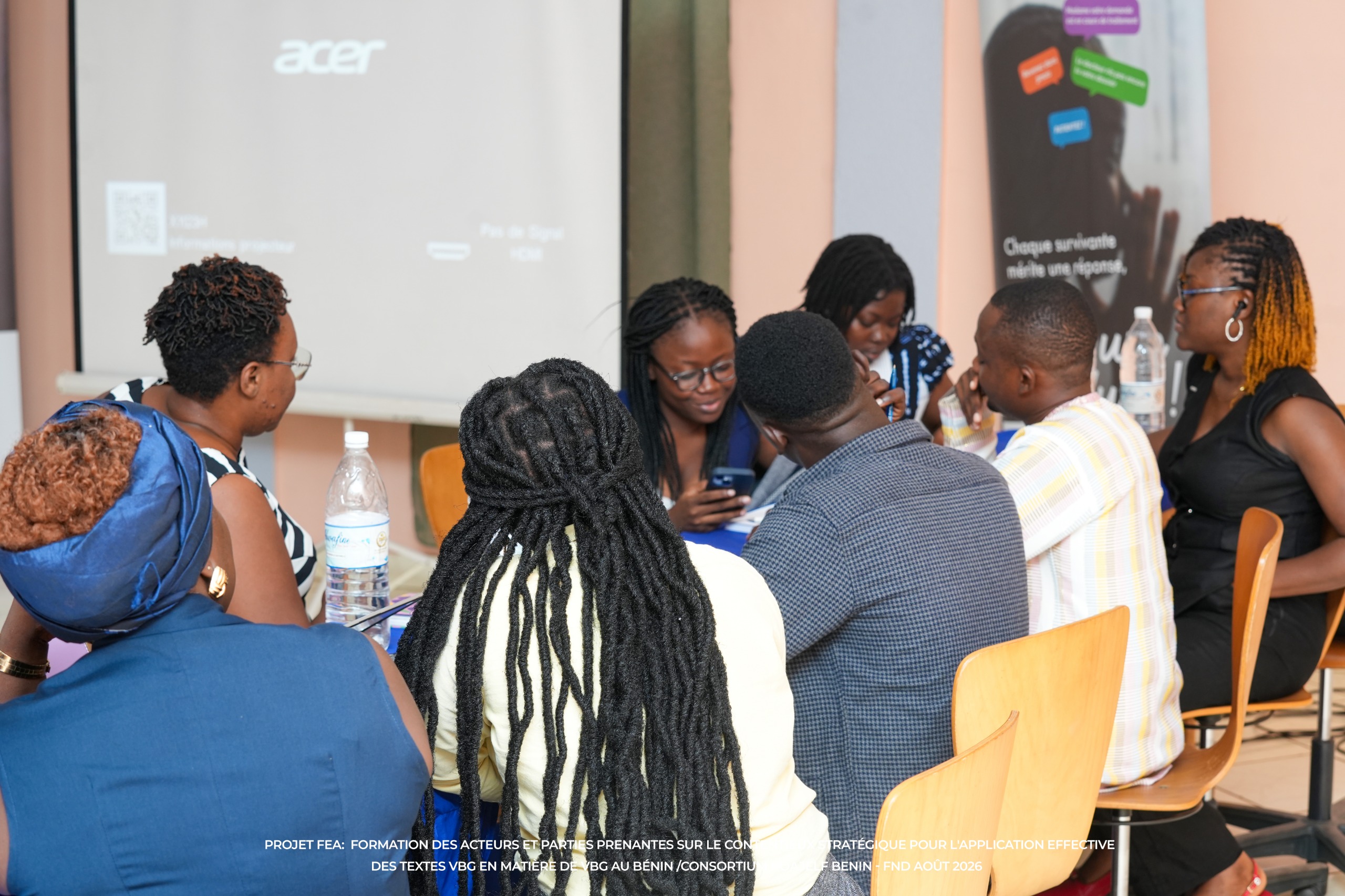
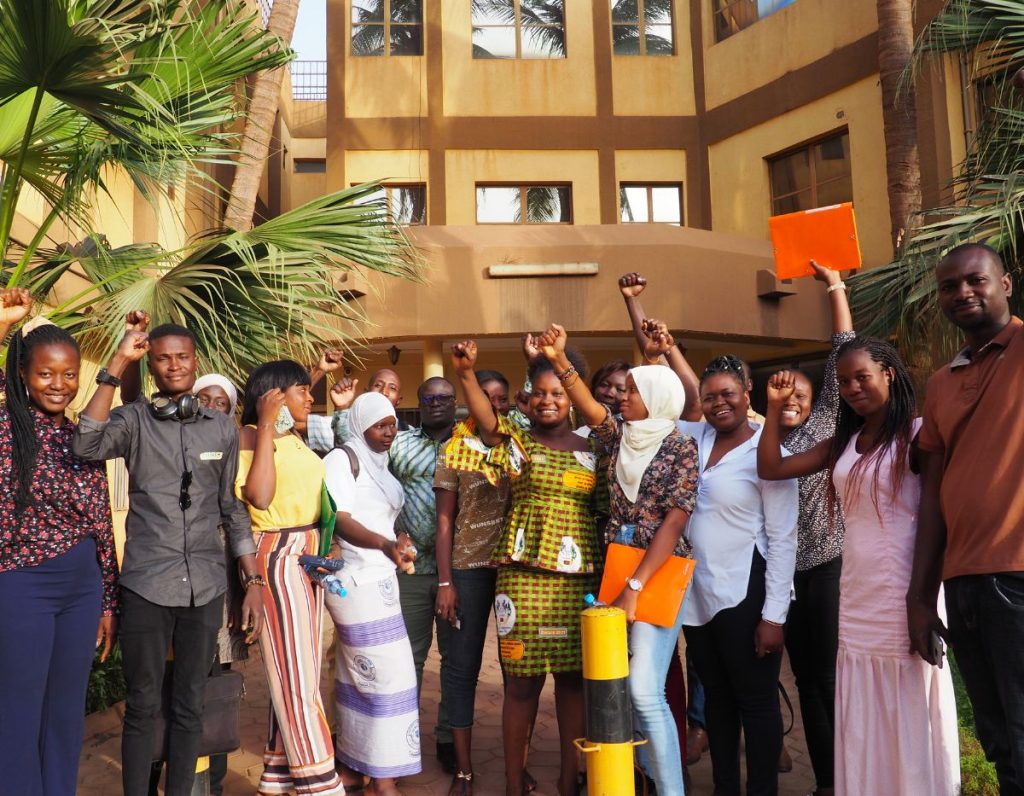
From April 12 to 14, 2022, a workshop was held in Ouagadougou to review and assess the Burkinbiwili project. This workshop provided an opportunity to gather the knowledge and experience gained during the implementation of the project.
Social auditing – a lever for accountability and empowerment
The Burkinbiwili project aimed to contribute to the implementation of political commitments and programs relating to the sexual and reproductive health and rights of adolescents and young people (SRHRYP) in Burkina Faso. The idea behind this project was to gather evidence through the organization of a social audit, conducted by young auditors, of service delivery sites. The audit was carried out with the aim of challenging government officials on the state of rights and the quality of services offered to adolescents and young people in terms of SRHR.
This social audit, conducted by 25 young girls and boys in nine districts across the five regions covered by the project, empowered them and strengthened their leadership and public speaking skills, enabling them to engage with politicians on issues relating to their sexual and reproductive health. The results of the audit were presented during advocacy events and theatrical performances in which the authorities were subjected to a mock trial. In this project, the social audit was designed as a tool for empowering young people, enabling them to become aware of their rights, observe their implementation, and make recommendations to the authorities responsible for their implementation.
Capitalize on action and experience to transform them into shareable learning
At the end of the project implementation, this capitalization workshop was organized and led by Cina Gueye (Capitalization and Knowledge Transfer Officer) and Stevie Reine Yameogo (Innovation and Support Officer), provided an opportunity to review the lessons learned by the project team and the healthcare providers with whom the auditors worked closely. The project team focused primarily on reviewing best practices in collaboration with the auditors, namely: communication via digital platforms such as WhatsApp, mobilizing young people around activities by ensuring their presence at activity sites, preparation/coaching sessions for auditors, etc., but also the various difficulties encountered along the way (unavailability of authorities, shyness of some auditors, etc.).
In addition, the workshop provided an opportunity to take a step back and reflect on the work of empowering young auditors. It was a powerful moment to reinforce their individual power and take stock of the issue of youth civic participation at the heart of the project. Cherita Niya, an auditor, said she "really" enjoyed the group work, which provided opportunities for young people to share what they had learned from the project. There were many poignant testimonials and stories. For Judith Nankoné, an auditor from Ouagadougou, the stage of the project that really stood out for her was the educational talks she led in health centers: "Thanks to the educational talks I led as part of the Burkinbiwili project, I have become a leader among my peers. I have acquired many skills and now want to help others, to make them understand that it is their right to go to health centers when they have sexual and reproductive health needs." Sandrine Ouédraogo, an auditor from Koudougou (Central-West region), says: "What I liked most [about this capitalization workshop] was that it allowed everyone to give feedback on what they had learned, what the project had brought to each of us, and what standard of living the project had given us. It was also an opportunity to remember the good times. The project helped to expose the problems faced by young people in health centers and contributed to developing the knowledge and skills of the auditors through their significant involvement in all stages of the project,", she added.
At the end of the Burkinbiwili project, female listeners formed associations, feeling sufficiently equipped and capable of bringing about positive change in the world of DSSRAJ in Burkina Faso at their own level. As a reminder, the project was carried out by the Rama Foundation , Gascode, RAJS/Burkina Faso and Burcaso, with technical support from Equipop and financial support from West African Health Organization – WAHO / OOAS.